
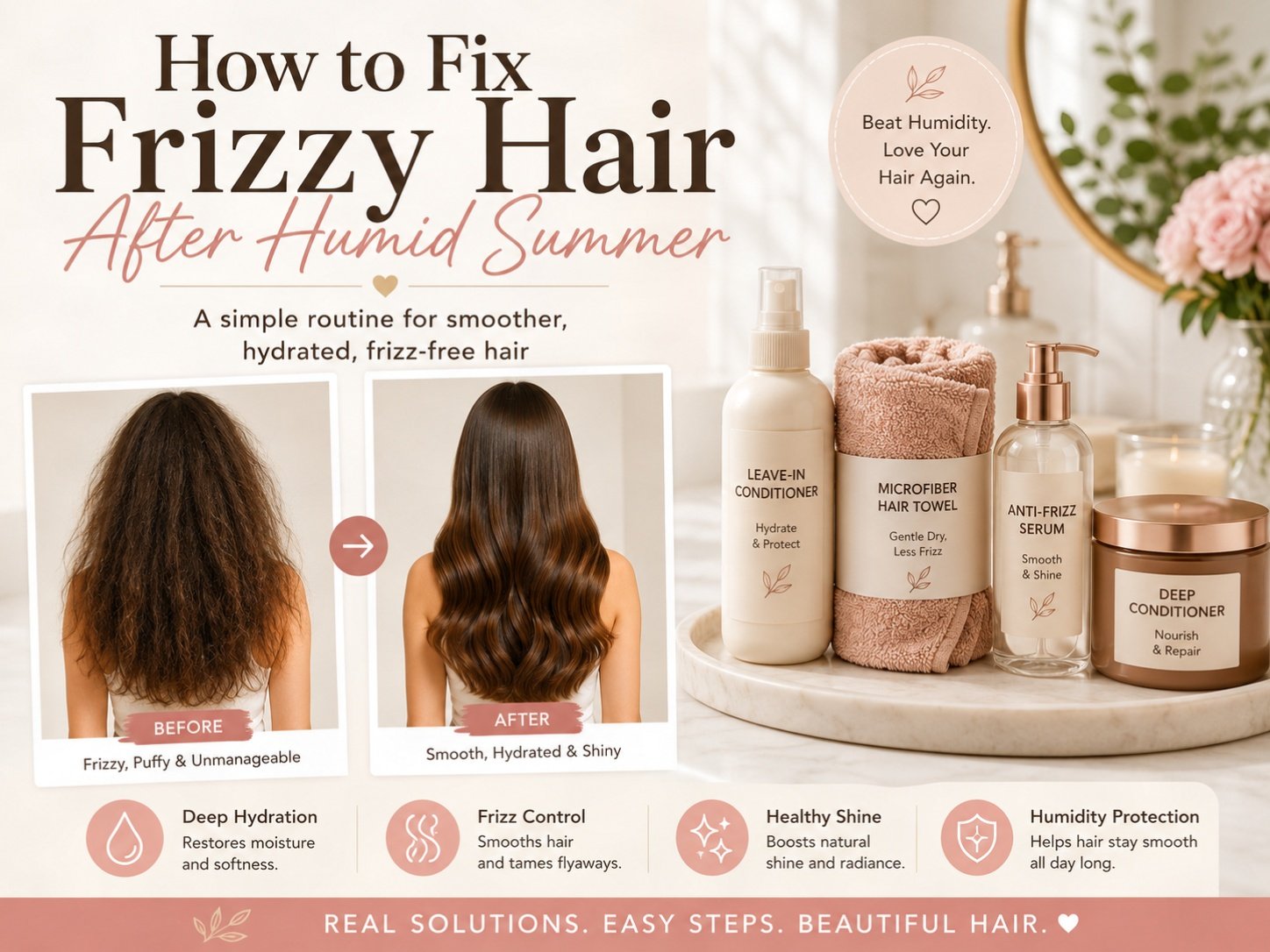
Frizzy hair after humid summer weather can feel rough, puffy, dry, tangled, and difficult to style. If your hair looked smooth in spring but started swelling, frizzing, or losing shape after weeks of heat, humidity, sweat, sun, chlorine, and frequent washing, your routine may need a reset.
I recommend focusing on moisture, gentle drying, better styling habits, and light frizz control instead of trying to flatten the hair with more heat. Humidity makes frizz more obvious, but the real issue is often dryness, damage, raised cuticles, or a lack of conditioning.
In this guide, I’ll explain how to fix frizzy hair after humid summer weather, what causes the puffiness, which habits make it worse, and how to build a smoother routine without making your hair greasy or heavy.
This article is for general hair-care education only. If you have sudden hair loss, scalp pain, sores, severe breakage, burning, itching, flaking that does not improve, or a reaction to a hair product, I recommend speaking with a board-certified dermatologist or qualified healthcare professional.
Why Frizzy Hair After Humid Summer Happens
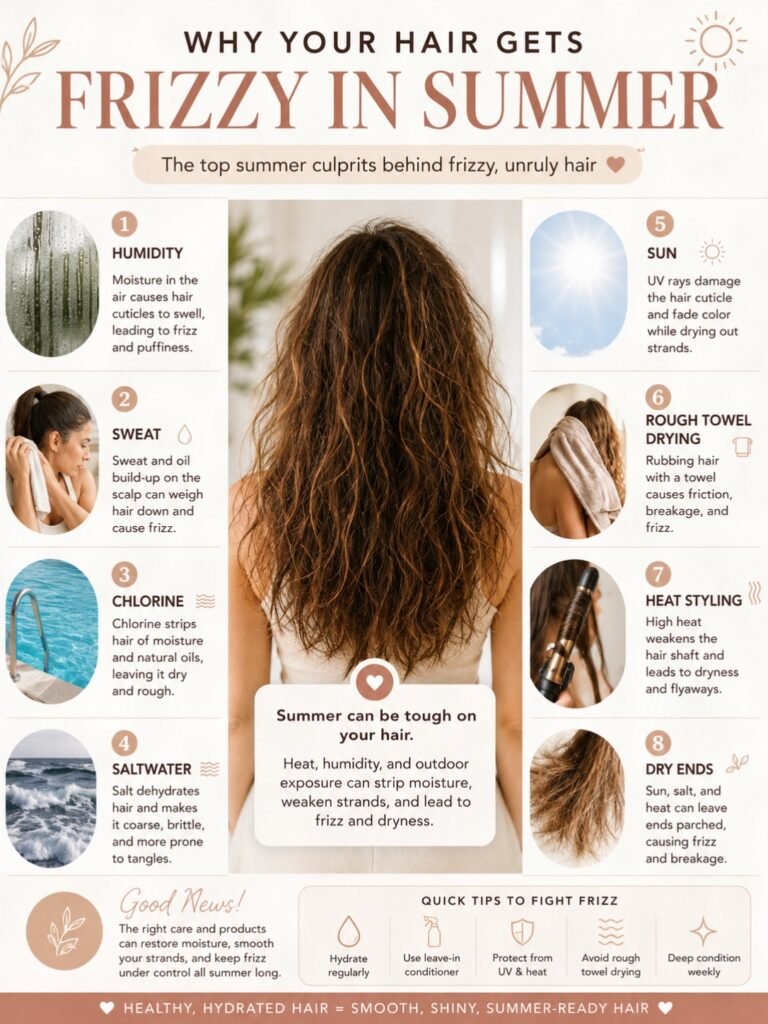
Frizz usually happens when hair is dry, damaged, raised, or trying to absorb moisture from the air. Humid weather makes this worse because water in the air can disturb the shape of the hair and make strands swell or separate.
The American Academy of Dermatology explains in its healthy hair tips that rough towel drying can damage hair, and that people with dry or curly hair may need conditioner through the full length of the hair. That matters because dry hair tends to frizz more easily.
The AAD also says in its guide to leave-in conditioner that leave-in conditioner can help reduce frizz, split ends, and breakage when used correctly.
Summer can also leave hair drier than usual. The AAD’s summer hair care guidance recommends applying oil or leave-in conditioner before entering the pool and following up with deep conditioner to help restore moisture. Cleveland Clinic also notes that pool chlorine can be drying to hair and skin in its article on pool water and dry hair.
That is why I treat frizzy hair after humid summer as a moisture-and-damage problem first, not just a styling problem.
How to Fix Frizzy Hair After Humid Summer Weather
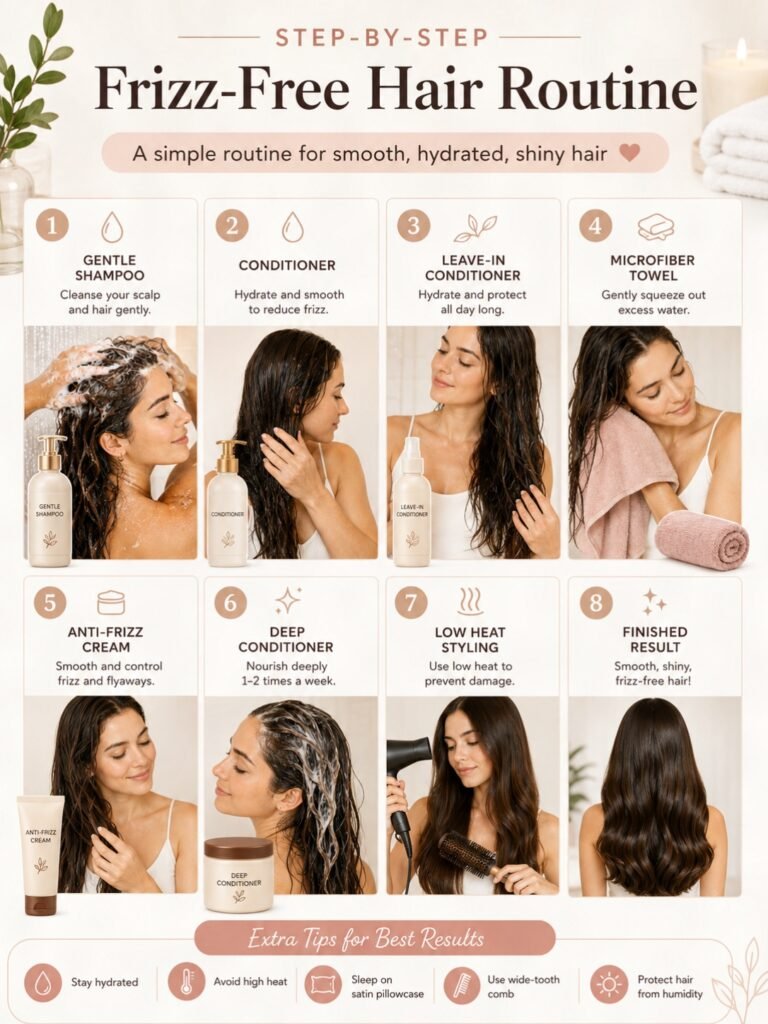
1. Start With a Gentle Shampoo Reset
If your hair feels frizzy, coated, limp at the roots, and rough at the ends, it may need a gentle reset. Summer often brings sunscreen, sweat, saltwater, chlorine, styling products, oils, and dry shampoo buildup.
You do not need to strip the hair. You just need to cleanse the scalp and remove buildup without drying out the lengths.
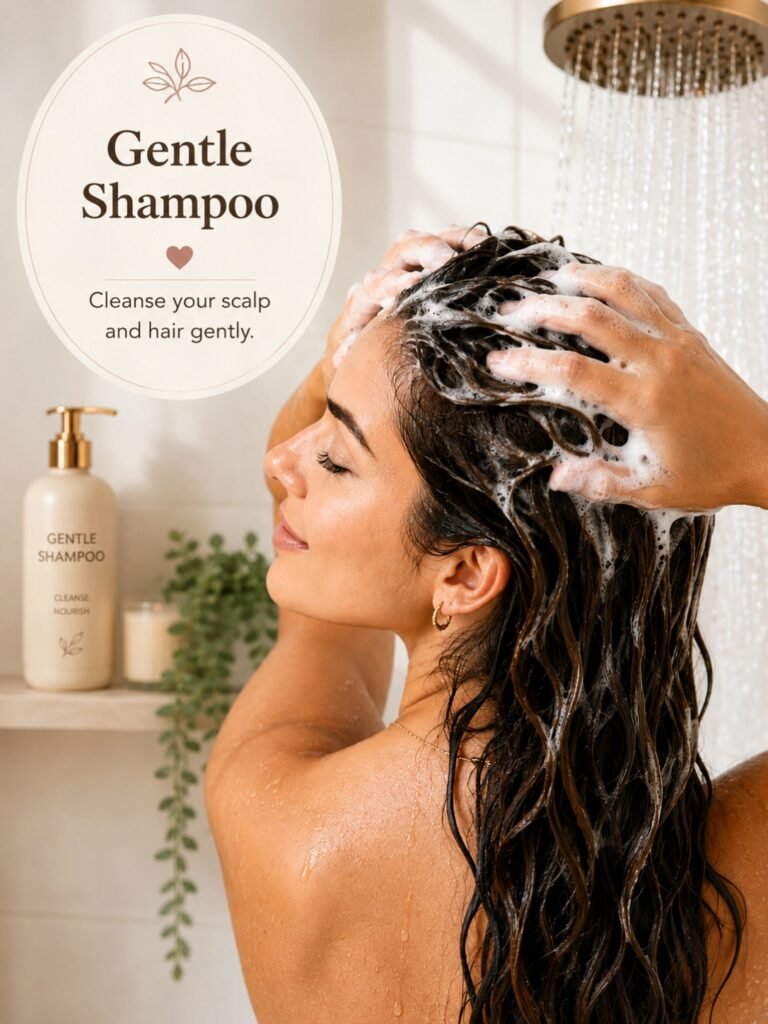
The AAD recommends focusing shampoo on the scalp instead of the full length of the hair because shampoo is meant to clean the scalp, and too much shampoo on the hair shaft can make hair dull and coarse. You can read this in the AAD’s healthy hair tips.
What to try:
- Focus shampoo on the scalp.
- Let the rinse move through the ends.
- Avoid piling hair on top of the head.
- Use a gentle shampoo if hair feels dry.
- Clarify occasionally if there is heavy buildup.
- Always condition after shampooing.
Mitchelle tip:
If your hair feels frizzy but also greasy at the roots, do not skip cleansing. A clean scalp and conditioned ends usually look smoother than hair that is overloaded with product.
2. Condition the Lengths Every Wash Day
Conditioner is one of the most important steps for frizzy hair after humid summer because frizz often gets worse when the hair cuticle is rough or the lengths are dry.
If you have straight, fine, or oily hair, you may only need conditioner from the mid-lengths to ends. If your hair is curly, coily, textured, thick, chemically treated, or dry, you may need more conditioning through the full length.
The AAD’s curly hair care tips recommend choosing a moisturizing shampoo formulated for curly hair and avoiding brushing curly hair while dry to reduce breakage and frizz.
What to try:
- Apply conditioner from mid-lengths to ends.
- Use more conditioner on dry or curly hair.
- Detangle gently while conditioner is in the hair.
- Rinse with lukewarm water.
- Avoid skipping conditioner after clarifying.
Mitchelle tip:
If your hair feels puffy as soon as it dries, your conditioner may not be giving enough slip or moisture.
3. Add Leave-In Conditioner Before Styling
A leave-in conditioner can make a big difference after a humid summer because it adds softness, slip, and light protection before styling. It can also help reduce the rough, separated look that makes frizz more visible.
The AAD’s leave-in conditioner guide recommends choosing a product created for your hair type, such as curly, dry, chemically treated, or fine hair. It also explains that spray leave-ins should be applied from the mid-strands to the ends.
How to use it:
- Apply to damp hair, not soaking wet hair.
- Start with a small amount.
- Focus on mid-lengths and ends.
- Comb through gently with fingers or a wide-tooth comb.
- Add more only if the hair still feels rough.
Before buying a leave-in conditioner, check current price, size, ingredients, hair type label, fragrance notes, safety notes, shipping, and returns.
Mitchelle tip:
For fine hair, a spray leave-in may be enough. For thick, curly, coily, or dry hair, a cream leave-in may work better.
4. Stop Rough-Drying With a Bath Towel
If you rub your hair with a regular towel, you may be making frizz worse. Wet hair is more fragile, and rough towel drying can disturb the cuticle and create more puffiness.
The AAD recommends wrapping hair in a towel or T-shirt to gently absorb moisture instead of roughly rubbing hair dry in its healthy hair tips.
A microfiber towel or soft cotton T-shirt can help you remove water without creating as much friction.
What to try:
- Squeeze water out gently.
- Wrap hair in a microfiber towel or cotton T-shirt.
- Avoid twisting too tightly.
- Do not rub the ends back and forth.
- Apply leave-in before the hair fully dries.
Before buying a microfiber hair towel, check current price, size, fabric texture, absorbency, button or wrap design, care instructions, safety notes, shipping, and returns.
Mitchelle tip:
If your hair looks frizzy before you even style it, your drying method may be part of the problem.
5. Use an Anti-Frizz Cream or Serum Lightly
Anti-frizz creams and serums can help smooth the look of frizz, but they work best when the hair is already conditioned. If the hair is dry underneath, heavy products may only make it greasy on the outside.
For frizzy hair after humid summer, I like applying a small amount to damp hair first, then adding a tiny amount to dry ends only if needed.
How to use it without weighing hair down:
- Start with less than you think you need.
- Rub it between your palms first.
- Apply from mid-lengths to ends.
- Avoid the scalp unless the product says otherwise.
- Use a little more on coarse, thick, curly, or coily hair.
- Use less on fine or low-density hair.
Before buying an anti-frizz cream or serum, check current price, size, ingredients, hair type, finish, fragrance notes, safety notes, shipping, and returns.
Mitchelle tip:
If your hair turns greasy but still looks frizzy, the product may be too heavy or you may be applying it too close to the roots.
6. Detangle the Right Way
Frizzy hair often tangles more after humid weather, especially if the ends are dry or split. The way you detangle matters.
Do not rip through knots from the top. Start at the ends and work upward slowly.
For curly and coily hair, the AAD recommends avoiding brushing hair while dry because it can break and frizz. This advice appears in the AAD’s curly hair care tips.
What to try:
- Detangle with conditioner in the shower.
- Use fingers or a wide-tooth comb.
- Start at the ends.
- Work upward slowly.
- Add leave-in conditioner if hair catches.
- Avoid aggressive brushing on dry curls.
Mitchelle tip:
If detangling creates a halo of frizz, your hair may need more slip, more moisture, or a gentler tool.
7. Cut Back on Heat While Hair Recovers
Heat can make frizz worse when hair is already dry or damaged. Flat irons and hot tools can smooth hair temporarily, but repeated high heat can leave the hair more fragile over time.
The AAD says excessive heat can damage hair in its healthy hair tips. Cleveland Clinic’s article on going to bed with wet hair also notes that if you need hair to dry faster, using a hair dryer on low heat or cool is best.
What to try:
- Use low or cool heat when possible.
- Apply heat protectant before styling.
- Avoid daily flat ironing.
- Let hair air-dry partially before blow-drying.
- Use a diffuser for waves, curls, and coils.
- Stop using heat on hair that feels brittle.
Mitchelle tip:
If you need heat for smoothness, use the lowest effective setting and protect the hair first.
8. Deep Condition Once a Week for a Short Reset
A weekly deep-conditioning step can help hair feel softer after humid summer weather, especially if it has been exposed to pool water, saltwater, sun, sweat, and frequent washing.
The AAD recommends deep conditioner after pool exposure in its summer hair care guidance. I would keep this simple and choose a deep conditioner that matches your hair type.
Best for:
- Dry ends
- Puffy hair
- Rough texture
- Color-treated hair
- Curly or coily hair
- Hair exposed to chlorine or saltwater
How to do it:
- Shampoo gently.
- Apply deep conditioner to the lengths.
- Follow the product time instructions.
- Rinse well.
- Apply leave-in if needed.
- Avoid using heavy masks too often on fine hair.
Mitchelle tip:
More is not always better. If your hair feels limp after masking, use less product or deep condition less often.
9. Protect Hair Before Swimming or Outdoor Humidity
If your hair frizzed badly during summer, prevention matters going forward. Pool water, saltwater, sun, and humidity can all make dryness more visible.
The AAD recommends applying oil or leave-in conditioner before entering the pool and following with deep conditioner afterward in its summer hair care tips.
Before swimming:
- Rinse hair with clean water.
- Apply leave-in conditioner or hair oil if it suits your hair.
- Wear a swim cap if you swim often.
- Rinse hair after swimming.
- Deep condition when hair feels dry.
For humid days:
- Style hair while damp.
- Use leave-in conditioner.
- Seal ends lightly with cream or serum.
- Avoid touching hair repeatedly.
- Choose protective styles if needed.
Mitchelle tip:
The best frizz routine starts before your hair gets exposed to humidity, not after it has already puffed up.
10. Get a Small Trim if the Ends Keep Frizzing
Sometimes frizz is really split ends or breakage. If the ends feel rough, catch on each other, or look fuzzy no matter what you apply, a small trim may help.
Products can soften the look of frizz, but they cannot permanently repair split ends. If the ends are damaged, trimming a little can make the whole style look smoother.
Signs you may need a trim:
- Ends feel rough and scratchy.
- Hair tangles mostly at the bottom.
- Ends look see-through.
- Frizz stays only at the tips.
- Hair catches when you comb it.
- Products do not improve the ends.
Mitchelle tip:
You do not need a big cut. Sometimes a small dusting or shape refresh makes the hair look healthier.
Best Routine for Frizzy Hair After Humid Summer
Wash Day Routine
- Shampoo the scalp gently.
- Condition the lengths.
- Detangle with conditioner in the hair.
- Rinse with lukewarm water.
- Squeeze water out gently.
- Wrap with a microfiber towel or soft T-shirt.
- Apply leave-in conditioner.
- Add a small amount of anti-frizz cream or serum.
- Air-dry, diffuse, or blow-dry on low heat.
Between-Wash Routine
- Mist dry ends lightly if needed.
- Smooth a tiny amount of leave-in or serum over frizzy areas.
- Avoid brushing dry curls or coils.
- Sleep on a satin or silk pillowcase if friction is an issue.
- Use loose protective styles when humidity is high.
Weekly Reset
- Check for buildup.
- Use a gentle clarifying shampoo if needed.
- Deep condition.
- Trim small knots or split ends if necessary.
- Clean brushes and combs.
What to Use by Hair Type
Fine Hair
Fine hair can get frizzy and greasy at the same time. Use lightweight leave-in conditioner, light serum only on the ends, and avoid heavy masks too often.
Thick Hair
Thick hair often needs more conditioner, more leave-in, and more sectioning. Apply product in layers so every section gets coverage.
Curly Hair
Curly hair is often more prone to dryness and frizz. The AAD’s curly hair guidance recommends a moisturizing shampoo and avoiding brushing curls while dry.
Coily Hair
Coily hair may need richer creams, careful detangling, and protective styling. Focus on moisture, gentle handling, and reducing friction.
Color-Treated Hair
Color-treated hair can feel drier after sun, chlorine, and frequent washing. Choose gentle products, condition well, and limit heat.
Wavy Hair
Wavy hair can puff up in humidity but fall flat with heavy products. Use a light leave-in, a small amount of cream or gel, and avoid over-brushing.
Common Mistakes That Make Summer Frizz Worse
Skipping Conditioner
Conditioner is not optional if your hair is dry, curly, chemically treated, or frizzy.
Rubbing Hair With a Towel
Rough towel drying can increase frizz and damage.
Using Too Much Oil
Oil can make hair shiny, but too much can leave hair greasy while the frizz stays.
Brushing Dry Curls
Dry brushing can break curls apart and make frizz worse.
Flat Ironing Every Day
Heat may smooth hair for a few hours, but too much can worsen dryness and breakage.
Applying Products Only on the Surface
Frizz control works better when product is spread through the hair, especially the mid-lengths and ends.
Ignoring Chlorine and Saltwater
Pool and ocean exposure can leave hair dry. Rinse, condition, and protect before the next swim.
Using the Wrong Product for Your Hair Type
Fine hair may need sprays and light creams. Thick, curly, or coily hair may need richer leave-ins and creams.
FAQ
Why is my hair so frizzy after humid summer weather?
Hair can become frizzy after humid summer weather because humidity, sweat, chlorine, saltwater, sun exposure, frequent washing, and heat styling can make hair drier, rougher, and more likely to swell or separate.
How do I fix frizzy hair after humid summer?
To fix frizzy hair after humid summer, shampoo gently, condition the lengths, use leave-in conditioner, dry with a microfiber towel or T-shirt, apply a small amount of anti-frizz cream or serum, deep condition weekly, reduce heat, and trim rough ends if needed.
What is the best product for frizzy hair after summer?
A leave-in conditioner is one of the most useful products for frizzy hair after summer because it adds moisture, slip, and softness before styling. Depending on your hair type, you may also benefit from a microfiber towel and a light anti-frizz serum or cream.
Does humidity damage hair permanently?
Humidity itself usually changes how hair behaves temporarily, but frizz can look worse if the hair is already dry, damaged, color-treated, or heat-styled often. Repeated harsh styling and poor moisture care can lead to more breakage over time.
Should I wash frizzy hair more or less?
It depends on your scalp and hair type. If your scalp is oily or sweaty, cleanse it as needed. If your lengths are dry, focus shampoo on the scalp and condition the ends well.
Is leave-in conditioner good for frizzy hair?
Yes. The American Academy of Dermatology says leave-in conditioner can help reduce frizz, split ends, and breakage when used correctly and chosen for your hair type.
Does a microfiber towel help with frizz?
A microfiber towel or soft T-shirt can help reduce friction while drying. This may make hair look smoother than rough towel drying.
Should I use oil on frizzy hair?
Oil can help some hair types, especially thicker, curly, coily, or dry hair, but too much can make hair greasy. Start with a small amount on the ends.
How do I stop hair from puffing up in humidity?
Style hair while damp, use leave-in conditioner, seal lightly with cream or serum, avoid touching hair repeatedly, reduce heat damage, and choose protective styles when humidity is high.
When should I see a dermatologist for frizzy hair?
See a dermatologist if frizz comes with sudden hair loss, scalp pain, severe breakage, sores, itching, burning, flaking that does not improve, or a product reaction.
Conclusion
Frizzy hair after humid summer weather is usually a sign that your hair needs moisture, gentler handling, and better protection from humidity, friction, chlorine, saltwater, and heat. You do not have to fight your texture. You just need a routine that helps the hair lie smoother and feel softer.
I recommend starting with the basics: gentle shampoo, conditioner on the lengths, leave-in conditioner, a microfiber towel or T-shirt, light anti-frizz cream or serum, weekly deep conditioning, and less heat while your hair recovers.
Once you understand how to fix frizzy hair after humid summer weather, your routine becomes much easier. Hydrate first, smooth second, and protect the hair before the next humid day.
Sources
- American Academy of Dermatology: Tips for Healthy Hair
- American Academy of Dermatology: Dermatologists’ Top Tips for Using Leave-In Conditioner
- American Academy of Dermatology: Must-Try Summer Hair Care
- American Academy of Dermatology: 6 Curly Hair Care Tips From Dermatologists
- American Academy of Dermatology: Hair Loss, Tips for Managing
- Cleveland Clinic: Can Pool Water Really Dry Out Skin and Hair?
- Cleveland Clinic: Should You Avoid Going to Bed With Wet Hair?