

Your nails may split into thin layers, flake at the tips, or peel no matter how carefully you file them, leaving you wondering why your nails keep peeling.
Peeling nails can be frustrating because they catch on clothing, ruin a manicure, and make your hands look less polished than you want. In my experience, peeling nails are often a sign that the nail plate is weak, dry, overexposed to water, irritated by products, or recovering from too much nail damage.
The good news is that peeling nails are often manageable with better nail habits. But they can also sometimes point to a fungal infection, skin condition, nutritional issue, thyroid problem, anemia, or another health concern, especially if the nails change color, shape, thickness, or become painful.
The Mayo Clinic fingernail care guide explains that fingernails can sometimes give clues about an underlying health condition and recommends seeing a healthcare professional for changes in nail color, shape, thickness, bleeding, swelling, pain, or nail separation.
In this guide, I will explain why your nails keep peeling, what everyday habits may be weakening them, how to protect them, and when it is smarter to see a dermatologist.
Why Peeling Nails Deserve a Closer Look
When trying to understand why your nails keep peeling, I recommend paying attention to the pattern.
Ask yourself:
- Are all your nails peeling or only one?
- Are they peeling at the tips?
- Do they feel soft, thin, or bendy?
- Do they peel after gel polish, acrylics, or press-ons?
- Are your nails yellow, thick, painful, or lifting?
- Do your hands spend a lot of time in water?
- Do you use acetone, cleaning products, or hand sanitizer often?
- Are your cuticles dry, cracked, or picked?
These clues matter because not every peeling nail has the same cause.
The Cleveland Clinic brittle nails guide explains that brittle nails may crack, split, peel, or break, and that causes can include frequent handwashing, chemical exposure, aging, nail polish remover, fungal infection, and nutrient deficiencies.
This article is for general nail-care education only. If your nails are painful, infected, lifting, bleeding, changing color, suddenly worsening, or peeling along with other symptoms, I recommend speaking with a dermatologist or qualified healthcare professional.
10 Reasons Why Your Nails Keep Peeling
1. Your Nails Are Too Dry
One of the most common reasons why your nails keep peeling is dryness.
Nails may look hard, but they still need moisture balance. When nails become too dry, the layers can separate, especially at the tips. This can make them peel, split, or flake.
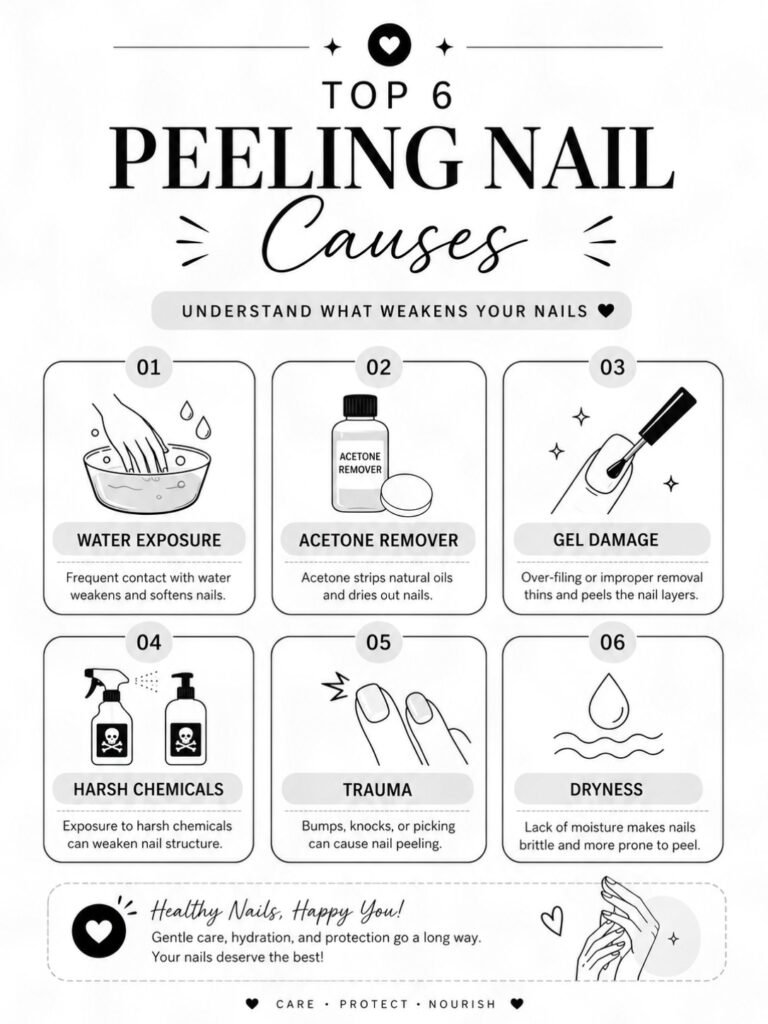
Dry nails can happen from:
- Cold weather
- Frequent handwashing
- Hand sanitizer
- Acetone nail polish remover
- Cleaning products
- Low humidity
- Not moisturizing after washing
The Cleveland Clinic brittle nails guide explains that frequent handwashing can dry out nails and contribute to brittleness.
What to try:
- Apply hand cream after washing
- Rub cuticle oil into nails and cuticles
- Use a thicker ointment at night
- Keep nails shorter while they recover
- Avoid picking at peeling layers
- Wear gloves for cleaning and dishwashing
If you are wondering why your nails keep peeling even though you do not use polish often, dryness may still be the issue.
2. Your Hands Spend Too Much Time in Water
Water sounds harmless, but repeated wetting and drying can weaken nails over time.
When nails absorb water, they swell slightly. When they dry, they contract. Doing this again and again can make the nail layers more likely to split and peel.
This is a common reason why your nails keep peeling if you wash dishes, clean, swim, bathe children, wash your hands often, or work in a wet environment.
The Mayo Clinic nail care guide recommends wearing cotton-lined rubber gloves when washing dishes, cleaning, or using harsh chemicals.
What to try:
- Wear gloves for dishes and cleaning
- Dry hands and nails well after washing
- Moisturize immediately after water exposure
- Avoid soaking nails for long periods
- Keep nails filed smooth so peeling edges do not catch
I recommend thinking of water exposure as a slow wear-and-tear issue. One sink of dishes may not matter, but daily soaking can add up.
3. Nail Polish Remover Is Drying Them Out
If your nails peel after removing polish, the remover may be part of the problem.
Acetone works quickly, but it can be very drying. Even non-acetone removers can irritate nails if used often. Repeated removal, scrubbing, and re-polishing can leave nails thin and flaky.
The Cleveland Clinic brittle nails guide lists nail polish remover as one factor that can weaken nails and suggests avoiding acetone nail polish remover if nails are brittle.
What to try:
- Use polish remover less often
- Avoid aggressively scraping polish
- Choose acetone-free remover if it works for your polish type
- Moisturize nails after polish removal
- Take short polish breaks when nails are peeling
- Avoid peeling off nail polish, gel, or dip
This is one reason why your nails keep peeling even if your nail routine looks neat on the surface.
4. Gel, Acrylic, Dip, or Press-On Nails Are Damaging the Nail Plate
Manicures can look beautiful, but removal matters. If gel, acrylic, dip powder, or press-ons are removed harshly, they can take layers of your natural nail with them.
Peeling off gel polish is especially damaging because it can pull away the upper layers of the nail plate. Filing too aggressively can also thin the nail and make peeling worse.
The American Academy of Dermatology gel manicure safety tips recommend not picking gel nail polish, because picking can remove layers of the nail. AAD also recommends letting nails grow out and repair before getting another gel manicure if they show signs of damage.
What to try:
- Do not peel off gel, dip, acrylic, or press-ons
- Have enhancements removed properly
- Avoid over-filing the nail surface
- Give nails recovery time between sets
- Keep nails short while damaged areas grow out
- Use cuticle oil consistently
If peeling started after a manicure, that may explain why your nails keep peeling.
5. You Are Filing or Buffing Too Aggressively
Filing can help prevent snags, but aggressive filing can make peeling worse.
Sawing back and forth, using a rough file, or buffing the nail plate too often can weaken the nail edge. Once the edge starts separating, peeling can travel farther down the nail.
The Mayo Clinic nail care guide recommends using sharp manicure scissors or clippers, trimming nails straight across, rounding the tips gently, and keeping nails dry and clean.
What to try:
- Use a fine-grit file
- File in one direction when possible
- Keep edges smooth
- Avoid buffing thin nails
- Do not file the top surface too often
- Trim peeling nails instead of pulling the layers
Filing should smooth the nail, not thin it out.
6. Your Nails Are Exposed to Harsh Chemicals
Cleaning products, solvents, detergents, hair color, disinfectants, and workplace chemicals can dry and irritate nails.
This is another common reason why your nails keep peeling, especially if your hands are exposed to cleaning sprays, dish soap, salon products, or chemicals without gloves.
The Mayo Clinic nail care guide recommends wearing gloves when washing dishes, cleaning, or using harsh chemicals.
What to try:
- Wear gloves during cleaning
- Avoid using nails as tools
- Moisturize after chemical exposure
- Use gentler hand soap when possible
- Keep cuticles moisturized
- Do not cut or aggressively push back cuticles
I recommend protecting your nails the same way you protect your skin. If a product dries out your hands, it can dry out your nails too.
7. Your Nails Are Recovering From Trauma
Peeling can happen after repeated small injuries.
This includes typing with long nails, using nails to open packages, picking labels, scraping stickers, biting nails, or hitting the nail edge repeatedly. Even tiny trauma can weaken the tip and cause layers to separate.
The Mayo Clinic fingernail care guide advises not using fingernails as tools to pick, poke, or pry things.
What to try:
- Keep nails shorter for a while
- Use scissors or tools instead of nails
- Stop picking at polish or cuticles
- Smooth snags quickly
- Avoid biting or tearing nails
- Wear gloves for rough tasks
If the peeling is mostly at the free edge, daily trauma may be why your nails keep peeling.
8. You May Have a Nutritional Deficiency
Sometimes peeling nails are related to what is happening inside the body.
The Cleveland Clinic brittle nails guide notes that fragile nails could be a sign that you are not getting enough protein, iron, or vitamin B. The Cleveland Clinic nail-health guide also says deficiencies in iron, zinc, or selenium can make nails brittle, soft, thin, and more likely to split.
This does not mean every peeling nail is a deficiency. In many cases, the cause is external, like water, remover, or manicure damage. But if your nails suddenly become weak, peel badly, or peel along with fatigue, hair shedding, dizziness, pale skin, or other symptoms, it is worth asking a healthcare professional about testing.
What to try:
- Eat enough protein
- Include iron-rich foods if appropriate for your diet
- Avoid starting supplements without a reason
- Ask a clinician about lab testing if symptoms suggest a deficiency
- Do not rely on nail supplements as a quick fix
I do not recommend guessing with high-dose supplements. Too much of certain nutrients can be harmful, and peeling nails can have many causes.
9. A Skin Condition or Infection May Be Affecting the Nail
If peeling comes with nail discoloration, thickening, crumbling, lifting, pain, swelling, or changes around the skin, it may be more than dryness.
The American Academy of Dermatology nail changes guide says changes in nail color, texture, or shape can be harmless, but can also be a sign of disease. AAD recommends seeing a board-certified dermatologist for certain nail changes, including a nail lifting up, a dark streak, redness and swelling around a nail, or thickened nails.
The Cleveland Clinic brittle nails guide also notes that fungal infections may cause nails to crack, thicken, or turn yellow.
What to try:
- Do not cover suspicious nail changes with polish for months
- Watch for yellowing, thickening, lifting, pain, or odor
- Avoid sharing nail tools
- Keep nails clean and dry
- See a dermatologist if one nail changes dramatically or does not improve
If only one nail keeps peeling, lifting, or changing color, I would not assume it is just dryness.
10. Aging or Hormonal Changes May Be Making Nails More Brittle
Nails can become more brittle over time. They may grow more slowly, feel thinner, or peel more easily.
The Cleveland Clinic brittle nails guide explains that nails can become more brittle and fragile as people age. This can make everyday water exposure, remover, and minor trauma more noticeable.
Aging does not mean you cannot improve nail strength. It just means your nails may need more protection and moisture than they used to.
What to try:
- Keep nails at a practical length
- Moisturize nails daily
- Use gloves for wet work
- Take polish breaks if needed
- Avoid harsh removal methods
- Ask a clinician about sudden or dramatic nail changes
If your nails used to be strong but now peel more easily, age-related brittleness may be part of why your nails keep peeling.
A Simple Nail-Care Routine for Peeling Nails
If you want to fix why your nails keep peeling, start with a simple protection routine.
- Keep nails short and smooth while they recover.
- File rough edges gently.
- Moisturize hands, nails, and cuticles after washing.
- Apply cuticle oil once or twice daily.
- Wear gloves for dishes, cleaning, and chemical exposure.
- Avoid peeling off gel, polish, acrylics, dip, or press-ons.
- Take a break from harsh manicures if nails are weak.
- Avoid using nails as tools.
- Choose acetone-free remover when possible.
- See a dermatologist if peeling comes with pain, color change, lifting, swelling, or thickening.
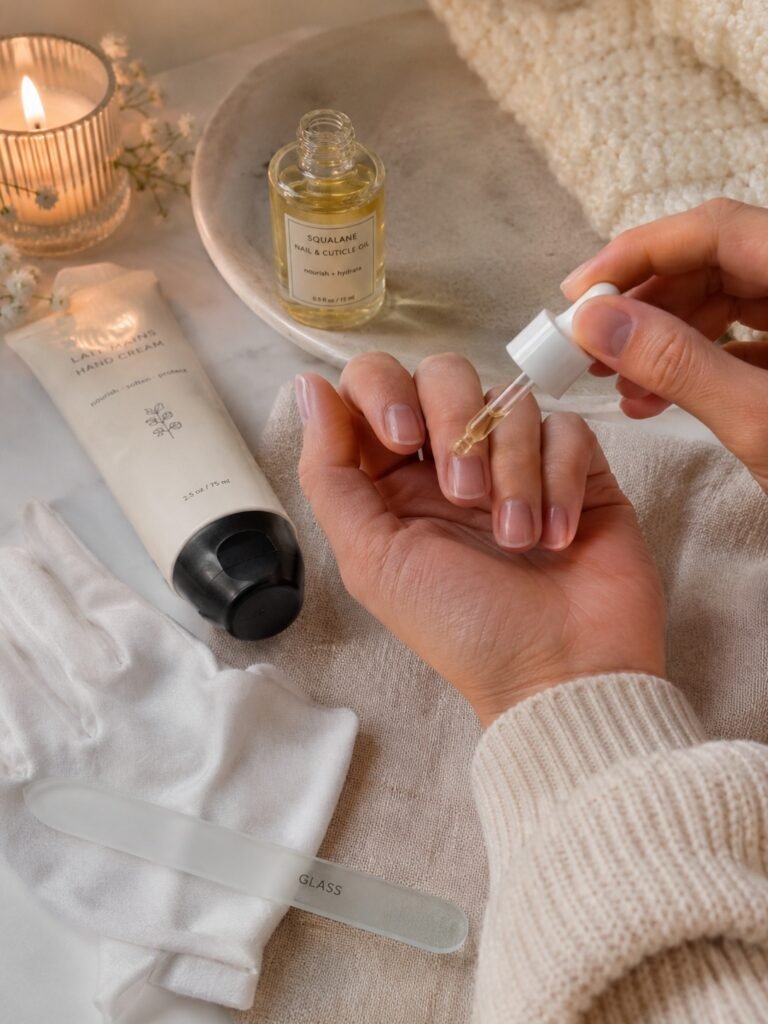
The Mayo Clinic nail care guide supports many of these basics, including keeping nails dry and clean, moisturizing, trimming nails carefully, using protective gloves, and avoiding using nails as tools.
What to Look For in Nail Products
When your nails keep peeling, I recommend choosing products that protect the nail instead of only making it look polished.
Helpful nail-care products may include:
- Fragrance-free hand cream
- Cuticle oil
- Petrolatum-based ointment
- Acetone-free polish remover
- Gentle nail file
- Cotton-lined cleaning gloves
- Nail strengthener, used carefully
- Ridge-filling base coat if nails look uneven
Be careful with nail hardeners. Some can help temporarily, but others may make nails too rigid and more likely to snap. If your nails are very thin, painful, or splitting badly, I would ask a dermatologist before relying on hardeners long term.
Common Mistakes That Make Peeling Nails Worse
Peeling Off Polish or Gel
This can remove layers of your natural nail and make peeling worse.
Soaking Nails Too Often
Long soaking can soften and weaken nails, especially before aggressive filing or removal.
Skipping Gloves During Cleaning
Water and chemicals are two major reasons why your nails keep peeling.
Cutting Cuticles
Cuticles help protect the nail area. Cutting them can lead to irritation or infection.
The Mayo Clinic nail care guide recommends not cutting cuticles because doing so can lead to infection.
Using Nails as Tools
Opening cans, scraping labels, and picking at objects can split the nail edge.
Covering Nail Changes With Polish
If a nail is lifting, thickening, turning yellow, or becoming painful, polish can hide a problem that needs care.
How Long Does It Take Peeling Nails to Improve?
Peeling nails usually do not fix overnight because the damaged part has to grow out.
Fingernails grow slowly, so it can take weeks to months to see a stronger free edge. The key is to protect the new nail as it grows.
While waiting, focus on:
- Shorter nail length
- Gentle filing
- Consistent moisture
- Less remover
- Less gel or acrylic damage
- Gloves during wet work
- Not picking at peeling layers
I recommend taking progress photos every two to four weeks. It helps you see whether the new nail growth looks healthier.
When to See a Dermatologist
Most peeling nails improve with better nail care, but some signs deserve professional attention.
I recommend seeing a dermatologist or qualified healthcare professional if:
- One nail changes suddenly
- Nails become thick, yellow, green, black, or white
- A nail lifts from the nail bed
- You have pain, swelling, redness, or pus
- Peeling comes with severe splitting or bleeding
- Nail changes happen along with fatigue or hair loss
- You suspect a fungal infection
- Peeling does not improve after several weeks of gentle care
The American Academy of Dermatology nail changes guide recommends seeing a dermatologist for several nail changes, including dark streaks, lifting nails, redness and swelling, pitting, yellow nails, and thickened or overgrown nails.
FAQ
Why do my nails keep peeling?
Your nails may keep peeling because they are dry, exposed to too much water, damaged by polish remover or manicures, weakened by filing or trauma, affected by harsh chemicals, or related to a nutritional deficiency, infection, skin condition, or aging.
Why your nails keep peeling even if you use cuticle oil?
Cuticle oil can help dryness, but it may not fix peeling caused by gel removal damage, water exposure, harsh chemicals, fungal infection, nutritional issues, or repeated trauma.
Can gel polish make nails peel?
Yes. Gel polish can contribute to peeling if it is picked off, scraped off, or removed too aggressively. AAD warns that picking gel polish can remove layers of the nail.
Should I cut peeling nails?
I recommend trimming peeling nails short and filing the edge smooth. Do not pull peeling layers because that can make the split travel farther.
What vitamin deficiency causes peeling nails?
Peeling or brittle nails may be linked to low protein, iron, vitamin B, zinc, or selenium, according to Cleveland Clinic. But nail peeling has many causes, so it is better to ask a clinician about testing instead of guessing with supplements.
Is nail peeling a fungus?
Not always. Peeling is often caused by dryness, water, chemicals, or manicure damage. But if nails are yellow, thick, crumbly, lifting, painful, or changing shape, a fungal infection is possible and should be checked.
How do I stop my nails from peeling?
Keep nails short, moisturize daily, use cuticle oil, wear gloves for wet work and cleaning, avoid peeling off polish or gel, reduce acetone exposure, file gently, and see a dermatologist if nail changes persist or look unusual.
Conclusion
Why your nails keep peeling usually comes down to dryness, repeated water exposure, polish remover, manicure damage, harsh chemicals, trauma, nutritional issues, infection, skin conditions, or age-related brittleness.
I recommend starting with simple protection: moisturize nails and cuticles, wear gloves for wet work, keep nails short, file gently, avoid peeling off polish, and give damaged nails time to grow out.
When you understand why your nails keep peeling, it becomes easier to stop treating the symptom and start protecting the nail as it grows. If your nails are painful, discolored, lifting, thickened, or suddenly changing, it is worth getting them checked instead of covering them with polish.
Sources
- Mayo Clinic fingernail care guide: https://www.mayoclinic.org/healthy-lifestyle/adult-health/in-depth/nails/art-20044954
- American Academy of Dermatology nail changes a dermatologist should examine: https://www.aad.org/public/everyday-care/nail-care-secrets/basics/nail-changes-dermatologist-should-examine
- American Academy of Dermatology gel manicure safety tips: https://www.aad.org/public/everyday-care/nail-care-secrets/basics/gel-manicures
- Cleveland Clinic brittle nails causes and treatment: https://health.clevelandclinic.org/brittle-nails-causes-treatment
- Cleveland Clinic nail health warnings: https://health.clevelandclinic.org/nails-and-your-health