
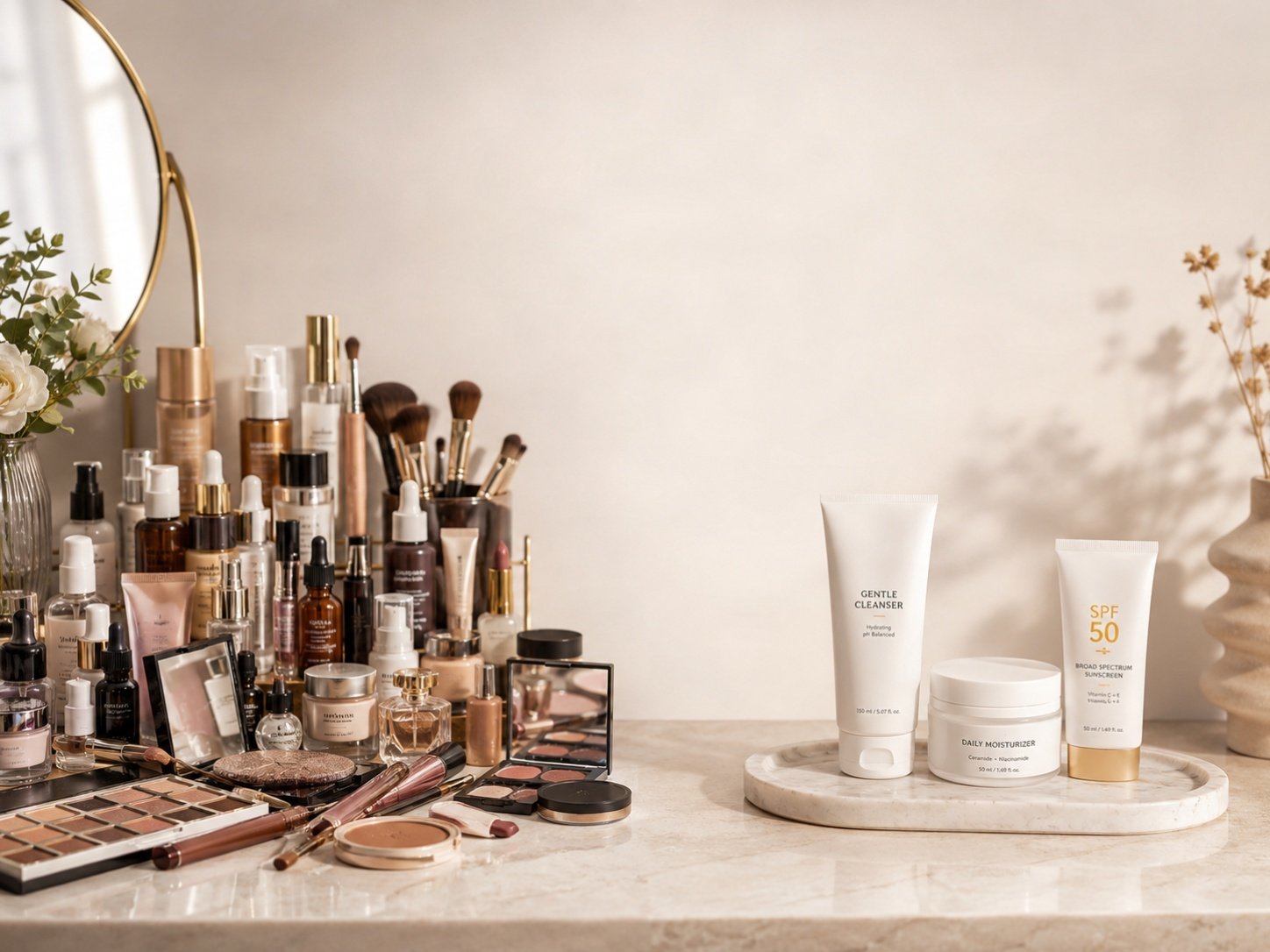
A beauty routine can slowly grow without you noticing. One serum becomes three, one primer turns into a drawer of “maybe” products, and suddenly your skin feels more confused than cared for. If you are looking for the signs you are using too many beauty products, start with how your skin behaves after your routine, not how many bottles are on your shelf.
Stinging, tightness, breakouts, pilling makeup, redness, and a routine that feels impossible to keep up with are all clues. I believe beauty should support your skin, not overwhelm it. A full shelf is not automatically a better routine. Sometimes your skin looks calmer when fewer products are doing a clearer job.
Why Product Overload Can Affect Your Skin
Beauty products are not the enemy. I love a well-chosen cleanser, moisturizer, sunscreen, treatment, and makeup product. The problem starts when products are layered without a clear purpose.
The American Academy of Dermatology skin care on a budget guide recommends a simple approach built around cleansing, moisturizing, and protecting the skin. AAD also notes that limiting the number of products you use can help reduce irritation and save money.
The Cleveland Clinic skin care order guide explains that using too many products can increase the chance of side effects, and that certain toners, serums, and other products may cause dryness.
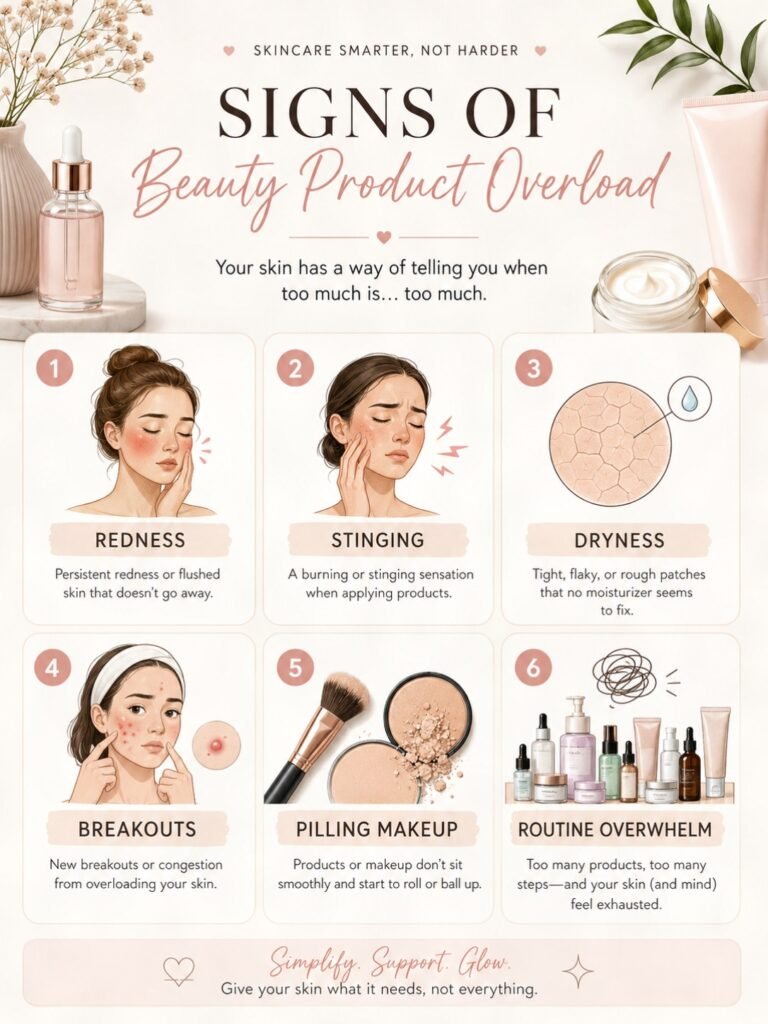
That is why the signs you are using too many beauty products often show up as irritation, dryness, breakouts, sensitivity, or makeup that refuses to sit smoothly. Your skin may not need more. It may need less, used more consistently.
This article is for general beauty and skincare education only. If your skin is painful, swollen, infected, severely peeling, burning, or suddenly reacting to products, I recommend speaking with a dermatologist or qualified healthcare professional.
Signs You Are Using Too Many Beauty Products & Resets
1. Your Skin Stings When You Apply Products
One of the clearest signs you are using too many beauty products is stinging that keeps happening during your routine.
A little tingle from certain active ingredients can happen, but frequent burning, stinging, or discomfort is not something I would ignore. It may mean your skin barrier is irritated, your products are too strong, or you are layering ingredients that do not work well together.
The Cleveland Clinic skin barrier guide lists stinging when applying skincare products as one possible sign of a damaged skin barrier. It also mentions dryness, flaking, inflammation, irritation, itchiness, rough patches, and sensitivity.
What to do:
- Pause strong actives for a few days
- Use a gentle cleanser
- Moisturize with a bland, fragrance-free product
- Avoid exfoliating until the stinging stops
- Reintroduce products one at a time
- See a dermatologist if burning or pain continues
If every product suddenly stings, I would stop experimenting and focus on calming the skin first.
2. Your Skin Feels Tight, Dry, or Flaky
Dryness can happen for many reasons, but product overload is a common one.
If you use strong cleansers, exfoliating toners, retinoids, acne treatments, clay masks, and drying spot treatments all in the same routine, your skin may start feeling tight and flaky. That does not always mean you need a richer routine. It may mean you need a gentler one.
The American Academy of Dermatology dry skin tips recommend using gentle, fragrance-free skincare products and avoiding products that contain alcohol, fragrance, retinoids, or alpha-hydroxy acid when dry skin needs relief.
What to do:
- Cut back on exfoliating products
- Avoid harsh foaming cleansers
- Use moisturizer on damp skin
- Skip drying masks while your skin is flaky
- Use one treatment at a time
- Keep sunscreen in the morning
Dry, flaky skin is one of the most common signs you are using too many beauty products, especially if the dryness started after adding new treatments.
3. You Keep Breaking Out After Adding New Products
Breakouts can come from hormones, stress, makeup, skincare, hair products, or clogged pores. But if your acne got worse after adding several new products, your routine may be too crowded.
The American Academy of Dermatology acne habits guide recommends using makeup, sunscreen, skincare, and hair-care products labeled “non-comedogenic” or “won’t clog pores.” AAD also warns that washing your face several times a day can irritate skin and lead to more breakouts.
What to do:
- Stop adding new products for a few weeks
- Check labels for “non-comedogenic” if you are acne-prone
- Remove makeup before bed
- Avoid washing your face too often
- Keep hair products away from your face
- Reintroduce one product at a time
Breakouts do not always mean a product is bad, but they are worth tracking. If your skin was calmer before the routine got complicated, that is a clue.
4. Your Face Looks Red or Irritated More Often
Redness can be one of the signs you are using too many beauty products, especially if your skin looks flushed, blotchy, or angry after your routine.
This can happen when you layer too many active ingredients, use fragrance-heavy products, exfoliate too often, or switch products before your skin has time to adjust.
The Mayo Clinic contact dermatitis guide explains that contact dermatitis is an itchy rash caused by direct contact with a substance or an allergic reaction, and that cosmetics and fragrances can be triggers.
What to do:
- Stop using products that cause visible redness
- Avoid fragrance if your skin is reactive
- Pause exfoliants and retinoids temporarily
- Use a simple cleanser, moisturizer, and sunscreen
- Keep a note of products used before a reaction
- Ask a dermatologist if redness keeps coming back
I recommend being careful with the mindset of “pushing through” irritation. Your skin does not need to suffer for a product to work.
5. Your Makeup Pills or Separates
Sometimes the first sign of product overload is not a rash. It is makeup that refuses to behave.
If your foundation rolls into little flakes, sunscreen balls up, primer slides, or concealer separates, you may be layering too much skincare before makeup. Too many serums, creams, oils, primers, and SPF layers can create a base that makeup cannot grip evenly.
This is one of the everyday signs you are using too many beauty products because it affects how your beauty routine performs, not just how your skin feels.
What to do:
- Use fewer layers before makeup
- Let moisturizer and sunscreen settle
- Skip face oil under foundation
- Use primer only where needed
- Choose one moisturizer that works under makeup
- Apply foundation in thin layers
A smooth base often comes from fewer, better layers.
6. You Do Not Know What Each Product Is Doing
If you cannot explain why a product is in your routine, it may not need to be there.
A routine can easily become a collection of trends: one serum for glow, one for pores, one for texture, one for dark spots, one because someone online loved it. The problem is that overlapping products can make irritation more likely and results harder to track.
The Cleveland Clinic simple skin care routine guide says skincare does not need to be overly involved or expensive and recommends introducing new products one at a time.
What to do:
- Write down every product you use
- Label each one by purpose
- Keep the products with clear jobs
- Pause products you do not understand
- Avoid buying duplicates of the same step
- Reintroduce only what your skin actually misses
This is one of my favorite ways to simplify because it removes guilt. You are not “wasting” products. You are learning what your skin needs.
7. You Are Using Several Active Ingredients at Once
Active ingredients can be helpful, but too many at once can be overwhelming.
Retinol, vitamin C, benzoyl peroxide, salicylic acid, glycolic acid, lactic acid, azelaic acid, and exfoliating masks can all have a place. But layering several actives in one routine can leave the skin dry, irritated, or more sensitive.
The Cleveland Clinic skin care order guide notes that retinol can dry out the skin, which makes moisturizer important. It also explains that the order and number of products matter because layering affects how products interact with the skin.
What to do:
- Use one active treatment at a time
- Avoid exfoliating on the same night as retinoid use if your skin is sensitive
- Add recovery nights with only cleanser and moisturizer
- Do not use multiple acne treatments randomly
- Start strong products slowly
- Wear sunscreen daily when using photosensitizing products
Too many actives are one of the most important signs you are using too many beauty products, especially if your skin used to tolerate products better.
8. Your Skin Feels Oily and Dry at the Same Time
Skin that feels oily on top but tight underneath can be confusing.
Sometimes this happens when the skin is dehydrated or irritated from too many stripping products. Your face may produce oil, but the skin still feels uncomfortable, tight, flaky, or sensitive.
Over-cleansing, harsh toners, frequent exfoliation, and skipping moisturizer can all contribute to this cycle. The AAD skin care on a budget guide recommends moisturizing your face, body, and lips even if you have oily skin.
What to do:
- Stop washing your face more than needed
- Use a lightweight moisturizer
- Avoid alcohol-heavy products if they dry you out
- Reduce exfoliation
- Keep your routine simple for a few weeks
- Blot oil instead of adding more drying products
When skin feels oily and dry at once, I usually look for over-cleansing or too many actives.
9. Your Routine Takes So Long That You Skip the Basics
A routine can become too much even if the products are not irritating your skin.
If your beauty routine is so long that you skip sunscreen, sleep in makeup, forget moisturizer, or avoid washing your face at night, the routine is not serving you anymore. A shorter routine you can repeat is better than a complicated one you abandon.
The Cleveland Clinic simple skin care routine guide describes a simple routine as one that keeps skin clean, moisturized, and protected from the sun. That is the standard I would come back to.
What to do:
- Keep cleanser, moisturizer, and sunscreen visible
- Move occasional treatments out of the daily area
- Create a simple night routine
- Remove makeup before bed
- Keep your morning routine realistic
- Stop saving basic skincare for “perfect routine” days
The basics should not be the first things that disappear.
10. Your Skin Looks Better When You Skip Products
This may be the most honest sign.
If your skin looks calmer on days when you forget half your routine, you may be using too many products. Sometimes a “lazy” day reveals that your skin does better with fewer layers.
This does not mean every treatment is bad. It means your current combination may not be working.
What to do:
- Try a two-week routine reset
- Use only cleanser, moisturizer, and sunscreen
- Add one treatment back at a time
- Track changes in redness, breakouts, dryness, and texture
- Keep what clearly helps
- Let go of what only adds steps
One of the clearest signs you are using too many beauty products is that your skin improves when you stop trying so hard.
How to Reset Your Beauty Routine
If several of these signs sound familiar, I would not throw your whole routine away. I would reset it.
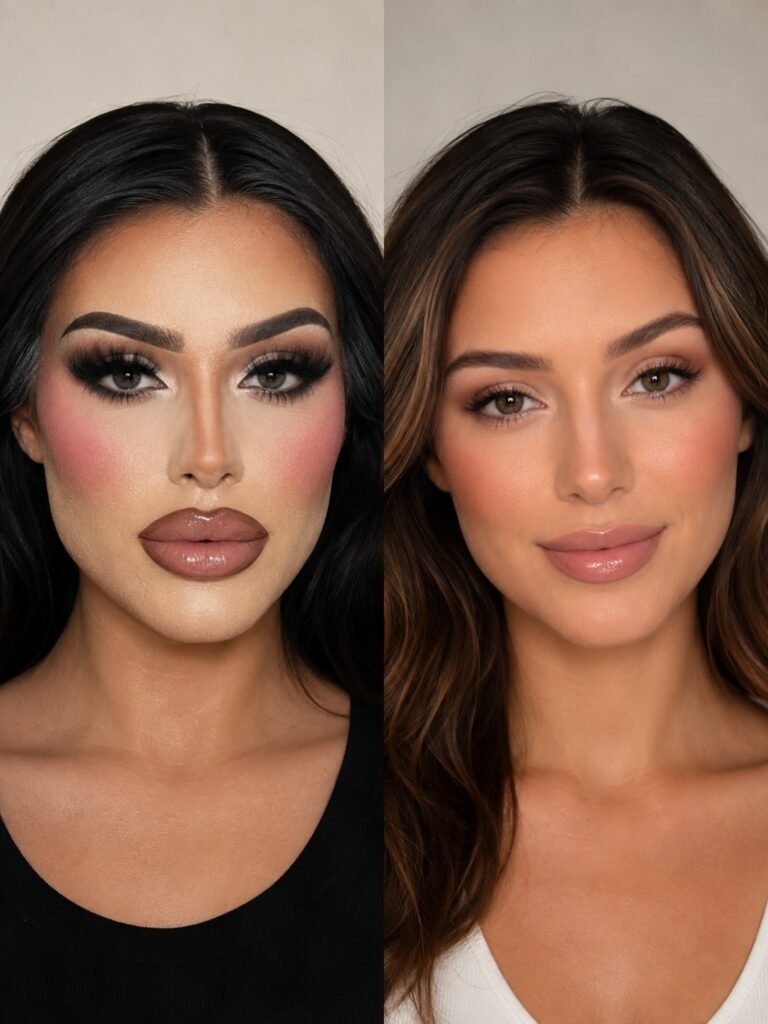
A simple reset can look like this:
Morning
- Gentle cleanser or rinse
- Moisturizer
- Broad-spectrum sunscreen
Night
- Makeup remover if needed
- Gentle cleanser
- Moisturizer
The FDA sunscreen guide explains that broad-spectrum sunscreen helps protect against both UVA and UVB rays and recommends reapplying at least every two hours, and more often if swimming or sweating.
Stay with the simple routine for a short period, then reintroduce products slowly.
How to Add Products Back Without Overwhelming Your Skin
Once your skin feels calmer, add products back carefully.
Try this method:
- Add one product at a time.
- Use it for at least one to two weeks before adding another.
- Watch for stinging, dryness, redness, breakouts, or itching.
- Keep the product if it clearly helps.
- Stop the product if it repeatedly irritates your skin.
- Avoid adding several actives at once.
The Cleveland Clinic simple skin care routine guide recommends introducing new skincare products one at a time, which makes it easier to notice what works and what causes problems.
This step is especially important if you have sensitive, acne-prone, dry, or eczema-prone skin.
What Products Are Worth Keeping?
When you are looking for the signs you are using too many beauty products, it helps to know what usually deserves a place in a basic routine.
Keep the Essentials
- Gentle cleanser
- Moisturizer
- Sunscreen
- Makeup remover if you wear makeup
- One treatment product if your skin needs it
Keep Makeup You Actually Use
- Everyday base product
- Concealer
- Brow product
- Mascara
- Blush
- Lip product
- Powder or blotting paper if needed
Keep Occasional Products Separately
- Face masks
- Exfoliants
- Hair masks
- Special-event makeup
- Backup products
- Self-tanner
- Nail products
A daily routine should not feel like a storage shelf. It should feel like a clear set of tools.
What to Remove First
If your bathroom shelf is full, start with products that are easiest to pause.
Consider removing or pausing:
- Duplicate serums
- Products that sting every time
- Harsh scrubs
- Strong fragrance products
- Masks you never use
- Toners that make your skin tight
- Extra primers that do not improve makeup
- Old products that changed smell, color, or texture
- Products you bought only because they were trending
You do not have to throw everything away immediately. Move questionable products out of your daily routine first. If your skin improves, that tells you something.
Common Mistakes When Cutting Back
Removing Sunscreen First
Sunscreen should stay. If your sunscreen feels greasy or pills, find a better texture instead of skipping it.
Stopping Prescription Products Without Asking
If a dermatologist prescribed something, ask before stopping it.
Replacing Ten Products With Ten New Ones
That is not simplifying. That is starting a new cycle of overload.
Quitting Moisturizer Because Your Skin Is Oily
Oily skin can still need moisture. Use a lighter texture instead.
Using All Your Actives on One Night
Do not compress a crowded routine into one “treatment night.” That can still irritate your skin.
Ignoring Irritation Because a Product Was Expensive
A costly product is not worth keeping if your skin hates it.
When to See a Dermatologist
Product overload can often improve with a simpler routine, but some symptoms deserve professional care.
I recommend seeing a dermatologist or qualified healthcare professional if:
- Burning or stinging continues after simplifying
- You have a rash that spreads
- Your skin becomes swollen, painful, or hot
- You develop hives
- Acne suddenly becomes severe
- Your skin cracks, bleeds, or oozes
- You suspect an allergic reaction
- Your skin does not improve after a gentle routine reset
The Mayo Clinic contact dermatitis guide explains that contact dermatitis can be very uncomfortable and may happen from cosmetics, fragrances, and other substances. If you cannot identify the trigger, professional help can make the process safer and faster.
FAQ
What are the signs you are using too many beauty products?
The most common signs you are using too many beauty products include stinging, redness, dryness, flaking, breakouts, pilling makeup, oily-but-tight skin, irritation, a routine that feels hard to maintain, and skin that looks better when you skip products.
Can using too many skincare products cause breakouts?
Yes, using too many skincare, makeup, sunscreen, or hair products can contribute to clogged pores or irritation, especially if the products are not non-comedogenic or if you are washing too often.
How many beauty products should I use daily?
There is no perfect number, but a simple daily routine usually includes cleanser, moisturizer, sunscreen in the morning, and makeup remover at night if you wear makeup. Treatments and makeup can be added only if they serve a clear purpose.
How do I know which beauty product is irritating my skin?
Pause non-essential products, return to a simple routine, then reintroduce one product at a time. Watch for redness, burning, itching, bumps, breakouts, or dryness after each product.
Should I stop all skincare if my skin is irritated?
I would not stop everything unless a healthcare professional tells you to. Usually, it is better to pause strong or extra products and keep a gentle cleanser, bland moisturizer, and sunscreen during the day.
Can too many products damage the skin barrier?
Too many products, especially strong actives, harsh cleansers, exfoliants, and fragranced products, can irritate the skin and may contribute to a weakened skin barrier.
How long does it take skin to calm down after using too many products?
Mild irritation may improve within a few days of simplifying, but more stubborn dryness, breakouts, or reactions can take longer. If your skin is painful, swollen, rashy, or not improving, I recommend seeing a dermatologist.
Conclusion
The signs you are using too many beauty products are usually easy to feel before they are easy to admit. Your skin may sting, break out, flake, turn red, feel tight, or look better on the days you do less.
I recommend bringing your routine back to the basics: gentle cleanser, moisturizer, sunscreen, and makeup removal at night if needed. Then add products back slowly and only keep what has a clear purpose.
Beauty should make your routine feel easier, not more stressful. When your products are chosen carefully and used with intention, your skin has more room to look calm, balanced, and cared for.
Sources
- American Academy of Dermatology skin care on a budget: https://www.aad.org/public/everyday-care/skin-care-basics/care/skin-care-budget
- American Academy of Dermatology dry skin tips: https://www.aad.org/public/everyday-care/skin-care-basics/dry/dermatologists-tips-relieve-dry-skin
- American Academy of Dermatology acne habits guide: https://www.aad.org/public/diseases/acne/skin-care/habits-stop
- Cleveland Clinic skin care product order: https://health.clevelandclinic.org/proper-skin-care-product-order
- Cleveland Clinic simple skin care routine: https://health.clevelandclinic.org/what-products-do-i-actually-need-for-a-simple-everyday-skin-care-routine
- Cleveland Clinic skin barrier guide: https://health.clevelandclinic.org/skin-barrier
- Mayo Clinic contact dermatitis symptoms and causes: https://www.mayoclinic.org/diseases-conditions/contact-dermatitis/symptoms-causes/syc-20352742
- FDA sunscreen guide: https://www.fda.gov/drugs/understanding-over-counter-medicines/sunscreen-how-help-protect-your-skin-sun