
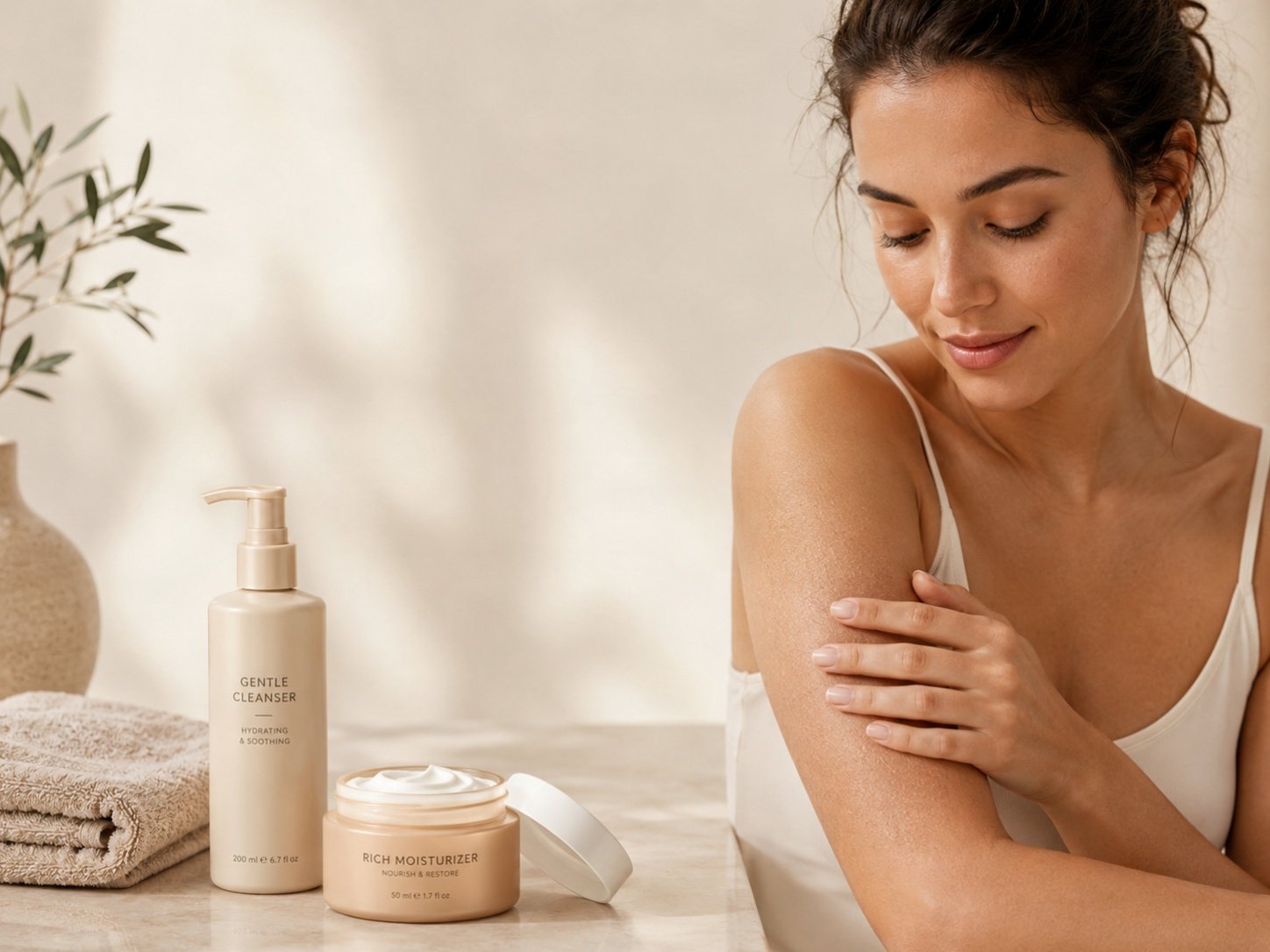
There is a special kind of frustration that comes from moisturizing your skin and still feeling rough patches afterward. You apply the cream, give it time, and somehow your skin still feels bumpy, flaky, tight, or uneven. If you are looking for how to fix dry skin that feels rough after moisturizer, the answer usually starts with the skin barrier, not just the product on your shelf. A thin lotion may not be enough.
Your cleanser may be too harsh. You may be applying moisturizer too late, skipping the right ingredients, over-exfoliating, or dealing with something like eczema or keratosis pilaris. I like to think of rough dry skin as a message. Your skin is not being difficult. It is asking for a better routine.
Why Skin Can Stay Rough Even After Moisturizing
Moisturizer can help dry skin, but it cannot solve every cause of rough texture by itself.
When you are trying to understand how to fix dry skin that feels rough after moisturizer, look at everything around the moisturizer: your cleanser, shower temperature, timing, exfoliation habits, weather, skin barrier, and any skin conditions that may be involved.
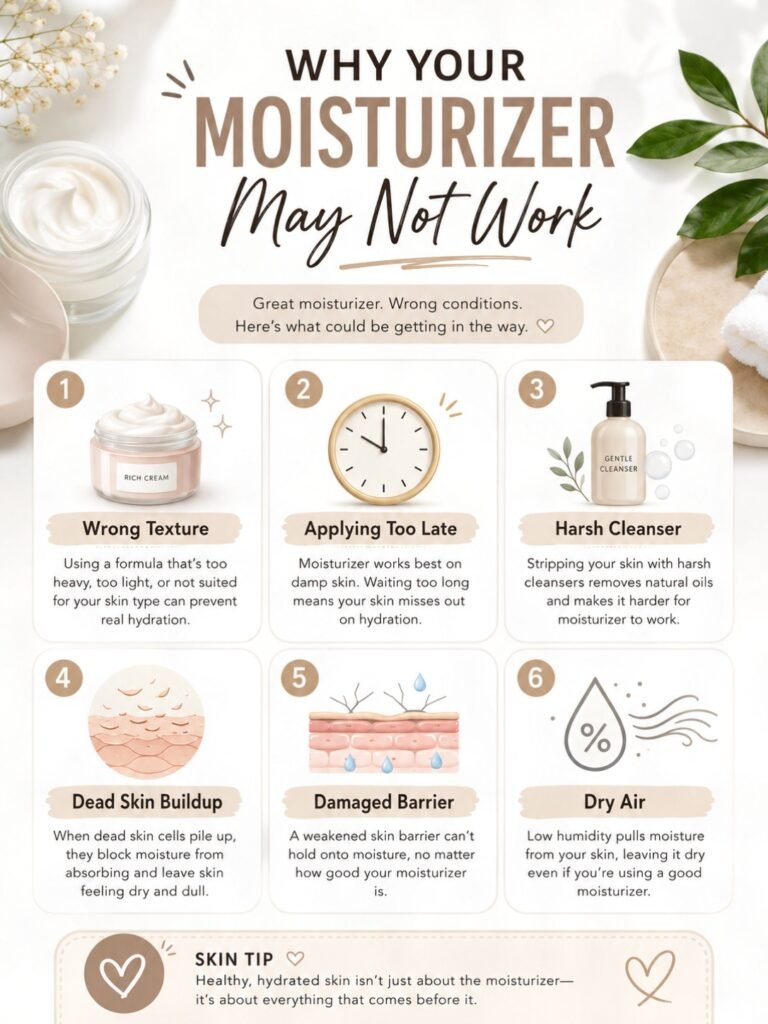
The Mayo Clinic dry skin guide explains that dry skin can feel rough, itchy, flaky, or scaly, and that long hot showers, harsh soaps, low humidity, aging, and some medical treatments can contribute to dryness.
The American Academy of Dermatology dry skin tips recommend using warm water, limiting showers and baths to 5 to 10 minutes, using a gentle fragrance-free cleanser, patting the skin dry, and applying moisturizer immediately after drying.
This article is for general skincare education only. If your rough dry skin is painful, bleeding, cracked, infected, spreading, intensely itchy, or not improving with gentle care, I recommend speaking with a dermatologist or qualified healthcare professional.
8 Reasons Your Skin Still Feels Rough After Moisturizer & Fixes
1. Your Moisturizer Is Too Light for Your Skin
One of the most common reasons you may need how to fix dry skin that feels rough after moisturizer is that your moisturizer is not rich enough.
Light lotions absorb quickly and feel comfortable, but very dry or rough skin often needs more support. If your skin feels soft for only a few minutes, then goes right back to feeling rough, your moisturizer may not be sealing in enough hydration.
The American Academy of Dermatology guide to picking moisturizer explains that lotions, creams, and ointments have different textures, and that thicker products are often helpful for very dry skin.
What to try:
- Switch from a lotion to a cream if your skin still feels rough
- Use an ointment on very dry areas like hands, feet, elbows, or knees
- Choose fragrance-free formulas if your skin is sensitive
- Apply moisturizer more than once daily if needed
- Use a richer product at night
If your skin still feels dry after a lightweight lotion, the problem may not be moisturizing itself. The product may simply be too thin for your skin’s needs.
2. You Are Applying Moisturizer Too Late
Timing can change how well your moisturizer works.
If you wait until your skin is completely dry and tight, your moisturizer has less water to trap. This is why skin can still feel rough even when you technically applied product.
The American Academy of Dermatology dry skin tips recommend applying moisturizer immediately after washing, bathing, or showering. The Mayo Clinic dry skin guide also explains that moisturizers seal in water to help keep the skin’s protective barrier healthy.
What to try:
- Apply moisturizer within a few minutes of showering
- Pat skin dry instead of rubbing it completely dry
- Moisturize while skin is still slightly damp
- Keep body cream in the bathroom
- Reapply after handwashing
This step matters when learning how to fix dry skin that feels rough after moisturizer because the same cream may work better when applied at the right moment.
3. Your Cleanser Is Stripping Your Skin
Sometimes the moisturizer is trying to fix damage your cleanser keeps causing.
If your skin feels tight, squeaky, itchy, or rough right after washing, your cleanser may be too harsh. Strong soaps, deodorant bars, heavily fragranced washes, and over-cleansing can strip the skin and make roughness worse.
The AAD dry skin guidance recommends using a gentle, fragrance-free cleanser and applying only enough cleanser to remove dirt and oil. AAD also recommends avoiding products with alcohol, fragrance, retinoids, or alpha-hydroxy acid when dry skin needs relief.
What to try:
- Use a gentle fragrance-free cleanser
- Avoid deodorant soap on dry areas
- Use cleanser only where needed on the body
- Stop scrubbing your skin with rough tools
- Avoid very hot water
- Moisturize immediately after cleansing
If your skin feels rough before moisturizer touches it, start by making your cleansing step gentler.
4. You May Have Dead Skin Buildup
Rough skin is not always only dry skin. Sometimes dead skin buildup is part of the texture.
This can happen on the arms, legs, elbows, knees, feet, and sometimes the face. Moisturizer may soften the surface, but if the outer layer is thick, flaky, or uneven, your skin may still feel rough underneath your hand.
This is where gentle exfoliation may help, but I recommend being careful. Harsh scrubs can make dry skin worse.
The American Academy of Dermatology keratosis pilaris self-care guide says keratosis pilaris often flares when skin becomes dry and that moisturizing can help prevent dry skin. AAD also warns that harsh scrubbing can irritate the skin.
What to try:
- Use gentle exfoliating moisturizers only if your skin tolerates them
- Avoid rough physical scrubs on cracked or irritated skin
- Stop exfoliating if your skin stings, burns, or turns red
- Follow any exfoliation with moisturizer
- Use sunscreen on exposed skin if you use exfoliating acids
If you are learning how to fix dry skin that feels rough after moisturizer, remember that smoother skin does not come from scrubbing harder. It comes from removing buildup gently while protecting the barrier.
5. Your Skin Barrier Is Irritated
A damaged or irritated skin barrier can make skin feel rough, tight, sensitive, itchy, or flaky. It can also make moisturizer sting or seem like it is not working.
Barrier irritation can happen from:
- Over-exfoliating
- Strong retinoids
- Harsh cleansers
- Hot showers
- Fragrance
- Too many active ingredients
- Cold weather
- Frequent handwashing
- Skipping moisturizer
The Cleveland Clinic skin barrier guide lists dryness, flaking, rough patches, sensitivity, irritation, itchiness, inflammation, and stinging when applying skincare as possible signs of a damaged skin barrier.
What to try:
- Pause strong actives for a short period
- Use a bland fragrance-free moisturizer
- Avoid scrubs and exfoliating acids until skin calms
- Keep showers warm, not hot
- Use sunscreen during the day
- Reintroduce treatments slowly
If moisturizer burns and your skin still feels rough, I would focus on calming the skin first, not adding more active ingredients.
6. Your Moisturizer Does Not Have the Right Ingredients
A moisturizer can feel nice and still not give your skin what it needs.
When thinking about how to fix dry skin that feels rough after moisturizer, I look for three kinds of support:
- Humectants to attract water
- Emollients to soften rough skin
- Occlusives to help seal moisture in
The Cleveland Clinic emollients guide explains that emollients are ingredients in creams, lotions, moisturizers, or ointments that form a film on the skin and can help relieve dryness, itching, and scaling.
The AAD dry skin tips recommend moisturizer ingredients such as petrolatum, mineral oil, shea butter, glycerin, dimethicone, hyaluronic acid, jojoba oil, and lactic acid for dry skin relief.
What to try:
- Look for glycerin or hyaluronic acid for hydration
- Look for shea butter, ceramides, oils, or emollients for softness
- Look for petrolatum or dimethicone to help seal rough areas
- Use an ointment over moisturizer on stubborn patches
- Avoid fragrance if your skin is reactive
You may not need a complicated routine. You may need a moisturizer with better barrier-supporting ingredients.
7. Your Environment Is Drying Out Your Skin
Your skin may still feel rough because your environment keeps pulling moisture away.
Low humidity, cold weather, indoor heating, air conditioning, wind, and frequent handwashing can make dry skin harder to manage. In these conditions, a light moisturizer once a day may not be enough.
The Mayo Clinic dry skin guide lists heat, low-humidity environments, long hot showers, harsh soaps, and aging as factors that can contribute to dry skin.
What to try:
- Use a humidifier when indoor air is dry
- Apply moisturizer more often
- Wear gloves in cold weather
- Use gloves for cleaning and dishwashing
- Avoid long hot showers
- Switch to a richer body cream in winter
If your rough dry skin gets worse in colder months, your environment may be a major part of the problem.
8. You May Have Eczema, Keratosis Pilaris, or Another Skin Condition
If your skin feels rough no matter what moisturizer you use, the texture may not be simple dryness.
Eczema, keratosis pilaris, psoriasis, contact dermatitis, or another skin condition can make skin feel rough, bumpy, scaly, itchy, or inflamed. Moisturizer can help support the skin, but some conditions need a more specific plan.
The Cleveland Clinic eczema guide says eczema symptoms can include dry skin, itchy skin, rash, bumps, thick leathery patches, flaky or scaly skin, and swelling. The AAD keratosis pilaris overview explains that keratosis pilaris can cause rough-feeling bumps, often on the upper arms, thighs, cheeks, or buttocks.
What to try:
- Notice whether roughness appears as bumps, scales, patches, or cracks
- Track whether the same areas keep returning
- Use fragrance-free moisturizer
- Avoid scratching or harsh scrubbing
- See a dermatologist if symptoms persist or worsen
This is why how to fix dry skin that feels rough after moisturizer may involve more than switching lotions. The real issue may need medical guidance.
A Better Routine for Rough Dry Skin
If your moisturizer is not enough, I would simplify the routine and make each step more intentional.
Morning Routine
- Rinse or cleanse gently if needed
- Apply moisturizer to slightly damp skin
- Use sunscreen on exposed skin
- Reapply moisturizer to rough areas if needed
Shower Routine
- Keep showers short
- Use warm water instead of hot
- Cleanse only where needed
- Avoid rough scrubs
- Pat skin dry
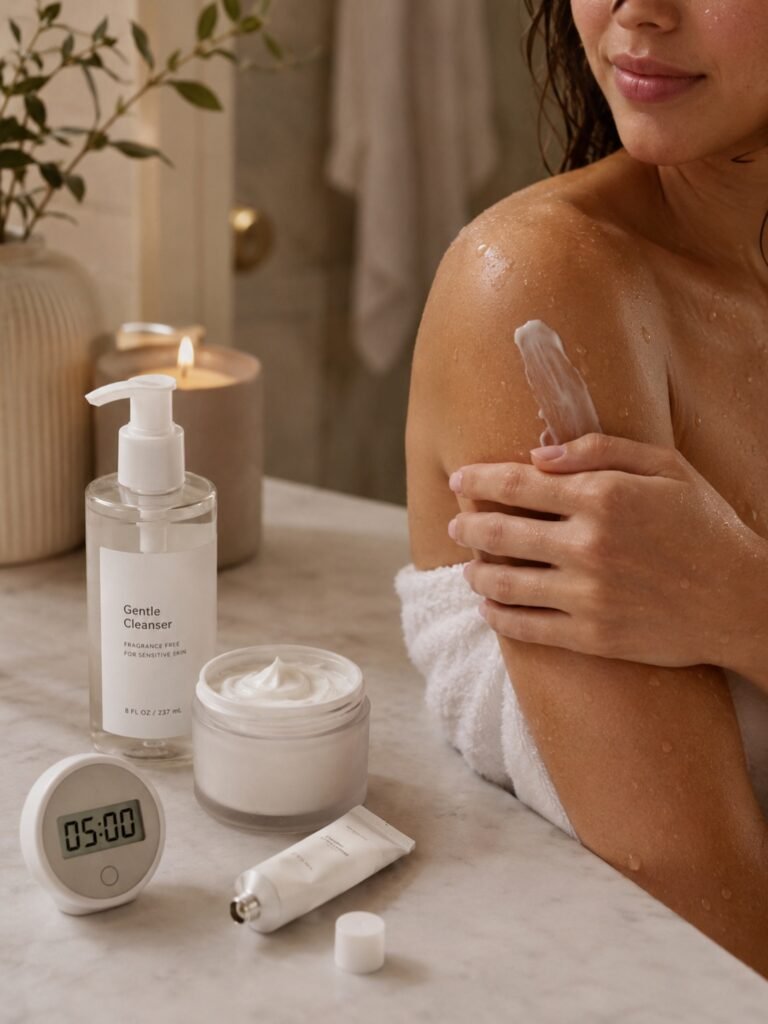
- Apply moisturizer immediately
Night Routine
- Cleanse gently
- Apply a richer cream to rough areas
- Seal stubborn patches with ointment
- Avoid strong actives on irritated skin
- Wear soft clothing that does not rub
The AAD dry skin tips support this kind of routine by recommending short warm bathing, gentle cleanser, immediate moisturizer, and fragrance-free products.
Best Ingredients for Rough Dry Skin
When choosing products for how to fix dry skin that feels rough after moisturizer, I would look beyond pretty packaging and focus on ingredients that support dry skin.
Helpful ingredients may include:
- Glycerin
- Hyaluronic acid
- Petrolatum
- Dimethicone
- Mineral oil
- Shea butter
- Jojoba oil
- Ceramides
- Colloidal oatmeal
- Lactic acid, if tolerated
- Urea, if tolerated
For very rough body skin, ingredients like lactic acid or urea can help smooth texture, but they may sting if your skin is cracked, freshly shaved, or irritated. Start slowly and avoid applying exfoliating moisturizers to broken skin.
Common Mistakes That Keep Skin Rough
Using a Thin Lotion on Very Dry Skin
A light lotion may not be enough if your skin is rough, flaky, tight, or scaly.
Applying Moisturizer on Fully Dry Skin
Moisturizer works best when it can help seal in water. Apply it soon after bathing or washing.
Taking Long Hot Showers
Hot water can strip the skin and make roughness worse.
Scrubbing Rough Patches Too Hard
Rough skin is not always dirt or dead skin that needs force. Scrubbing can create more irritation.
Using Too Many Active Ingredients
Retinoids, acids, acne treatments, and exfoliants can dry or irritate the skin when overused.
Ignoring Fragrance Irritation
Fragrance can irritate sensitive or dry skin. Fragrance-free is often a safer choice when skin is rough.
Skipping Sunscreen
Some exfoliating ingredients can make skin more sun-sensitive, and sun exposure can worsen uneven texture over time.
How Long Does Rough Dry Skin Take to Improve?
Mild roughness may feel better within a few days of better moisturizing and gentler cleansing. More stubborn rough patches can take several weeks, especially if your skin barrier is irritated or the roughness is related to keratosis pilaris, eczema, or repeated friction.
Track progress by how your skin feels, not only how it looks.
Look for signs like:
- Less tightness
- Less flaking
- Less itching
- Less stinging
- Smoother texture
- Fewer rough patches
- Moisturizer lasting longer
If nothing improves after a few weeks of consistent gentle care, it may be time to ask a dermatologist what is really causing the roughness.
When to See a Dermatologist
Most rough dry skin can improve with better moisturizer habits, but some symptoms need professional attention.
I recommend seeing a dermatologist or qualified healthcare professional if:
- Rough skin does not improve after several weeks
- Skin is painful, cracked, bleeding, or oozing
- You have severe itching
- Rough patches are spreading
- You have thick scales or inflamed plaques
- Moisturizer burns every time
- You suspect eczema, psoriasis, or infection
- The roughness appeared suddenly without an obvious cause
The Mayo Clinic dry skin treatment guide notes that if dry skin becomes itchy or cracks open, a doctor may recommend specific treatments.
FAQ
Why does my skin still feel rough after moisturizer?
Your skin may still feel rough after moisturizer because the product is too lightweight, it is applied too late, your cleanser is stripping your skin, dead skin buildup is making the surface uneven, your skin barrier is irritated, or a skin condition such as eczema or keratosis pilaris may be involved.
How do I fix dry skin that feels rough after moisturizer?
To fix dry skin that feels rough after moisturizer, use a gentle cleanser, apply moisturizer while skin is slightly damp, switch to a richer cream or ointment, avoid hot water and harsh scrubs, pause irritating actives, and consider barrier-supporting ingredients like glycerin, petrolatum, dimethicone, ceramides, or shea butter.
Should I exfoliate rough dry skin?
Gentle exfoliation may help if dead skin buildup is part of the roughness, but harsh scrubs can make dry skin worse. If your skin is cracked, burning, or irritated, focus on barrier repair first.
Is lotion enough for rough dry skin?
Sometimes lotion is not enough. Rough dry skin may need a thicker cream or ointment, especially on the body, hands, elbows, knees, or feet.
Why does moisturizer make my skin soft at first, then rough again?
This can happen when the moisturizer is too light, your skin is losing water quickly, the air is dry, your skin barrier is damaged, or the product is not sealing moisture well enough.
Can eczema make skin feel rough after moisturizer?
Yes. Eczema-prone skin can feel rough, dry, itchy, scaly, or inflamed. Moisturizer can help, but eczema may need a specific treatment plan from a healthcare professional.
What is the best moisturizer for rough dry skin?
The best moisturizer for rough dry skin is usually fragrance-free and rich enough for your skin. Look for ingredients like glycerin, petrolatum, dimethicone, shea butter, mineral oil, ceramides, or hyaluronic acid. For rough body texture, lactic acid or urea may help if your skin tolerates them.
Conclusion
Learning how to fix dry skin that feels rough after moisturizer starts with understanding why your moisturizer is not enough. The issue may be product texture, timing, cleanser, dead skin buildup, barrier irritation, dry air, or an underlying skin condition.
I recommend starting with gentle changes: switch to a richer fragrance-free moisturizer, apply it while skin is slightly damp, avoid hot water, stop harsh scrubbing, and protect stubborn rough patches with ointment when needed.
When you understand how to fix dry skin that feels rough after moisturizer, you can stop layering random lotions and start giving your skin the moisture, protection, and patience it actually needs.
Sources
- American Academy of Dermatology dry skin tips: https://www.aad.org/public/everyday-care/skin-care-basics/dry/dermatologists-tips-relieve-dry-skin
- American Academy of Dermatology how to pick the right moisturizer: https://www.aad.org/public/everyday-care/skin-care-basics/dry/pick-moisturizer
- American Academy of Dermatology keratosis pilaris self-care: https://www.aad.org/public/diseases/a-z/keratosis-pilaris-self-care
- American Academy of Dermatology keratosis pilaris overview: https://www.aad.org/public/diseases/a-z/keratosis-pilaris-overview
- Mayo Clinic dry skin symptoms and causes: https://www.mayoclinic.org/diseases-conditions/dry-skin/symptoms-causes/syc-20353885
- Mayo Clinic dry skin diagnosis and treatment: https://www.mayoclinic.org/diseases-conditions/dry-skin/diagnosis-treatment/drc-20353891
- Cleveland Clinic skin barrier guide: https://health.clevelandclinic.org/skin-barrier
- Cleveland Clinic emollients guide: https://my.clevelandclinic.org/health/treatments/23305-emollients
- Cleveland Clinic eczema guide: https://my.clevelandclinic.org/health/diseases/9998-eczema