

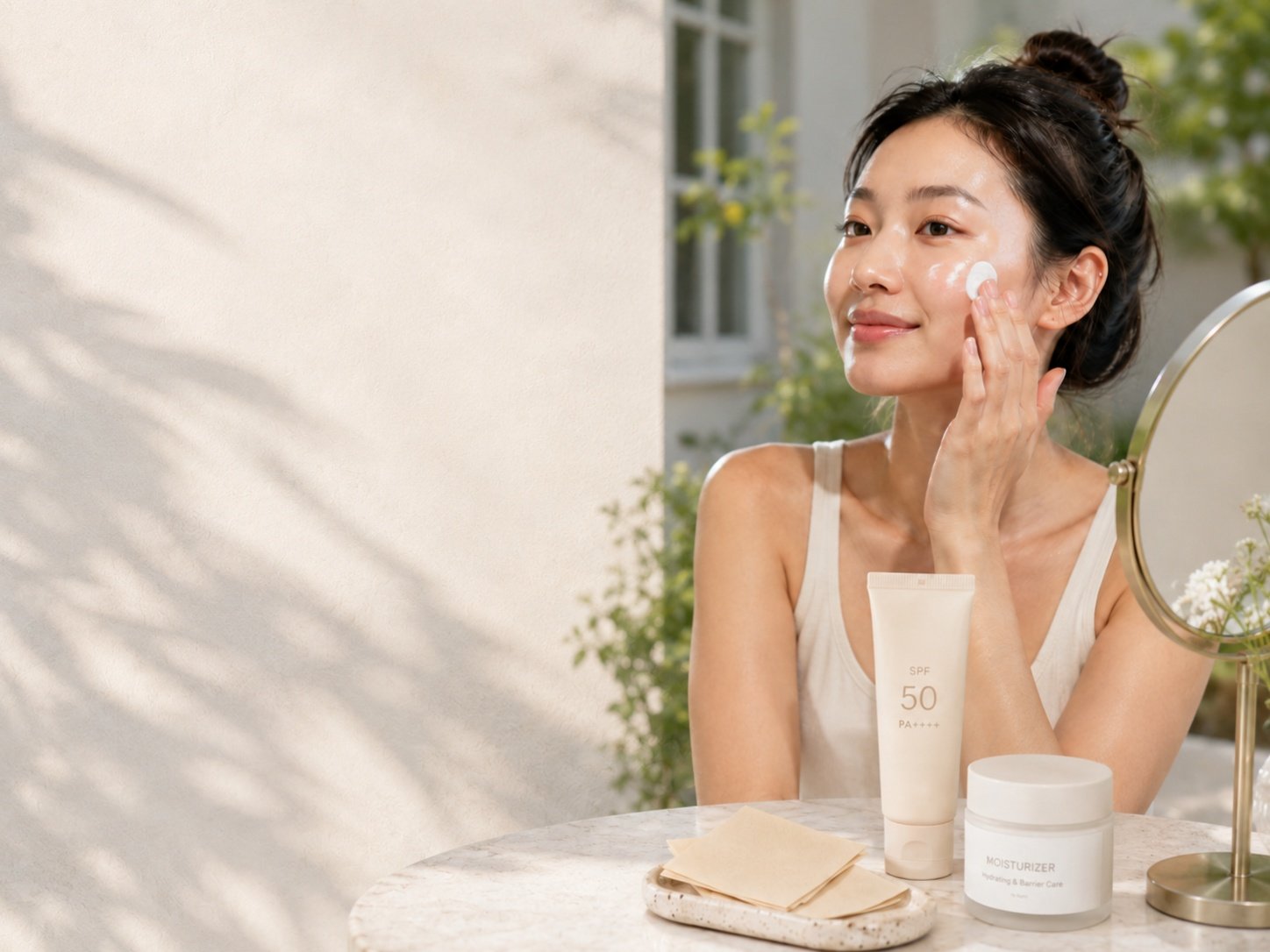
If your face looks shiny, oily, or heavy after applying SPF, you may be wondering why sunscreen makes your face look greasy.
I know that feeling. You do the right thing by applying sunscreen, then your skin looks slick before you even leave the house. For some people, sunscreen also makes makeup slide, emphasizes pores, or feels like a thick layer sitting on top of the skin.
The good news is that sunscreen itself is not the problem. The issue is usually the formula, how much product is layered underneath, your skin type, the finish of the sunscreen, or how you apply it.
In this guide, I will explain why sunscreen makes your face look greasy, how to choose a better formula, and what small routine changes can help your SPF look more natural on the skin.
Why Greasy Sunscreen Usually Comes Down to Formula and Routine
When you are trying to understand why sunscreen makes your face look greasy, I recommend looking at two things first: the sunscreen texture and what you apply before it.
Some sunscreens are rich, moisturizing, or water-resistant, which can be helpful for dry skin or outdoor activities. But on oily or combination skin, those same formulas can look shiny or feel heavy.
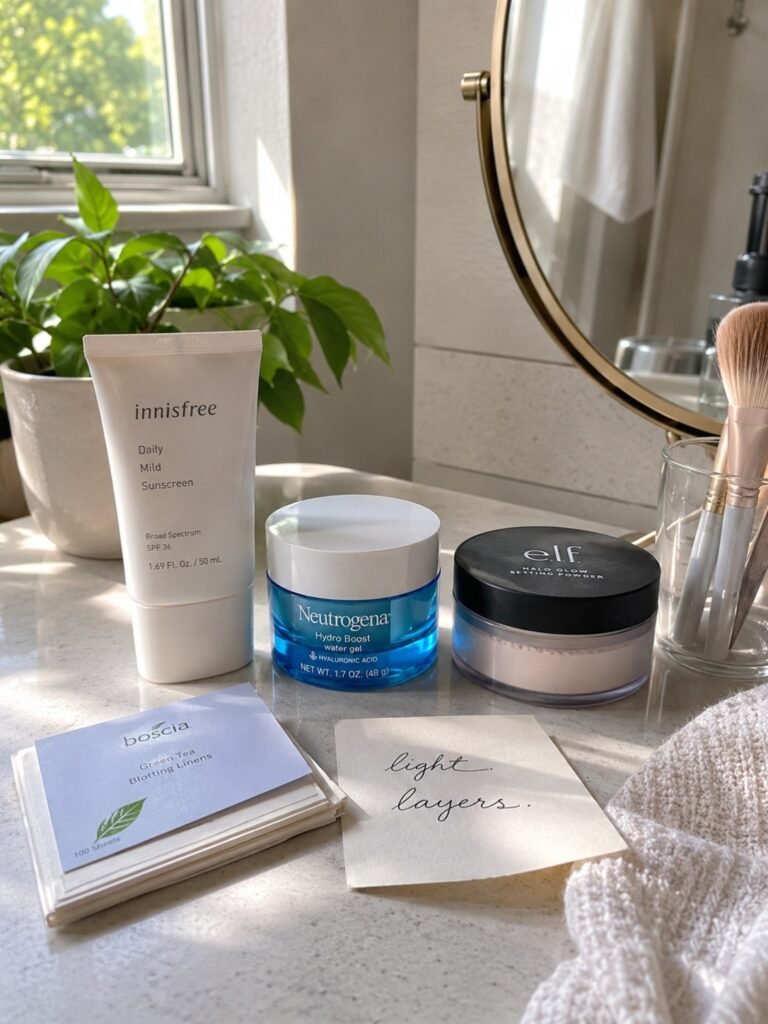
Another reason why sunscreen makes your face look greasy is that your skincare layers underneath may already be too heavy. A rich moisturizer, face oil, primer, and dewy SPF can all add up quickly.
Dermatologists still recommend using sunscreen because sun protection matters. The American Academy of Dermatology sunscreen guidance recommends choosing a sunscreen that is broad-spectrum, water-resistant, and SPF 30 or higher. The FDA sunscreen guide also explains that broad-spectrum sunscreen helps protect against both UVA and UVB rays.
If your skin is oily or acne-prone, the American Academy of Dermatology guide to choosing sunscreen recommends looking for “non-comedogenic” or “won’t clog pores” on the label. That is one of the first things I would check if sunscreen feels greasy or contributes to breakouts.
This article is for general skincare education only. If sunscreen causes burning, rash, swelling, hives, or ongoing irritation, I recommend speaking with a dermatologist or qualified healthcare professional.
8 Reasons Why Sunscreen Makes Your Face Look Greasy
1. The Formula Is Too Rich for Your Skin Type
One of the most common reasons why sunscreen makes your face look greasy is that the formula is too rich for your skin.
Some sunscreens are made with moisturizing ingredients that feel beautiful on dry skin but look heavy on oily or combination skin. If your face already produces a lot of oil, a creamy sunscreen can make the shine more noticeable.
This does not mean the sunscreen is bad. It may simply be better suited for a different skin type. Formula mismatch is a simple but common reason why sunscreen makes your face look greasy, especially if you are using a cream sunscreen on an oily T-zone.
The American Academy of Dermatology oily skin tips recommend choosing products labeled “oil free” and “noncomedogenic” because these products are less likely to clog pores or cause acne.
What to try:
- Look for “oil-free” on the label
- Choose “non-comedogenic” sunscreen if you are acne-prone
- Try a gel, fluid, serum, or lightweight lotion texture
- Avoid very rich cream sunscreens if your skin gets shiny quickly
- Save heavier sunscreens for dry areas, body use, or outdoor days
2. You Are Using a Dewy Sunscreen When You Want a Matte Finish
Some sunscreens are designed to make skin look glowing. That can be pretty on dry or dull skin, but it can look greasy if your face already gets oily.
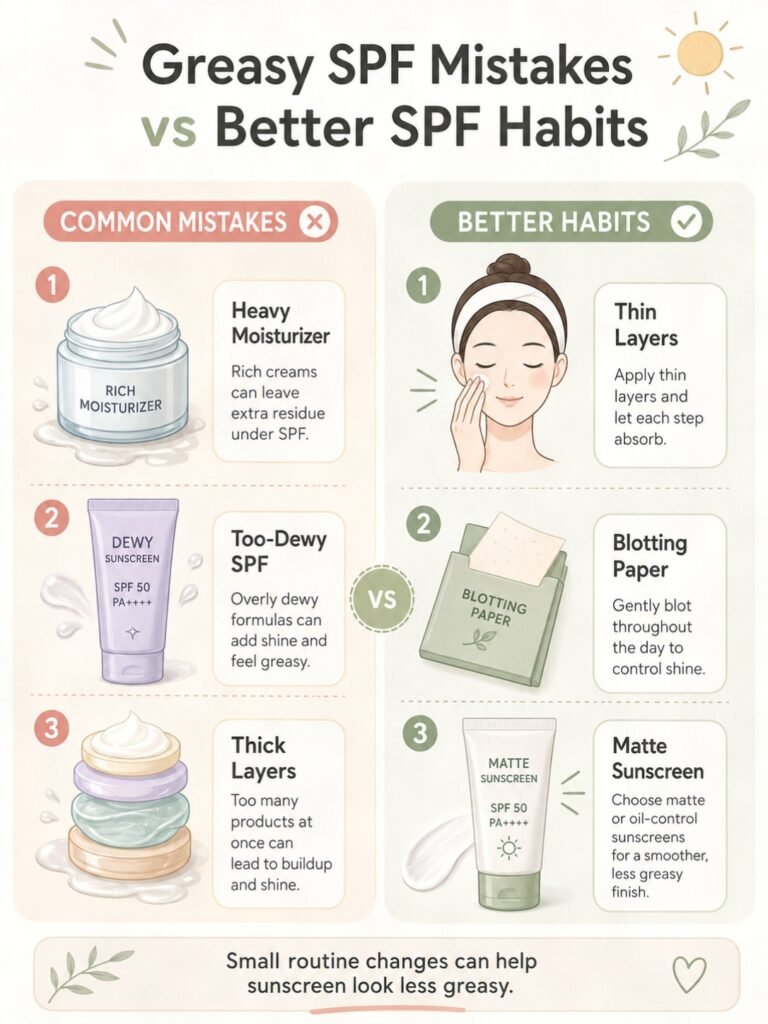
This is an easy-to-miss reason why sunscreen makes your face look greasy. The product may be doing exactly what it says, but the finish does not match what you want.
Words like “glow,” “dewy,” “hydrating,” “radiant,” or “luminous” often suggest a shinier finish. Words like “matte,” “oil control,” “dry touch,” or “shine control” may be a better fit if you want less shine.
If you keep asking why sunscreen makes your face look greasy, check whether the product is meant to create a glow. Sometimes the finish is the issue, not your skin.
What to try:
- Choose a sunscreen labeled matte or oil control
- Avoid very luminous formulas if you already have oily skin
- Test the sunscreen without makeup first
- Compare how it looks after 10 minutes, not just immediately after applying
- Use powder only where you need it, such as the T-zone
I recommend judging sunscreen after it has had time to settle. Some formulas look shiny at first but dry down nicely after a few minutes.
3. You Are Layering Too Much Moisturizer Underneath
Sometimes the sunscreen is not the only reason your face looks greasy. The layers underneath can make a big difference.
If you apply toner, serum, moisturizer, face oil, primer, and sunscreen, the final result may look heavy even if the sunscreen itself is not very greasy.
This is especially common in the morning when people use the same rich moisturizer they use at night, then layer SPF on top. Too many skincare layers can be a hidden reason why sunscreen makes your face look greasy.
The American Academy of Dermatology moisturizer guidance explains that different skin types may need different moisturizer textures, and people with oily skin may prefer a lighter lotion or gel.
What to try:
- Use a lighter moisturizer in the morning
- Skip face oil before sunscreen
- Let moisturizer absorb before applying SPF
- Try sunscreen alone if it is moisturizing enough
- Keep your morning routine simpler than your nighttime routine
If you have oily skin, you may not need a separate moisturizer every morning if your sunscreen already gives enough hydration. But if your skin feels tight or irritated, do not skip moisture completely. Choose a lighter texture instead.
4. You Are Applying Too Much in One Thick Layer
You do need enough sunscreen for protection, but applying it in one thick layer can make it look streaky, shiny, or greasy.
The FDA sunscreen guide says an average-sized adult or child needs at least one ounce of sunscreen to evenly cover the body from head to toe. For the face, I recommend using enough to cover the face and neck evenly, then applying it in thinner layers so it spreads better and looks less heavy.
If you are wondering why sunscreen makes your face look greasy even when it is labeled lightweight, your application method may be part of it.
Applying too much product at once is another practical reason why sunscreen makes your face look greasy, especially when the sunscreen has not had time to settle.
What to try:
- Apply sunscreen in two thinner layers instead of one heavy layer
- Let the first layer settle before adding the second
- Press and smooth instead of rubbing for too long
- Give sunscreen a few minutes before makeup
- Blot gently after it sets if needed
I like the two-layer method because it helps sunscreen spread more evenly without feeling like one heavy coat.
5. Your Sunscreen Is Water-Resistant and Film-Forming
Water-resistant sunscreen can be very helpful when you are sweating, swimming, or outside for a long time. But these formulas are often made to stay on the skin, which can make them feel thicker or more noticeable.
This is another reason why sunscreen makes your face look greasy, especially if you are using a sport or beach sunscreen as your everyday face sunscreen.
The FDA sunscreen guide explains that water-resistant sunscreens must state whether they remain effective for 40 or 80 minutes while swimming or sweating. That staying power can be useful, but it may not always give the lightest finish for daily wear.
What to try:
- Use water-resistant sunscreen for workouts, beach days, and outdoor activities
- Use a lighter everyday sunscreen for normal days
- Look for face-specific formulas
- Avoid using heavy body sunscreen on your face if it feels greasy
- Cleanse well at night to remove sunscreen fully
I recommend having two sunscreens if possible: one for daily face use and one for sweat, swimming, or long outdoor exposure.
6. Mineral Sunscreen Can Leave a Visible Layer
Mineral sunscreens use ingredients like zinc oxide and titanium dioxide. Some people love them because they can be a good option for sensitive or acne-prone skin, but they can sometimes leave a visible layer or feel thicker on the face.
The Cleveland Clinic guide to mineral vs. chemical sunscreen explains that mineral sunscreens create a physical barrier, may feel heavier, can leave a white cast, and are less likely to clog pores. That can make them a good option for some oily or acne-prone skin types, but the finish depends heavily on the formula.
This can be part of why sunscreen makes your face look greasy or chalky at the same time. The formula may leave a visible layer that catches light, especially if it is thick, untinted, or not blended well.
What to try:
- Try a lightweight mineral fluid instead of a thick mineral cream
- Use a tinted mineral sunscreen if white cast is an issue
- Warm the product between your fingers before applying
- Apply in thin layers
- Let it settle before judging the finish
Tinted mineral sunscreens can be especially helpful if white cast makes the sunscreen look more obvious.
7. Your Skin Is Producing Oil Throughout the Day
Sometimes sunscreen looks fine at first, then your face gets greasy later. In that case, the issue may be your skin’s natural oil production mixing with the sunscreen during the day.
This is common around the forehead, nose, and chin. Your sunscreen may not be creating all the shine. It may simply be sitting on top of skin that becomes oily as the day goes on.
Oil production is another reason why sunscreen makes your face look greasy by lunchtime, even if it looked fine right after application.
The American Academy of Dermatology oily skin guidance recommends using gentle skincare and choosing oil-free, noncomedogenic products for oily skin.
What to try:
- Use a gentle cleanser in the morning
- Choose a lightweight sunscreen
- Blot oil during the day instead of washing repeatedly
- Set only the shiny areas with translucent powder
- Avoid over-drying your skin, which can make irritation worse
I do not recommend stripping your skin with harsh cleansers just to fight sunscreen shine. That can leave your skin irritated and still oily later.
8. Your Makeup and Sunscreen Are Not Working Well Together
If your sunscreen looks greasy only after makeup, the problem may be product layering.
Some foundations, primers, moisturizers, and sunscreens do not sit well together. You may see pilling, sliding, separation, shine, or patchiness.
This is especially common when a silicone-heavy primer, rich moisturizer, dewy sunscreen, and creamy foundation are all layered together. Makeup separation can be one reason why sunscreen makes your face look greasy, even when the SPF alone is not the problem.
The American Academy of Dermatology acne habits guide recommends choosing makeup, sunscreen, skin care, and hair care products labeled “non-comedogenic” or “won’t clog pores,” especially if breakouts are a concern.
What to try:
- Let sunscreen set before applying makeup
- Use less primer or skip it
- Choose a matte or natural-finish foundation
- Blot before makeup if sunscreen is very shiny
- Avoid rubbing foundation over sunscreen too aggressively
If makeup always separates over your SPF, test the sunscreen on a no-makeup day. That helps you see whether the sunscreen itself is greasy or whether the layers are clashing.
How to Make Sunscreen Look Less Greasy
If you understand why sunscreen makes your face look greasy, the next step is to adjust your routine without giving up sun protection.
The best fix depends on the cause. Once you know why sunscreen makes your face look greasy on your skin, it becomes easier to choose a formula and application method that works.
Try this simple approach:
- Cleanse gently in the morning
- Use a lightweight moisturizer only if needed
- Choose an oil-free or non-comedogenic sunscreen
- Apply sunscreen in thin layers
- Let it settle for several minutes
- Blot gently if needed
- Set only shiny areas with powder
- Reapply during the day when needed
The American Academy of Dermatology choosing sunscreen guide recommends considering your skin type when choosing sunscreen. For oily or acne-prone skin, it specifically suggests looking for “non-comedogenic” or “won’t clog pores.”
What to Look For on a Sunscreen Label
If sunscreen keeps making your face look greasy, I would start reading labels more carefully.
If you are still unsure why sunscreen makes your face look greasy, the label can give you useful clues. A sunscreen marketed as glowing, rich, or deeply hydrating may not give the same finish as a matte gel or fluid.
Look for words like:
- Oil-free
- Non-comedogenic
- Won’t clog pores
- Matte finish
- Oil control
- Dry touch
- Lightweight
- Gel
- Fluid
- Serum sunscreen
- Fragrance-free, especially if your skin is sensitive
The American Academy of Dermatology acne skincare tips recommend using a broad-spectrum, water-resistant sunscreen with SPF 30 or higher and choosing one labeled non-comedogenic if you have acne-prone skin.
Common Mistakes That Make Sunscreen Look Greasier
Using Body Sunscreen on Your Face Every Day
Body sunscreens can work, but many are heavier than face sunscreens. If your face gets greasy, try a formula made for facial skin.
Choosing Glow Sunscreen for Oily Skin
A glow finish can look beautiful on some skin types, but it may look oily on a naturally shiny T-zone.
Skipping Moisturizer Completely When Your Skin Feels Dry
If your skin feels tight, it may still need moisture. Choose a light gel or lotion instead of skipping moisturizer and irritating your skin.
Applying Makeup Too Soon
If you apply foundation immediately after sunscreen, the layers may slide. Give sunscreen time to settle.
Powdering Too Much
Powder can help shine, but too much powder can look cakey. I recommend using it only where you need it.
When Greasy Sunscreen Comes With Breakouts or Irritation
A greasy finish is usually a cosmetic issue, but breakouts, stinging, burning, or rash are different.
If your sunscreen causes bumps, irritation, or breakouts, I would check whether it is labeled non-comedogenic and fragrance-free. The American Academy of Dermatology sunscreen selection guide recommends non-comedogenic options for acne-prone skin and suggests avoiding fragrance and certain ingredients if you are allergy-prone.
If you get a rash, swelling, hives, burning, or repeated irritation from sunscreen, stop using that product and speak with a dermatologist or healthcare professional. The Cleveland Clinic sunscreen allergy guide explains that sunscreen allergy can cause symptoms such as itching, redness, swelling, rash, blisters, or hives.
FAQ
Why does sunscreen make my face look greasy?
Sunscreen can make your face look greasy if the formula is too rich, too dewy, water-resistant, layered over heavy skincare, applied too thickly, or mixed with your natural oil during the day.
Why sunscreen makes your face look greasy even if you have dry skin?
Even dry skin can look shiny if the sunscreen has a heavy or dewy finish. Dry skin may need moisture, but the sunscreen texture still has to match your preference.
Why sunscreen makes your face look greasy under makeup?
Sunscreen may look greasy under makeup if the layers do not work well together, if the SPF has a dewy finish, or if you apply foundation before the sunscreen has settled.
What type of sunscreen is best for oily skin?
For oily skin, I would look for oil-free, non-comedogenic, lightweight, gel, fluid, or matte sunscreens. The best sunscreen is the one you can wear consistently without hating the finish.
Does greasy sunscreen mean it is clogging my pores?
Not always. A sunscreen can look greasy without clogging pores. If you are acne-prone, look for non-comedogenic or “won’t clog pores” on the label.
Should I skip moisturizer before sunscreen?
You can skip moisturizer if your sunscreen is moisturizing enough and your skin feels comfortable. If your skin feels tight, use a lightweight moisturizer before sunscreen.
How do I make sunscreen less shiny?
Use a lighter sunscreen, apply it in thin layers, let it set, blot gently, and add a small amount of translucent powder only where you get shiny.
Conclusion
Why sunscreen makes your face look greasy usually comes down to formula, finish, layering, application, and skin type.
I do not recommend skipping sunscreen just because one product looks oily. Instead, try a lighter, oil-free, non-comedogenic, matte, gel, fluid, or face-specific formula. Keep your morning skincare simple, apply sunscreen in thinner layers, and let it settle before makeup.
When you understand why sunscreen makes your face look greasy, it becomes much easier to choose a sunscreen you will actually want to wear every day.
The goal is not to avoid SPF. The goal is to find an SPF that protects your skin while matching your skin type, routine, and finish preference.
Sources
- American Academy of Dermatology sunscreen FAQ and SPF guidance: https://www.aad.org/media/stats-sunscreen
- American Academy of Dermatology choosing sunscreen guide: https://www.aad.org/public/everyday-care/sun-protection/shade-clothing-sunscreen/choosing-right-sunscreen
- American Academy of Dermatology oily skin tips: https://www.aad.org/public/everyday-care/skin-care-basics/dry/oily-skin
- American Academy of Dermatology acne skincare tips: https://www.aad.org/public/diseases/acne/skin-care/tips
- American Academy of Dermatology acne habits guide: https://www.aad.org/public/diseases/acne/skin-care/habits-stop
- American Academy of Dermatology moisturizer guidance: https://www.aad.org/public/everyday-care/skin-care-basics/dry/pick-moisturizer
- FDA sunscreen guide, amount guidance, UVA and UVB protection, and water-resistance labeling: https://www.fda.gov/drugs/understanding-over-counter-medicines/sunscreen-how-help-protect-your-skin-sun
- Cleveland Clinic mineral vs. chemical sunscreen guide: https://health.clevelandclinic.org/mineral-vs-chemical-sunscreen
- Cleveland Clinic sunscreen allergy guide: https://health.clevelandclinic.org/sunscreen-allergy