

Learning how to wear sunscreen without ruining makeup can make your morning routine feel so much easier. I know how frustrating it is when your foundation looks smooth at first, then sunscreen makes it pill, slide, separate, or turn greasy by lunchtime.
Most people struggle with sunscreen under makeup because the layers are too heavy, applied too quickly, or not matched to their skin type.
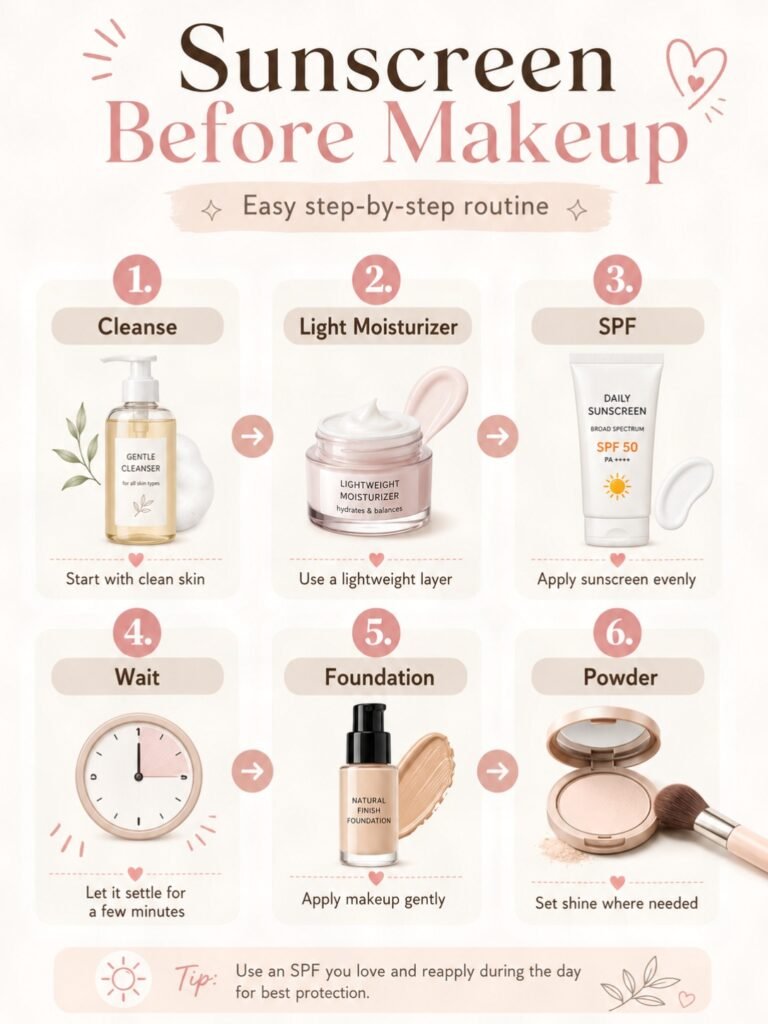
The good news is that you do not have to choose between sun protection and good makeup. You usually just need the right sunscreen texture, lighter skincare layers, better timing, and a few smart reapplication tricks.
I recommend thinking of sunscreen as part of your makeup prep, not as something that fights against it. When you understand how to wear sunscreen without ruining makeup, your SPF can sit smoothly under foundation, skin tint, concealer, powder, or even a full-glam routine.
Dermatologists still recommend daily sun protection. The American Academy of Dermatology sunscreen guidance recommends choosing a sunscreen that is broad-spectrum, water-resistant, and SPF 30 or higher. The FDA sunscreen guide also explains that broad-spectrum sunscreen helps protect against both UVA and UVB rays.
This guide explains how to wear sunscreen without ruining makeup, including what to apply first, how long to wait, what sunscreen finish to choose, and how to reapply SPF over makeup without starting over.
Why Sunscreen Under Makeup Can Pill, Slide, or Separate
Before learning how to wear sunscreen without ruining makeup, it helps to understand why SPF and makeup sometimes clash.
Sunscreen can affect makeup because it has to form an even protective layer on the skin. If you rub too much makeup over it too soon, layer heavy skincare underneath, or use a sunscreen that does not match your skin type, your makeup may pill, separate, look greasy, or feel thick.
Common reasons sunscreen ruins makeup include:
- The sunscreen is too greasy or too rich
- You apply makeup before sunscreen has settled
- Your moisturizer, primer, sunscreen, and foundation do not layer well
- You rub foundation too aggressively over SPF
- You use too many morning skincare products
- Your sunscreen leaves a white cast or heavy film
- You do not blot or set strategically
- You rely on SPF makeup instead of a dedicated sunscreen
The American Academy of Dermatology sunscreen FAQ says sunscreen should be applied to dry skin 15 minutes before going outdoors and reapplied approximately every two hours when outdoors, or after swimming or sweating. That matters because rushing your layers can affect both protection and makeup finish.
How to Wear Sunscreen Without Ruining Makeup: 8 Practical Tips
1. Start With a Lightweight Morning Skincare Routine
The first step in wearing sunscreen without ruining makeup is to keep your morning skincare light.
If you apply a rich moisturizer, facial oil, heavy serum, thick sunscreen, primer, and foundation, your makeup has too many layers to sit on. Even a good foundation can slide when the base underneath is too creamy.
In my experience, most makeup applies better when the morning routine is simple.
Try this order:
- Gentle cleanser
- Lightweight serum if needed
- Lightweight moisturizer if needed
- Sunscreen
- Primer if you use one
- Makeup
The American Academy of Dermatology moisturizer guidance explains that different skin types may need different moisturizer textures, and people with oily skin may prefer a lighter lotion or gel. That is especially helpful when you are trying to keep makeup smooth over SPF.
If your sunscreen is moisturizing enough, you may not need a separate moisturizer in the morning. If your skin feels tight, use a light gel or lotion rather than skipping moisture completely.
2. Choose a Sunscreen That Matches Your Makeup Style
A big part of how to wear sunscreen without ruining makeup is choosing the right finish.
If you like matte foundation, a very dewy sunscreen may make your base look oily. If you like glowy skin, a very dry sunscreen may make your makeup look patchy. The sunscreen finish should support the makeup look you want.
For oily skin, I would look for:
- Matte finish
- Oil-free
- Lightweight lotion
- Gel sunscreen
- Fluid sunscreen
- Non-comedogenic
For dry skin, I would look for:
- Hydrating
- Creamy but not greasy
- Comfortable under makeup
- No tight or flaky finish
- Works well with your foundation texture
For acne-prone skin, the American Academy of Dermatology guide to choosing sunscreen recommends looking for “non-comedogenic” or “won’t clog pores” on the label. The AAD acne skincare tips also recommend choosing a broad-spectrum, water-resistant sunscreen with SPF 30 or higher.
The best sunscreen for how to wear sunscreen without ruining makeup is the one that protects your skin and sits well under your actual foundation, concealer, or skin tint.
3. Let Sunscreen Set Before Applying Makeup
Timing is one of the easiest fixes for wearing sunscreen without ruining makeup.
If you apply foundation immediately after sunscreen, the layers may mix together. That can cause pilling, streaking, slipping, or uneven coverage.
I recommend applying sunscreen, then waiting a few minutes before makeup. During that time, you can do your hair, brush your teeth, choose jewelry, or get dressed.
A simple routine looks like this:
- Apply sunscreen evenly
- Let it settle for several minutes
- Blot only if needed
- Apply primer or makeup gently
- Use thin makeup layers
The American Academy of Dermatology how-to-apply-sunscreen guidance says sunscreen should be applied before going outdoors and reapplied every two hours when outdoors, and immediately after swimming or sweating. Letting it sit before makeup helps you avoid disturbing the layer right away.
4. Apply Sunscreen Before Makeup in Thin, Even Layers
Another important part of wearing sunscreen without ruining your makeup is how you apply it.
A thick blob of sunscreen can make makeup look heavy. Thin, even layers usually sit better and are easier to blend.
I like to apply sunscreen in sections:
- Forehead
- Cheeks
- Nose
- Chin
- Jawline
- Neck
Then I gently smooth it over the skin instead of rubbing hard. Aggressive rubbing can make skincare pill, especially if you are wearing moisturizer or serum underneath.
The FDA sunscreen guide says an average-sized adult or child needs at least one ounce of sunscreen to evenly cover the body from head to toe. For the face and neck, I recommend using enough to cover the skin evenly, then applying it in thin layers so it looks smoother under makeup.
5. Skip Heavy Primer Unless You Really Need It
Primer can help makeup last, but it can also create problems when layered over sunscreen.
If you are learning how to wear sunscreen without ruining makeup, try testing your routine without primer first. Some sunscreens already act like a primer because they smooth the skin or leave a soft finish.
Primer can cause problems when:
- It pills over sunscreen
- It adds too much slip
- It makes foundation separate
- It feels heavy with SPF underneath
- It clashes with your sunscreen texture
If you do use primer, apply a small amount only where you need it, such as the T-zone, around pores, or on areas where foundation fades.
I recommend avoiding the habit of layering primer everywhere just because it is part of your usual routine. With sunscreen underneath, less can look better.
6. Use Gentle Makeup Application Techniques
The way you apply makeup matters when figuring out how to wear sunscreen without ruining makeup.
If you rub foundation back and forth, you may disturb the sunscreen layer underneath. Pressing, tapping, or lightly buffing usually works better.
Try these application tips:
- Use a damp sponge with gentle pressing motions
- Use a brush lightly instead of dragging
- Apply foundation in thin layers
- Spot conceal instead of adding full coverage everywhere
- Avoid rubbing around the nose and cheeks too much
- Let each layer settle before adding more product
A skin tint or light foundation often works better over sunscreen than a thick matte foundation, especially for everyday wear.
If you need more coverage, I recommend building it slowly instead of applying one heavy layer.
7. Set Only the Areas That Get Shiny
Powder can help sunscreen and makeup last, but too much powder can make the face look cakey.
A good trick for how to wear sunscreen without ruining makeup is to set only the areas that need it.
For many people, that means:
- Forehead
- Nose
- Around the nose
- Chin
- Smile lines
- Under eyes, if concealer creases
Leave the cheeks alone if you like a natural glow. This keeps the makeup fresh without making sunscreen feel heavy underneath.
The American Academy of Dermatology oily skin guidance recommends blotting papers to reduce oil and suggests choosing oil-free, noncomedogenic products if your skin gets oily. That can be helpful when SPF makes the T-zone shiny during the day.
8. Reapply Sunscreen Over Makeup the Smart Way
Reapplication is where many people struggle with how to wear sunscreen without ruining makeup.
The FDA sunscreen guide says sunscreen should be reapplied at least every two hours, and more often if swimming or sweating. The American Academy of Dermatology sunscreen FAQ gives similar advice for outdoor exposure.
But no one wants to remove a full face of makeup every two hours.
For reapplying sunscreen over makeup, I recommend choosing the method based on your day.
For light makeup:
- Pat sunscreen over makeup with clean fingers
- Use a cushion puff to press SPF on top
- Apply in thin layers
- Let it settle before touching up
For full makeup:
- Blot oil first
- Use a sunscreen stick carefully on high points
- Use SPF powder as a touch-up layer
- Use SPF setting spray as a supplemental option
- Reapply more carefully before long outdoor exposure
The Skin Cancer Foundation notes that powder sunscreens can be useful for layering over makeup and for extra protection in scalp areas, but they should be applied generously enough. I think SPF powder is best as a touch-up helper, not your only sunscreen for the day.
Best Sunscreen Types for SPF Under Foundation and Makeup
Choosing the right sunscreen makes wearing sunscreen without ruining makeup much easier.
Lightweight Fluid Sunscreen
Fluid sunscreens are often thin, spread easily, and work well under foundation. They are a good option if cream sunscreens feel too heavy.
Gel Sunscreen
Gel sunscreens can work well for oily or combination skin because they often feel lighter and less creamy.
Matte Sunscreen
Matte sunscreen helps reduce shine and can act like a soft primer under makeup. It is especially helpful around the T-zone.
Tinted Sunscreen
Tinted sunscreen can simplify your routine because it gives light coverage and SPF in one step. It can also reduce the need for foundation.
Mineral Sunscreen
Mineral sunscreen may be a good option for sensitive skin, but some formulas can leave a white cast or feel thicker. A tinted mineral sunscreen may sit better under makeup.
The Cleveland Clinic guide to mineral vs. chemical sunscreen explains that mineral sunscreens create a physical barrier, may feel heavier, can leave a white cast, and are less likely to clog pores. Formula matters a lot if you plan to wear makeup over it.
Common Mistakes That Ruin Makeup Over Sunscreen
Applying Makeup Too Soon
This is one of the biggest mistakes. Give sunscreen time to settle before applying foundation.
Using Too Many Creamy Layers
Heavy moisturizer, creamy SPF, primer, and foundation can create too much slip.
Rubbing Foundation Over Sunscreen
Press makeup on gently instead of rubbing it around.
Using SPF Makeup as Your Only Sun Protection
SPF foundation can help, but I would not rely on it as your only sunscreen. You usually do not apply enough makeup to get the labeled SPF protection.
Forgetting to Reapply
Good morning application matters, but sunscreen still needs reapplication outdoors. The FDA recommends reapplying at least every two hours, and more often if swimming or sweating.
Choosing the Wrong Finish
A dewy sunscreen under dewy foundation can look oily. A dry sunscreen under matte foundation can look patchy. Match textures carefully.
My Simple Sunscreen and Makeup Routine
Here is the routine I recommend when someone asks how to wear sunscreen without ruining makeup.
- Wash your face gently.
- Apply a light moisturizer only if your skin needs it.
- Apply broad-spectrum SPF 30 or higher.
- Let sunscreen settle for several minutes.
- Blot only if needed.
- Apply a small amount of primer only where needed.
- Press foundation or skin tint on gently.
- Spot conceal instead of layering too much base.
- Set the T-zone with powder.
- Reapply SPF during outdoor exposure.
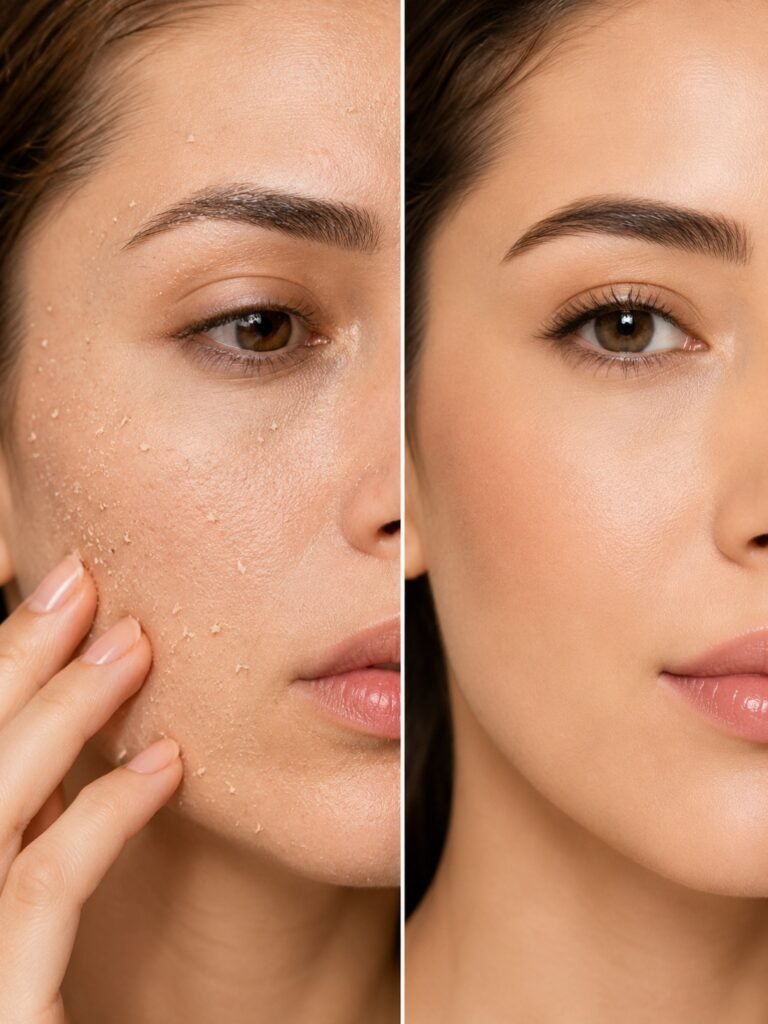
This routine works because it keeps layers light, protects the sunscreen film, and avoids disturbing the base.
How to Reapply Sunscreen Over Makeup Without Removing It
If you are indoors most of the day, your reapplication needs may be different from someone outside in direct sun. But if you are outdoors, sweating, sitting near strong sunlight, or commuting during peak sun, reapplication matters.
Here are practical ways to reapply sunscreen over makeup without ruining your base:
- Use blotting paper first to remove oil
- Press sunscreen over makeup with a cushion puff
- Use a sunscreen stick gently on high points
- Add SPF powder as a touch-up
- Use SPF mist as a supplemental layer
- Wear a hat and sunglasses for extra protection
- Seek shade when possible
The FDA sunscreen guide also reminds readers that sunscreen should not be the only sun protection step. Protective clothing, hats, sunglasses, and shade can help reduce UV exposure.
This is especially important because makeup touch-ups are rarely as thorough as your first sunscreen application.
FAQ
How do you wear sunscreen without ruining makeup?
The best way to wear sunscreen without ruining makeup is to use a lightweight SPF, keep morning skincare simple, let sunscreen settle before foundation, apply makeup with gentle pressing motions, set only shiny areas, and reapply SPF carefully over makeup when needed.
Should sunscreen go before or after makeup?
Sunscreen should go before makeup. Apply skincare first, then sunscreen, let it settle, and then apply primer or makeup.
How long should I wait between sunscreen and makeup?
I recommend waiting several minutes after sunscreen before applying makeup. This gives the sunscreen time to settle and reduces pilling, streaking, and slipping.
Can I mix sunscreen with foundation?
I do not recommend mixing sunscreen with foundation because it can dilute the sunscreen and make coverage uneven. Apply sunscreen first, then makeup on top.
Is SPF foundation enough?
I would not rely on SPF foundation as your only sunscreen. Most people do not apply enough foundation to get the labeled SPF protection. Use a dedicated sunscreen first.
How do I reapply sunscreen over makeup?
Blot oil first, then use a cushion puff, sunscreen stick, SPF powder, or SPF mist depending on your makeup level and sun exposure. For longer outdoor time, use a more generous reapplication method.
Why does sunscreen make my makeup separate?
Sunscreen can make makeup separate if the formula is too greasy, the layers underneath are too heavy, makeup is applied too soon, or foundation is rubbed aggressively over SPF.
Conclusion
Learning how to wear sunscreen without ruining makeup is mostly about choosing the right sunscreen texture, simplifying your skincare, waiting before makeup, and applying your base gently.
You do not need to skip SPF to keep your makeup pretty. I recommend using a broad-spectrum SPF 30 or higher, letting it settle, choosing makeup-friendly textures, and setting only the areas that need it.
Once you know how to wear sunscreen without ruining makeup, sun protection becomes much easier to keep in your daily routine. Your makeup can still look smooth, fresh, and polished while your skin gets the protection it needs.
Sources
- American Academy of Dermatology sunscreen FAQ and SPF guidance: https://www.aad.org/media/stats-sunscreen
- American Academy of Dermatology how to apply sunscreen: https://www.aad.org/public/everyday-care/sun-protection/shade-clothing-sunscreen/how-to-apply-sunscreen
- American Academy of Dermatology choosing sunscreen guide: https://www.aad.org/public/everyday-care/sun-protection/shade-clothing-sunscreen/choosing-right-sunscreen
- American Academy of Dermatology acne skincare tips: https://www.aad.org/public/diseases/acne/skin-care/tips
- American Academy of Dermatology oily skin guidance: https://www.aad.org/public/everyday-care/skin-care-basics/dry/oily-skin
- American Academy of Dermatology moisturizer guidance: https://www.aad.org/public/everyday-care/skin-care-basics/dry/pick-moisturizer
- FDA sunscreen guide: https://www.fda.gov/drugs/understanding-over-counter-medicines/sunscreen-how-help-protect-your-skin-sun
- Skin Cancer Foundation sunscreen application expert advice: https://www.skincancer.org/blog/ask-the-expert-how-to-apply-sunscreen/
- Cleveland Clinic mineral vs. chemical sunscreen guide: https://health.clevelandclinic.org/mineral-vs-chemical-sunscreen