

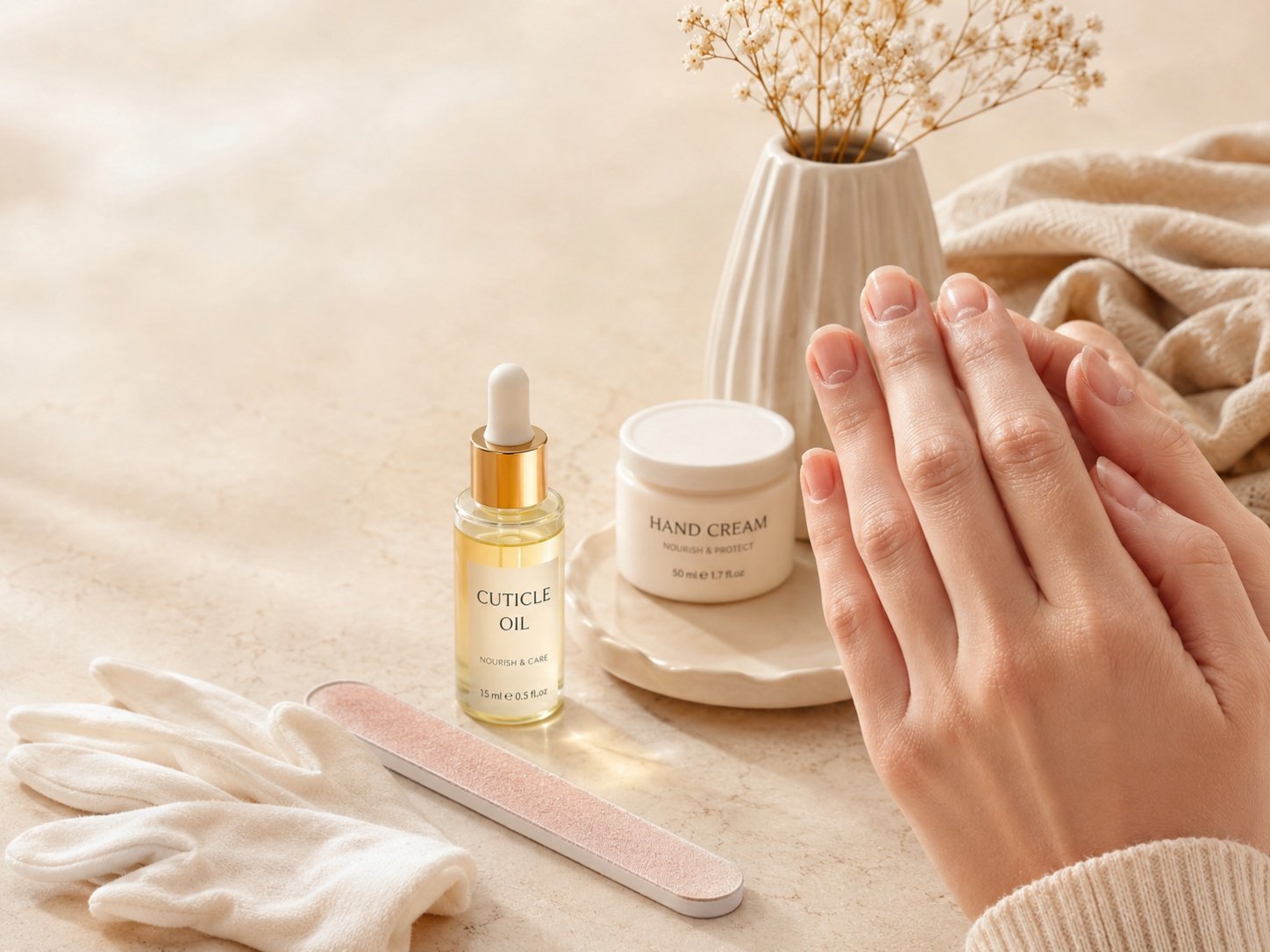
If the skin around your nails looks rough, cracked, flaky, or painfully tight, you may be searching for how to fix dry cuticles at home without making them worse.
Dry cuticles are common, especially if you wash your hands often, use sanitizer, clean without gloves, pick at your nails, get frequent manicures, or live in cold, dry weather. In my experience, cuticles usually improve when you stop treating them like something to cut away and start treating them like a protective part of the nail area.
Your cuticles help seal the skin to the nail plate, which helps protect the nail area. The Mayo Clinic fingernail care guide warns not to let cuticles be removed during manicures because they seal the skin to the nail plate and removal can lead to nail infection.
In this guide, I will explain how to fix dry cuticles at home, what causes them, what to apply, what habits to avoid, and when dry cuticles may need professional care.
Why Dry Cuticles Need Gentle Care
When you are learning how to fix dry cuticles at home, the first rule is simple: do less damage.
Dry cuticles often come from repeated irritation. The skin around the nail is delicate, and once it cracks, it can catch on fabric, form hangnails, or become sore. If you cut, bite, peel, or aggressively push the cuticle area, you can make the dryness worse.
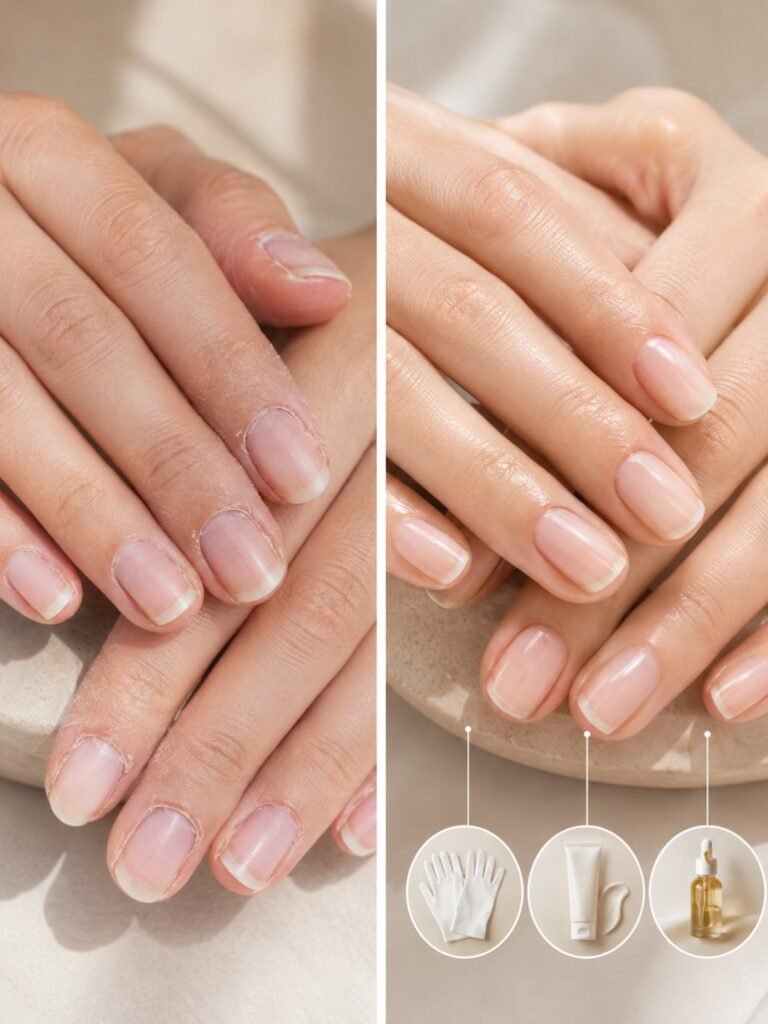
The Mayo Clinic nail care guide recommends not biting fingernails or picking at cuticles because these habits can damage the nail bed, and even a small cut next to the nail can allow germs to enter and cause infection.
Ask yourself:
- Do your cuticles look white, dry, or flaky?
- Do they crack after washing your hands?
- Do you get hangnails often?
- Do you push or cut your cuticles too aggressively?
- Do you use acetone polish remover often?
- Do you clean, wash dishes, or use chemicals without gloves?
- Do you pick at rough skin when you are stressed or bored?
These clues can help you understand why your cuticles are dry and how to fix them without over-treating the area.
This article is for general nail-care education only. If you have swelling, warmth, pus, severe pain, spreading redness, nail lifting, a green or yellow nail, or symptoms that keep coming back, I recommend speaking with a dermatologist or qualified healthcare professional.
8 Steps for How to Fix Dry Cuticles at Home
1. Stop Cutting Your Cuticles
The first step in how to fix dry cuticles at home is to stop cutting them.
I know trimming cuticles can make a manicure look cleaner for a short time, but cutting the cuticle area can create tiny openings in the skin. That can lead to irritation, hangnails, and sometimes infection.
The Mayo Clinic fingernail care guide says cuticles should not be removed because they seal the skin to the nail plate, and removal can lead to nail infection.
What to do instead:
- Leave the cuticle attached
- Clip only loose hangnails carefully
- Avoid ripping dry skin
- Use oil to soften rough areas
- Push back only very gently after moisturizing, if needed
- Stop any step that causes pain, bleeding, or redness
If you want to fix dry cuticles, protecting the skin barrier matters more than making the nail bed look longer.
2. Moisturize After Every Hand Wash
Frequent handwashing is one of the biggest reasons cuticles get dry.
Washing removes dirt and germs, but it can also strip natural oils from the skin around your nails. The Cleveland Clinic hangnail guide explains that moisturizing helps prevent dryness and cracking that can lead to hangnails, and that this is especially important after handwashing.
This is one of the simplest parts of how to fix dry cuticles at home: keep hand cream close enough that you actually use it.
What to do:
- Keep hand cream near the sink
- Apply it after washing your hands
- Rub it into your nails and cuticles too
- Use a thicker cream at night
- Reapply after sanitizer when possible
The Mayo Clinic nail care guide recommends rubbing hand lotion into the fingernails and cuticles when you moisturize.
I recommend choosing a hand cream you like enough to use several times a day. The best product is the one you will apply consistently.
3. Add Cuticle Oil Once or Twice Daily
Hand cream helps, but cuticle oil can be especially useful for the dry skin around the nails.
Cuticle oil is not magic, but it can soften rough skin, make hangnails less tempting to pick, and help your nail area look healthier. If your cuticles are cracked, dry, and tight, oil adds a targeted layer of care.
For how to fix dry cuticles at home, I recommend applying cuticle oil at least once daily. Nighttime is easiest because you are less likely to wash it off right away.
How to apply cuticle oil:
- Place a small drop near each cuticle
- Massage it into the skin around the nail
- Rub any extra over the nail plate
- Follow with hand cream if your hands are very dry
- Use it before bed for best consistency
Good options may include jojoba oil, vitamin E oil, argan oil, sweet almond oil, or a ready-made cuticle oil blend. If you have sensitive skin, I recommend choosing a fragrance-free option.
4. Seal Moisture Overnight With Ointment
If your cuticles are cracked or painfully dry, a light daytime lotion may not be enough.
At night, I like a thicker approach. Apply hand cream first, then seal the cuticle area with a small amount of petrolatum-based ointment or a thick balm. This helps reduce moisture loss while you sleep.
The Cleveland Clinic brittle nails guide discusses moisturizing as part of brittle nail care and mentions a “slugging” approach, where a thicker ointment is used to lock in moisture.
Overnight cuticle routine:
- Wash hands gently.
- Pat dry.
- Apply cuticle oil.
- Apply hand cream.
- Dab ointment around each cuticle.
- Wear cotton gloves if you want extra protection.
This step can make a big difference when you are trying to learn how to fix dry cuticles at home and your cuticles keep cracking by morning.
5. Wear Gloves for Dishes, Cleaning, and Wet Work
Water and cleaning products can dry out the skin around your nails quickly.
Repeated wetting and drying can also weaken nails. The Mayo Clinic fingernail care guide recommends wearing cotton-lined rubber gloves when washing dishes, cleaning, or using harsh chemicals.
If your cuticles are constantly dry, gloves are not optional. They are one of the most practical fixes.
Use gloves when you:
- Wash dishes
- Clean bathrooms
- Use disinfectants
- Scrub floors
- Handle laundry chemicals
- Garden
- Work with hair color or salon chemicals
The Cleveland Clinic hangnail guide also recommends wearing gloves for chores to protect hands from harsh cleaning chemicals and prolonged water exposure.
If gloves feel annoying, keep a pair near the sink. The easier they are to reach, the more likely you are to use them.
6. Switch to Gentler Soaps and Removers
If your cuticles sting after washing or look dry around the edges, your soap or polish remover may be too harsh.
Harsh soaps, alcohol-heavy sanitizer, acetone remover, and drying nail products can all make cuticles look worse. The Cleveland Clinic hangnail guide recommends choosing gentle soaps because mild cleansers are less likely to dry the skin around the nails, and it also recommends avoiding strong nail polish removers because acetone can dry out the skin around fingernails.
This is a helpful step in how to fix dry cuticles at home because you are not only adding moisture. You are also removing some of the things that keep stripping it away.
What to try:
- Use a gentle hand soap
- Avoid very hot water
- Use hand sanitizer when needed, but moisturize after
- Choose acetone-free polish remover when possible
- Take breaks from frequent polish changes
- Avoid harsh nail prep products on already-dry cuticles
If your cuticles are cracked, skip fragranced lotions or strong manicure products until the skin calms down.
7. Clip Hangnails Safely Instead of Pulling Them
Dry cuticles often lead to hangnails. Pulling them is one of the quickest ways to make the area sore.
The Mayo Clinic nail care guide warns not to pull off hangnails because you might rip live tissue. Mayo Clinic recommends gently clipping hangnails instead.
How to handle a hangnail:
- Wash your hands
- Soften the area with warm water or moisturizer
- Use clean nail clippers or cuticle nippers
- Clip only the loose piece of skin
- Do not dig into attached skin
- Apply ointment if the area feels tender
- Cover with a bandage if you keep touching it
This is an important part of how to fix dry cuticles at home because hangnails can keep the cycle going. You pick one, it tears, it hurts, then more dry skin forms.
8. Break the Picking and Biting Habit
Dry cuticles are much harder to heal if you keep picking at them.
I say this gently because many people pick without realizing it. Rough skin feels tempting to “fix,” but picking usually creates more rough edges. Biting cuticles can also introduce germs and increase irritation.
The Mayo Clinic fingernail care guide says biting fingernails or picking cuticles can damage the nail bed and allow germs to enter through small cuts near the nail.
What helps:
- Keep cuticle oil nearby
- Apply a bandage to the finger you pick most
- Use a fidget item during work or TV time
- Keep nails short and smooth
- Clip hangnails quickly before you pick them
- Wear cotton gloves at night if you pick in bed
If picking feels compulsive or hard to control, it may help to speak with a healthcare professional or therapist. That is not a failure. Sometimes the habit needs more support than a bottle of oil.
Best At-Home Routine for Dry Cuticles
If you want a simple routine for how to fix dry cuticles at home, use this morning and night plan.
Morning Routine
- Wash hands with gentle soap
- Pat dry instead of rubbing aggressively
- Apply hand cream
- Rub cream into nails and cuticles
- Add cuticle oil if your cuticles are very dry
- Wear gloves for dishes, cleaning, or wet work
Night Routine
- Wash hands gently
- Apply cuticle oil
- Massage around each nail for 30 seconds
- Apply a thick hand cream
- Seal cracked areas with ointment
- Wear cotton gloves if your hands are very dry
Weekly Routine
- File nail edges smooth
- Clip only loose hangnails
- Take a break from harsh manicure products if needed
- Check for redness, swelling, pain, or nail changes
- Replace rough files or dirty tools
I recommend staying consistent for at least two weeks. Dry cuticles often improve slowly because the skin needs time to repair and the habits need time to change.
What to Look For in Cuticle Products
When you are choosing products for how to fix dry cuticles at home, I recommend looking for simple, moisturizing, barrier-supporting options.
Helpful product types include:
- Fragrance-free hand cream
- Cuticle oil
- Petrolatum-based ointment
- Thick hand balm
- Cotton gloves
- Gentle hand soap
- Acetone-free polish remover
- Clean nail clippers
- Fine nail file
Ingredients that may help dry cuticles include:
- Petrolatum
- Glycerin
- Shea butter
- Jojoba oil
- Argan oil
- Sweet almond oil
- Vitamin E
- Dimethicone
- Ceramides
I would be careful with strong exfoliating acids, harsh cuticle removers, and aggressive manicure tools when your cuticles are already cracked. Dry cuticles usually need protection first, not more irritation.
Common Mistakes That Make Dry Cuticles Worse
Cutting Cuticles Too Closely
Cutting may look neat for a day, but it can make the area more irritated and vulnerable.
Pulling Hangnails
This can tear live skin and make soreness worse.
Washing Without Moisturizing
Handwashing is important, but your cuticles need moisture afterward.
Cleaning Without Gloves
Water and cleaning products can dry and irritate the nail area.
Using Acetone Too Often
Acetone can be useful for removing certain products, but frequent use can dry out the skin around the nails.
Overusing Cuticle Remover
Chemical cuticle removers can help in some manicures, but they can also irritate dry, cracked skin when overused.
Picking Rough Skin
Picking creates more rough edges and slows healing.
How Long Does It Take to Fix Dry Cuticles?
Mild dry cuticles may feel better within a few days of consistent moisturizing. Cracked, peeling, or irritated cuticles may take a few weeks to look healthier, especially if you keep washing your hands, using sanitizer, or working with water.
The key is consistency.
If you moisturize once, then spend the next day washing dishes without gloves, your cuticles may go right back to feeling dry. That is why how to fix dry cuticles at home is not only about what you apply. It is also about what you stop doing.
Focus on:
- Daily hand cream
- Daily cuticle oil
- Gloves for wet work
- No cutting or picking
- Gentle soap
- Careful hangnail trimming
- Overnight ointment when needed
When Dry Cuticles May Need Medical Care
Dry cuticles are usually a home-care issue, but not always.
I recommend seeing a dermatologist or healthcare professional if you notice:
- Pain that does not improve
- Redness spreading around the nail
- Swelling
- Warmth
- Pus
- Bleeding
- A nail lifting from the nail bed
- Yellow, green, black, or thickened nails
- Repeated infections
- Severe itching, scaling, or rash around the nails
The American Academy of Dermatology nail changes guide recommends seeing a dermatologist for certain nail changes, including nail lifting, redness and swelling around a nail, thickened nails, yellow nails, and other changes in color, texture, or shape.
The Cleveland Clinic nail fungus guide also explains that fungal nail infections can affect nail color, shape, and texture, causing nails to look whitish, yellowish, brownish, crumbly, flaky, thicker, misshapen, or separated from the nail bed.
If your cuticles are just dry, home care can help. If the skin is infected or the nail itself is changing, it is better to get it checked.
FAQ
How do you fix dry cuticles at home?
To fix dry cuticles at home, stop cutting or picking them, moisturize after handwashing, apply cuticle oil daily, seal cracked areas with ointment at night, wear gloves for dishes and cleaning, use gentle soap, and clip hangnails instead of pulling them.
What causes dry cuticles?
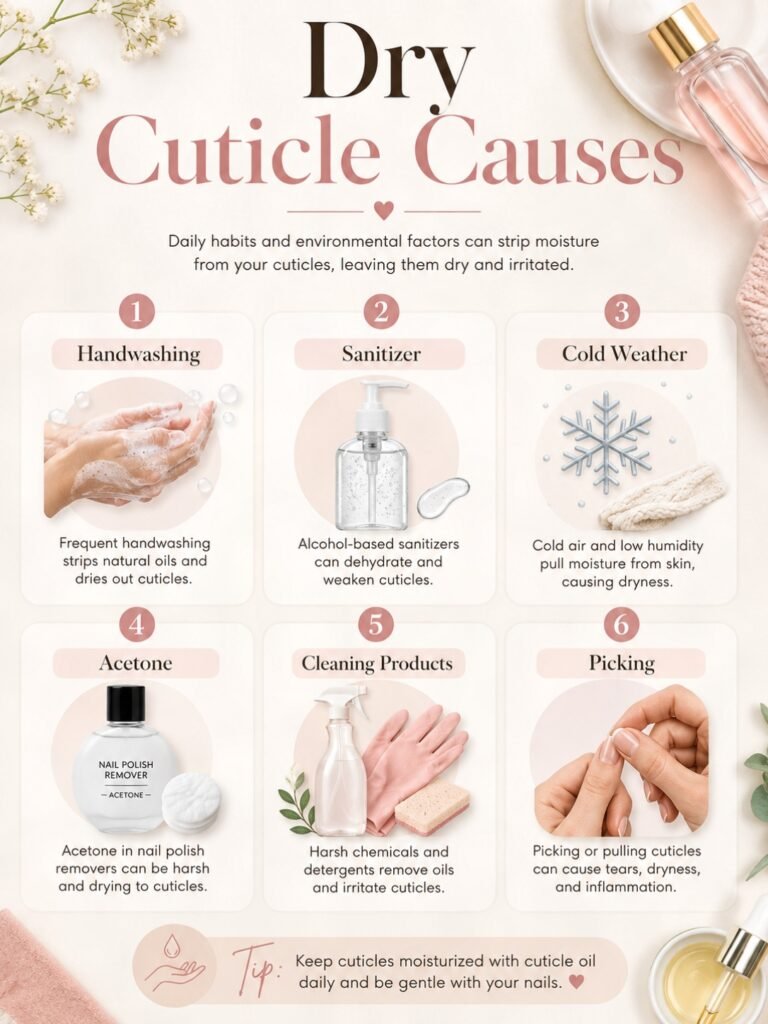
Dry cuticles can be caused by frequent handwashing, hand sanitizer, cold weather, low humidity, harsh soap, acetone polish remover, cleaning products, manicures, picking, biting, and not moisturizing after water exposure.
Is cuticle oil better than hand cream?
Cuticle oil is more targeted, while hand cream moisturizes the whole hand. I recommend using both if your cuticles are very dry: cuticle oil around the nail, then hand cream over the hands and nail area.
Should I cut dry cuticles?
I do not recommend cutting dry cuticles. Cuticles help protect the nail area, and cutting them can increase irritation and infection risk. Clip only loose hangnails carefully.
Can Vaseline help dry cuticles?
A petrolatum-based ointment can help seal moisture around dry cuticles, especially at night. Apply cuticle oil or hand cream first, then a small amount of ointment over cracked areas.
How often should I apply cuticle oil?
For dry cuticles, I recommend applying cuticle oil once or twice daily. If you wash your hands often, you may need hand cream more frequently throughout the day.
When should I worry about dry cuticles?
You should get professional advice if dry cuticles come with redness, swelling, warmth, pus, severe pain, bleeding, nail lifting, thickened nails, color changes, or symptoms that keep returning.
Conclusion
Learning how to fix dry cuticles at home starts with gentle, consistent care. Dry cuticles usually need moisture, protection, and fewer irritating habits.
I recommend moisturizing after handwashing, using cuticle oil daily, sealing cracked areas with ointment at night, wearing gloves for dishes and cleaning, clipping hangnails instead of pulling them, and avoiding cuticle cutting or picking.
When you understand how to fix dry cuticles at home, the goal becomes simple: protect the skin around your nails so it can heal instead of repeatedly drying, cracking, and tearing. If you notice pain, swelling, pus, nail lifting, or color changes, it is worth getting professional help.
Sources
- Mayo Clinic fingernail care guide: https://www.mayoclinic.org/healthy-lifestyle/adult-health/in-depth/nails/art-20044954
- Cleveland Clinic hangnail prevention and treatment: https://health.clevelandclinic.org/how-to-get-rid-of-a-hangnail
- Cleveland Clinic brittle nails causes and treatment: https://health.clevelandclinic.org/brittle-nails-causes-treatment
- American Academy of Dermatology nail changes a dermatologist should examine: https://www.aad.org/public/everyday-care/nail-care-secrets/basics/nail-changes-dermatologist-should-examine
- Cleveland Clinic nail fungus guide: https://my.clevelandclinic.org/health/diseases/onychomyscosis-nail-fungus