
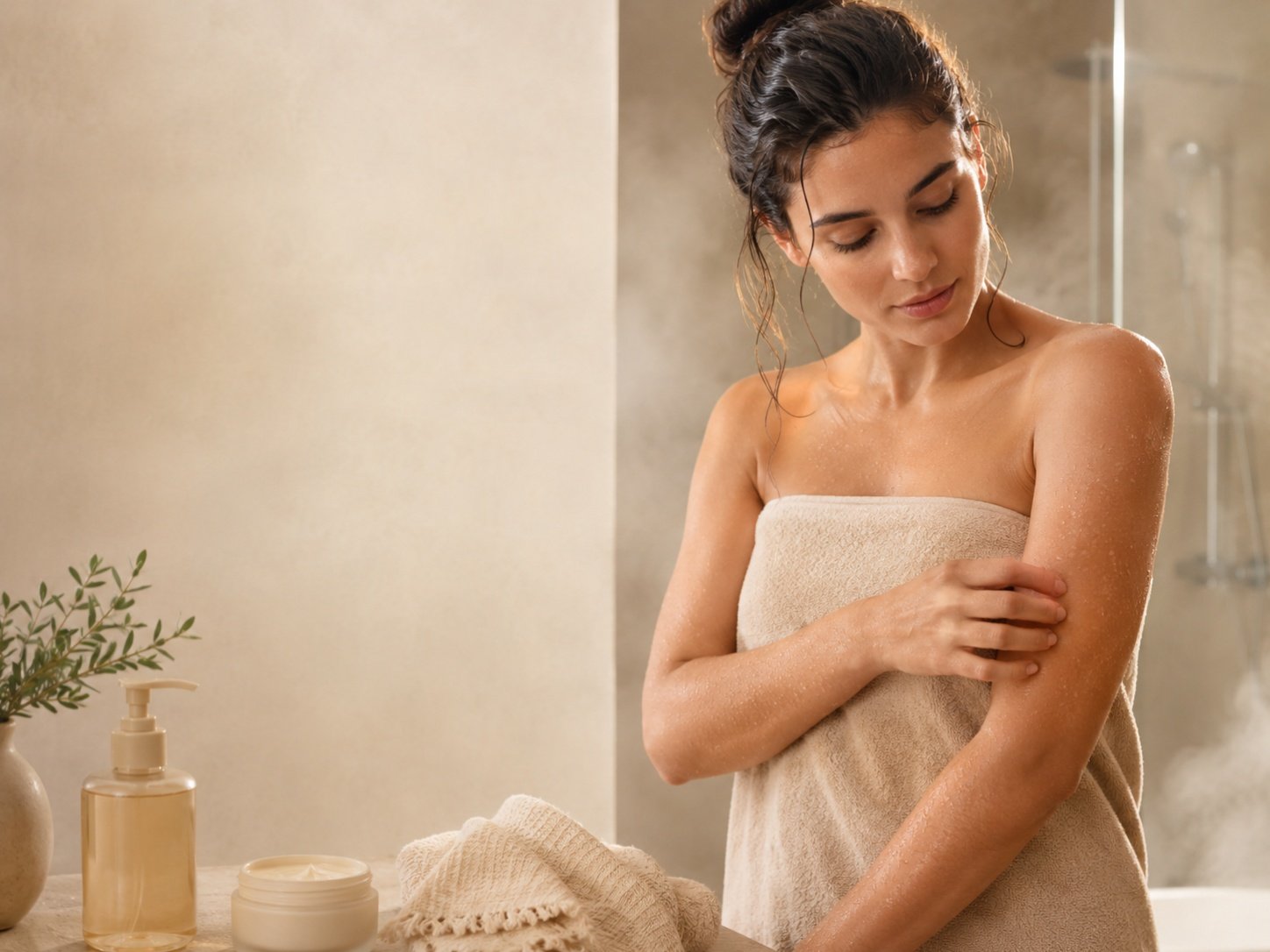
If your skin starts itching, tingling, prickling, or feeling tight right after bathing, you may be wondering why your skin feels itchy after a shower.
A shower should leave your skin feeling clean and comfortable. So when your legs, arms, back, or whole body start itching afterward, it can feel confusing and annoying. In my experience, post-shower itching is often related to hot water, dry skin, harsh soap, over-scrubbing, fragrance, eczema, or not moisturizing soon enough.
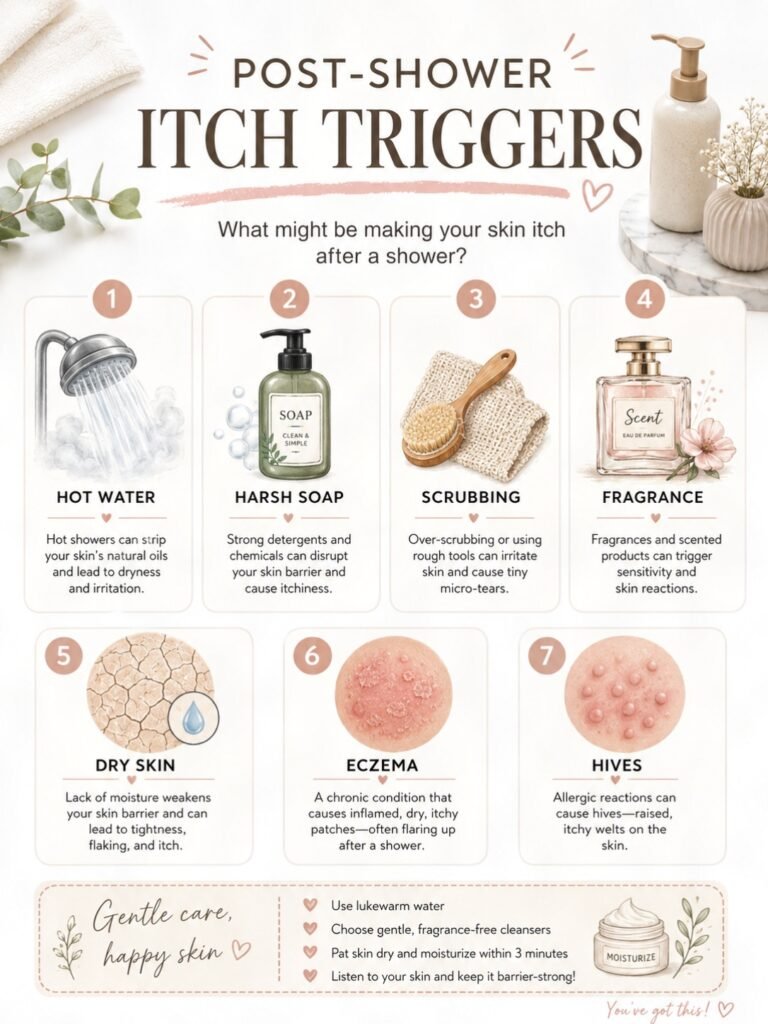
The good news is that many cases improve with simple changes. Shorter warm showers, gentle cleanser, softer towels, and moisturizer applied right after bathing can make a real difference.
The American Academy of Dermatology dry skin tips recommend limiting baths and showers to 5 to 10 minutes, using warm water, gently patting the skin dry, and applying moisturizer immediately after drying.
In this guide, I will explain why your skin feels itchy after a shower, what your skin may be reacting to, how to adjust your shower routine, and when itching needs medical attention.
Why Post-Shower Itching Deserves a Closer Look
When trying to understand why your skin feels itchy after a shower, I recommend looking at the pattern.
Ask yourself:
- Does the itching happen only after hot showers?
- Does your skin feel tight, dry, or flaky afterward?
- Do you see a rash, bumps, hives, or redness?
- Does the itching happen after using a certain body wash?
- Does it affect your whole body or only one area?
- Does moisturizer help?
- Does the itching last a few minutes, a few hours, or all day?
- Does water itself seem to trigger the itch, even without soap?
These clues matter because post-shower itching is not always caused by the same thing.
The Mayo Clinic dry skin guide explains that dry skin can feel rough, itchy, flaky, or scaly, and that long, hot showers, too much bathing, and scrubbing can dry the skin. The Cleveland Clinic itch guide also notes that dry air, harsh soaps, and some medications can cause itching, while persistent itch can sometimes point to an underlying condition.
This article is for general skin-care education only. If you have severe itching, a spreading rash, hives, swelling, trouble breathing, open sores, signs of infection, or itching that does not improve, I recommend speaking with a dermatologist or qualified healthcare professional.
8 Reasons Why Your Skin Feels Itchy After a Shower
1. Your Shower Water Is Too Hot
One of the most common reasons why your skin feels itchy after a shower is hot water.
Hot water can feel relaxing, but it can also strip natural oils from the skin. When those oils are removed, your skin may feel tight, dry, itchy, or irritated after you towel off.
This is especially common on the legs, arms, back, and stomach because those areas can become dry quickly.
The American Academy of Dermatology dry skin tips recommend using warm water rather than hot water and keeping showers short. The Mayo Clinic dry skin guide also lists long, hot showers or baths as a cause of dry skin.
What to try:
- Use warm water instead of hot water
- Keep showers to 5 to 10 minutes
- Turn down the temperature before rinsing
- Avoid standing under very hot water for long periods
- Moisturize right after showering
If the itching improves when you lower the water temperature, hot water may be the main reason your skin reacts.
2. Your Skin Is Too Dry
Dry skin is another major reason why your skin feels itchy after a shower.
When the skin barrier is dry, bathing can make the tightness and itch more noticeable. Your skin may look flaky, ashy, rough, scaly, or dull. It may also itch more in cold weather or low humidity.
Dry skin can happen from:
- Cold weather
- Indoor heating
- Low humidity
- Frequent showers
- Harsh soap
- Aging
- Certain medications
- Not moisturizing after bathing
The Mayo Clinic dry skin guide explains that dry skin may be caused by heat, low-humidity environments, too much bathing or scrubbing, harsh soaps, aging, and some medical treatments.
What to try:
- Apply moisturizer immediately after showering
- Use a cream or ointment instead of a thin lotion if your skin is very dry
- Moisturize again before bed
- Run a humidifier if indoor air is dry
- Avoid harsh body scrubs while your skin is itchy
The American Academy of Dermatology dry skin tips recommend applying moisturizer immediately after drying the skin to help trap moisture.
3. Your Soap or Body Wash Is Too Harsh
Sometimes the reason why your skin feels itchy after a shower is the cleanser, not the water.
Harsh soaps, strong body washes, deodorant soaps, exfoliating washes, and heavily fragranced products can irritate the skin. If your skin feels squeaky clean after showering, that may actually be a sign that too much oil has been removed.
The American Academy of Dermatology dry skin tips recommend using a gentle, fragrance-free cleanser and applying only enough cleanser to remove dirt and oil. The Mayo Clinic contact dermatitis guide explains that contact dermatitis is an itchy rash caused by direct contact with a substance or an allergic reaction to it.
What to try:
- Switch to a gentle, fragrance-free body wash
- Avoid deodorant soap if it makes your skin tight
- Use cleanser only where needed
- Skip scented shower gels when your skin is irritated
- Avoid harsh exfoliating washes until itching improves
I recommend changing one product at a time. If you switch your soap, lotion, detergent, and towel routine all at once, it becomes harder to know what helped.
4. You Are Scrubbing Too Much
Scrubbing can make clean skin feel extra clean, but it can also make itching worse.
Loofahs, washcloths, exfoliating gloves, body brushes, salt scrubs, sugar scrubs, and rough towels can irritate the skin barrier. If your skin is already dry or sensitive, scrubbing can trigger itch, redness, stinging, or tiny bumps.
The AAD hives self-care guidance recommends being gentle with itchy skin while bathing and avoiding rubbing the itchy skin with a washcloth, loofah, or mesh sponge. Even if you do not have hives, this advice is useful when your skin is already irritated.
What to try:
- Use your hands instead of a rough loofah
- Avoid daily body scrubs
- Pat dry instead of rubbing hard
- Exfoliate less often
- Stop scrubbing itchy areas
If your skin turns red or itchy where you scrub most, friction may be part of why your skin feels itchy after a shower.
5. You Are Not Moisturizing Soon Enough
One of the easiest mistakes is waiting too long to moisturize.
After a shower, your skin has a short window where moisturizer can help seal in water. If you wait until your skin is fully dry and tight, moisture has already started to evaporate.
The American Academy of Dermatology dry skin tips recommend applying moisturizer immediately after drying off. The Johns Hopkins Medicine dry skin guide also recommends applying ointments or creams within a few minutes after bathing or showering.
What to try:
- Pat your skin until it is damp, not bone dry
- Apply moisturizer within a few minutes
- Use more on itchy areas
- Choose a cream or ointment for very dry skin
- Keep moisturizer in the bathroom so you remember
This small habit can make a big difference if dryness is why your skin feels itchy after a shower.
6. You May Have Eczema or Sensitive Skin
If your skin is itchy after showers and you also get dry patches, redness, rough areas, scaling, or recurring flare-ups, eczema may be part of the picture.
Eczema-prone skin often has a weaker skin barrier, so hot water, fragrance, soap, sweat, and friction can trigger itching more easily.
The Cleveland Clinic eczema guide recommends sealing in moisture after a bath or shower by immediately applying moisturizer and taking baths or showers with warm, not hot, water. The AAD atopic dermatitis skin-care guidance also says a 5-to-10-minute bath or shower in warm water can help hydrate the skin, but longer bathing can dry it out.
What to try:
- Keep showers short and warm
- Use fragrance-free cleanser
- Moisturize immediately after bathing
- Avoid rubbing with towels
- Wear soft, breathable fabrics
- See a dermatologist if itching, rash, or flare-ups continue
If eczema is why your skin feels itchy after a shower, a basic moisturizing routine may help, but stubborn flares may need medical treatment.
7. Heat or Hives May Be Triggering the Itch
If your skin gets itchy with small raised bumps, welts, or hives after a hot shower, heat may be triggering a reaction.
A hot shower can raise your body temperature. In some people, that heat can trigger hives or itching.
The Cleveland Clinic cholinergic urticaria guide explains that cholinergic urticaria causes hives when the skin is exposed to heat, and triggers can include hot temperatures, exercise, stress, and spicy foods. The AAD hives self-care guidance also recommends warm, not hot, baths and showers because hot water can irritate the skin.
What to try:
- Take cooler, shorter showers
- Avoid very steamy bathrooms
- Notice whether exercise or spicy foods also trigger itch
- Wear loose clothing after showering
- Speak with a healthcare professional if hives keep happening
If you get hives, swelling, dizziness, throat tightness, wheezing, or trouble breathing, seek urgent medical care.
8. Water Itself May Be Triggering Itching
This is less common, but it matters.
Some people experience itching after contact with water, even without a visible rash. This is called aquagenic pruritus. It can happen after showering, sweating, humidity, or other water contact.
The Cleveland Clinic aquagenic pruritus guide explains that aquagenic pruritus is itching triggered by contact with water and does not cause hives or a rash. Cleveland Clinic also notes that it can sometimes be associated with conditions such as polycythemia vera, although it can also happen without a known cause.
What to try:
- Track whether all water contact triggers the itch
- Notice whether there is no rash or hives
- Keep showers short and lukewarm
- Moisturize after bathing
- Ask a healthcare professional if the itching is intense, frequent, or unexplained
If you are trying to understand why your skin feels itchy after a shower and it happens every time water touches your skin, even with gentle products, it is worth getting professional advice.
A Better Shower Routine for Itchy Skin
If you want to reduce post-shower itching, I recommend starting with a simple routine.
- Keep the shower warm, not hot.
- Limit showers to 5 to 10 minutes.
- Use a gentle, fragrance-free cleanser.
- Clean only the areas that need cleanser.
- Avoid rough loofahs and scrubs.
- Rinse well so cleanser does not stay on the skin.
- Pat dry with a soft towel.
- Apply moisturizer within a few minutes.
- Wear soft clothing after showering.
- Track triggers if itching keeps coming back.
The American Academy of Dermatology dry skin tips support several of these steps, including short warm showers, gentle cleanser, patting dry, and moisturizing immediately after drying.
What to Look For in Moisturizer
When your skin feels itchy after showering, I recommend choosing a moisturizer that supports the skin barrier instead of only smelling nice.
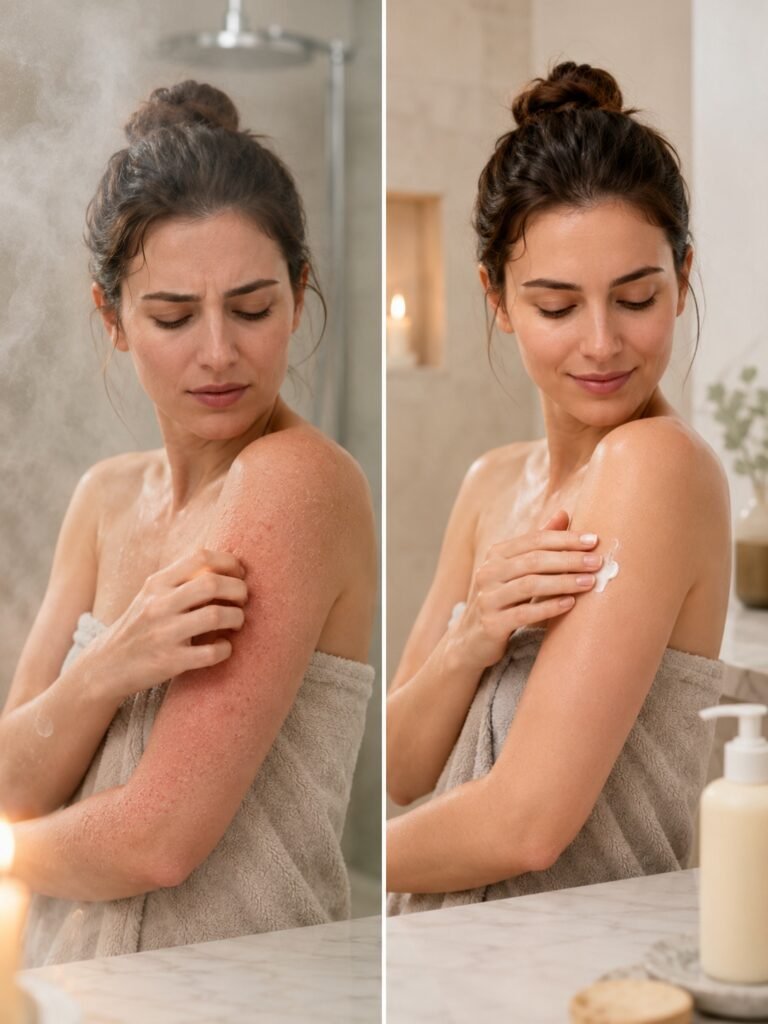
Look for ingredients such as:
- Petrolatum
- Glycerin
- Ceramides
- Dimethicone
- Shea butter
- Mineral oil
- Hyaluronic acid
- Colloidal oatmeal
- Fragrance-free formulas
The AAD dry skin tips recommend using a moisturizer that contains ingredients such as petrolatum, mineral oil, shea butter, glycerin, dimethicone, lanolin, hyaluronic acid, jojoba oil, or lactic acid.
If your skin stings with lotion, switch to a bland, fragrance-free cream or ointment. Fragrance can be irritating for sensitive skin.
Common Mistakes That Make Post-Shower Itching Worse
Taking Long, Hot Showers
Hot water can strip the skin and make dryness worse.
Using Scented Body Wash on Sensitive Skin
Fragrance may smell nice, but it can irritate some people’s skin.
Scrubbing With a Rough Loofah
Friction can make already itchy skin more irritated.
Waiting Too Long to Moisturize
Moisturizer works best when applied soon after showering.
Using a Thin Lotion When Skin Is Very Dry
Very dry skin may need a thicker cream or ointment.
Washing the Whole Body With Soap Every Time
Some areas may only need water unless they are sweaty, dirty, or oily.
Ignoring Hives or a Persistent Rash
If itching comes with hives, swelling, rash, pain, or worsening symptoms, do not keep treating it like simple dryness.
When to See a Dermatologist
Most post-shower itching improves with gentler bathing and better moisturizing, but some symptoms need professional care.
I recommend seeing a dermatologist or qualified healthcare professional if:
- Itching is severe or keeps returning
- You have a rash that spreads or does not improve
- You get hives after showers
- You have swelling, welts, or painful skin
- Your skin cracks, bleeds, or oozes
- You have signs of infection
- The itching affects sleep
- Water itself seems to trigger intense itching
- Itching comes with unexplained weight loss, fever, fatigue, or night sweats
The Cleveland Clinic itch guide explains that itch can sometimes be a sign of an underlying condition, especially when it is persistent, widespread, or not explained by dry skin or irritation.
FAQ
Why does my skin feel itchy after a shower?
Your skin may feel itchy after a shower because of hot water, dry skin, harsh soap, fragrance, over-scrubbing, not moisturizing soon enough, eczema, hives triggered by heat, or a less common water-triggered condition such as aquagenic pruritus.
Why your skin feels itchy after a shower even without a rash?
If your skin itches after a shower without a rash, dry skin, hot water, harsh cleanser, or aquagenic pruritus may be possible causes. If it happens every time or feels intense, I recommend asking a healthcare professional.
Can hot showers cause itchy skin?
Yes. Hot showers can dry and irritate the skin, which may lead to itching, tightness, or flaking afterward.
Is itchy skin after a shower a sign of eczema?
It can be. Eczema-prone skin may itch after hot water, fragrance, soap, sweat, or friction. If you also have dry patches, redness, scaling, or recurring flares, it is worth getting checked.
Should I moisturize before or after a shower?
Moisturize after a shower while the skin is still slightly damp. This helps trap moisture and reduce dryness.
What body wash is best for itchy skin after showers?
I recommend a gentle, fragrance-free cleanser. Avoid harsh soaps, strong fragrance, and rough exfoliating products if your skin is itchy.
When should I worry about itching after a shower?
You should get professional advice if itching is severe, persistent, widespread, wakes you up, comes with hives, swelling, rash, bleeding, infection, or happens every time water touches your skin.
Conclusion
Why your skin feels itchy after a shower usually comes down to hot water, dry skin, harsh soap, over-scrubbing, fragrance, missed moisturizer, eczema, heat-triggered hives, or less common water-triggered itching.
I recommend starting with the simplest fixes: take shorter warm showers, use gentle fragrance-free cleanser, stop scrubbing, pat your skin dry, and apply moisturizer within a few minutes.
When you understand why your skin feels itchy after a shower, it becomes easier to protect your skin barrier instead of repeating the same routine that keeps making your skin uncomfortable. If the itching is severe, persistent, comes with hives or rash, or happens every time you touch water, it is worth getting medical advice.
Sources
- American Academy of Dermatology dry skin tips: https://www.aad.org/public/everyday-care/skin-care-basics/dry/dermatologists-tips-relieve-dry-skin
- Mayo Clinic dry skin symptoms and causes: https://www.mayoclinic.org/diseases-conditions/dry-skin/symptoms-causes/syc-20353885
- Mayo Clinic contact dermatitis symptoms and causes: https://www.mayoclinic.org/diseases-conditions/contact-dermatitis/symptoms-causes/syc-20352742
- Cleveland Clinic signs that itch may be a medical problem: https://health.clevelandclinic.org/why-youre-itchy
- Cleveland Clinic eczema guide: https://my.clevelandclinic.org/health/diseases/9998-eczema
- American Academy of Dermatology atopic dermatitis skin-care guidance: https://www.aad.org/public/diseases/eczema/types/atopic-dermatitis/atopic-dermatitis-coping
- Cleveland Clinic cholinergic urticaria guide: https://my.clevelandclinic.org/health/diseases/cholinergic-urticaria
- American Academy of Dermatology hives self-care guidance: https://www.aad.org/public/diseases/a-z/hives-self-care
- Cleveland Clinic aquagenic pruritus guide: https://my.clevelandclinic.org/health/diseases/22516-aquagenic-pruritus
- Johns Hopkins Medicine dry skin guide: https://www.hopkinsmedicine.org/health/conditions-and-diseases/dry-skin