

If your hair feels greasy too quickly, dry after washing, itchy between wash days, or weighed down by products, you may be wondering, how often should you wash your hair? The honest answer is that there is no perfect schedule for everyone. Your best wash routine depends on your scalp, hair type, texture, lifestyle, products, and whether you have flakes, dryness, oiliness, or buildup.
I recommend thinking about hair washing as scalp care first and hair care second. Shampoo is mainly for your scalp because that is where oil, sweat, dead skin, and buildup collect. Conditioner is mainly for your hair length because that is where dryness, tangles, and breakage usually show up.
The American Academy of Dermatology says to wash your hair based on how oily or dirty it gets. Straight hair with an oily scalp may need daily shampooing, while dry, textured, curly, or thick hair may only need shampooing when needed, at least every 2 to 3 weeks.
In this guide, I’ll walk you through how often you should wash your hair, what affects your wash schedule, how to tell if you are washing too much or not enough, and how to adjust your routine without damaging your hair.
This article is for general beauty and scalp care education only. If your scalp is painful, bleeding, very itchy, inflamed, flaking heavily, or you notice sudden hair loss, I recommend speaking with a dermatologist or qualified healthcare professional.
Why Hair Washing Frequency Matters
Hair washing is not only about how clean your hair looks. It also affects your scalp comfort, oil balance, product buildup, dryness, flakes, tangles, and how well your hair styles.
Your scalp naturally produces oil. That oil can help protect the scalp and hair, but it can also build up with sweat, dead skin, dry shampoo, gels, creams, oils, and pollution. If you do not wash often enough for your scalp type, your roots may look greasy or your scalp may feel itchy.
On the other hand, if you wash too often for your hair type or use a shampoo that is too harsh, your hair may feel dry, rough, brittle, or frizzy.
Mayo Clinic dermatologist Dr. Dawn Davis explains that shampooing is not just for the hair. The scalp also needs cleansing because oil residue and dead skin can build up if they are not removed. You can read Mayo Clinic’s guidance on how often you should wash your hair and why scalp cleansing matters.
The goal is not to wash as little as possible. The goal is to wash often enough for a clean, comfortable scalp while keeping the hair length moisturized and manageable.
How Often Should You Wash Your Hair?
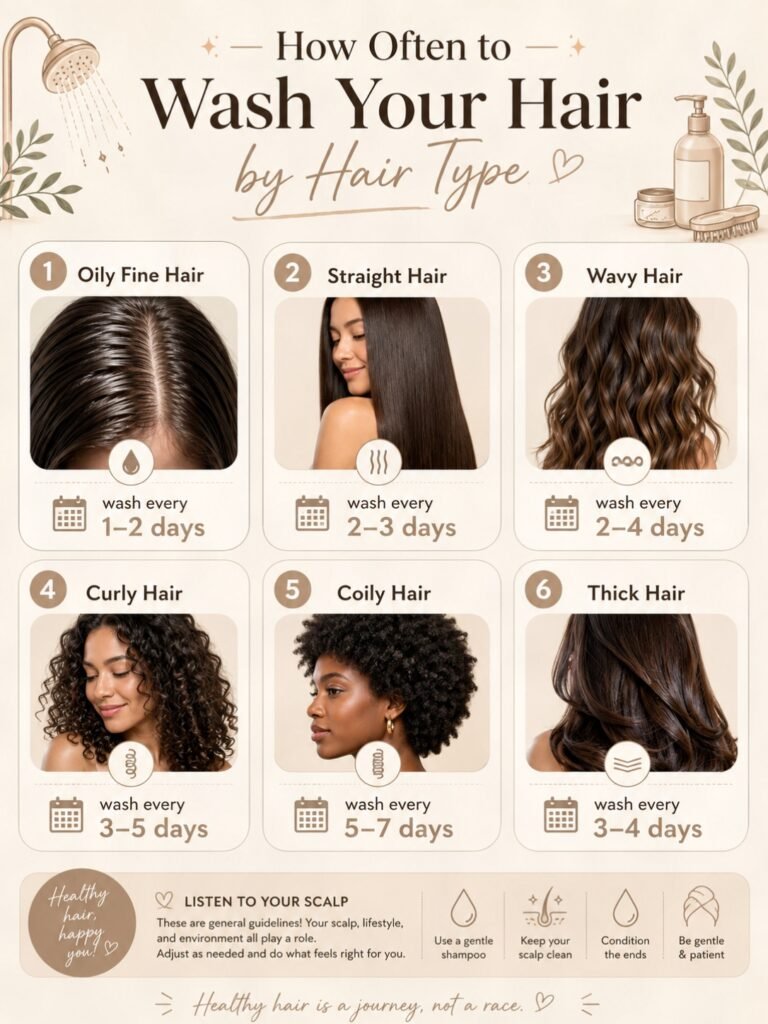
The easiest answer is this: wash your hair when your scalp is oily, dirty, sweaty, itchy, flaky, or weighed down by buildup. For some people, that means daily. For others, it means once or twice a week. For some textured, curly, or coily hair types, it may be less often.
A practical starting point looks like this:
- Oily scalp or fine straight hair: daily or every other day
- Fine hair without heavy oil: every 1 to 2 days
- Medium hair: every 2 to 4 days
- Thick or coarse hair: once a week or as needed
- Curly hair: every few days to once a week, depending on scalp oil and styling routine
- Coily or tightly textured hair: once a week to every 2 weeks, or as needed
- Dry, thick, curly, or textured hair: at least every 2 to 3 weeks as needed, according to AAD guidance
- Sweaty scalp or heavy product use: wash more often when buildup or odor appears
- Flaky, itchy, or irritated scalp: may need more frequent cleansing or a dandruff shampoo
Cleveland Clinic gives a helpful general guide: thin or finer hair may benefit from washing every 1 to 2 days, semi-coarse hair every 2 to 4 days, and coarse, thick hair once a week or whenever needed.
I recommend using those ranges as a starting point, not a strict rule. Your scalp will usually tell you what it needs.
10 Things That Decide How Often You Should Wash Your Hair
1. Your Scalp Oil Level
Your scalp oil level is one of the biggest factors in how often should you wash your hair. If your scalp gets oily quickly, your hair may look greasy faster, especially at the roots, crown, and hairline.
The AAD says people with straight hair and oily scalps may want to shampoo every day. That matters because straight hair lets oil move down the hair shaft more easily.
What to try:
- Wash daily or every other day if your scalp gets oily fast
- Focus shampoo on the scalp, not the ends
- Keep conditioner away from oily roots
- Use lightweight products near the crown
- Clean your brush regularly
- Avoid touching your roots throughout the day
If your roots are greasy but your ends are dry, do not stop conditioning. Just condition from the mid-lengths to ends.
2. Your Hair Texture
Hair texture changes how oil travels. Straight hair usually shows oil faster because sebum can move down the strand more easily. Curly and coily hair often looks less greasy because bends and coils slow oil movement from the scalp to the ends.
This is why curly and coily hair can be oily at the scalp but dry at the ends at the same time.
What to try:
- Straight hair: wash more often if roots get oily
- Wavy hair: wash based on scalp oil and product buildup
- Curly hair: wash when the scalp feels oily, itchy, or coated
- Coily hair: protect moisture while keeping the scalp clean
- Use conditioner based on hair dryness, not scalp oil
- Avoid copying wash routines made for a completely different texture
The right schedule should keep your scalp clean without making your ends feel stripped.
3. Your Hair Thickness
Fine hair often looks oily faster because there is less hair to absorb or hide scalp oil. Thick hair may be able to go longer between washes because oil is less visible and takes longer to move through the hair.
Cleveland Clinic’s wash-frequency guide suggests thin, finer hair may need washing every 1 to 2 days, while coarse, thick hair may only need washing once a week or as needed.
What to try:
- Fine hair: use lightweight shampoo and conditioner
- Medium hair: wash every few days if the scalp feels comfortable
- Thick hair: wash when the scalp feels oily, itchy, sweaty, or coated
- Avoid heavy oils near fine roots
- Use richer conditioner on thick or dry ends
- Adjust product amount based on density
If your hair gets flat quickly, your wash routine may need to be more frequent or your products may be too heavy.
4. Your Hair and Scalp Dryness
If your hair feels dry, brittle, rough, frizzy, or tangled after washing, you may be washing too often, using a shampoo that is too harsh, or skipping enough conditioner.
The AAD recommends shampooing dry, textured, curly, or thick hair when needed, at least once every 2 to 3 weeks as needed. This does not mean everyone with curly or thick hair should wait that long. It means dry textures usually need a gentler, moisture-aware schedule.
What to try:
- Wash less often if hair feels dry after every shampoo
- Use a moisturizing shampoo if your hair is dry
- Condition every wash day
- Apply conditioner mainly to the length and ends
- Use leave-in conditioner if the hair still feels dry
- Avoid scrubbing the hair length with shampoo
If your scalp is oily but your ends are dry, wash the scalp and protect the ends with conditioner.
5. Sweat and Workout Routine
Sweat can make the scalp feel itchy, salty, greasy, or uncomfortable. If you work out often, wear helmets, sweat heavily, or live in a humid climate, you may need to wash more often.
I do not recommend forcing yourself to wait several days if your scalp feels sweaty and irritated. A clean scalp is part of healthy hair care.
What to try:
- Rinse or wash after heavy sweating
- Use a gentle shampoo if you wash frequently
- Wash hats, headbands, scarves, and helmets regularly
- Keep conditioner on the ends
- Use dry shampoo lightly before mild sweating, not as your only cleanser
- Wash sooner if your scalp smells, itches, or feels coated
A sweaty scalp does not always need a harsh shampoo. It needs enough cleansing to feel fresh again.
6. Product Buildup
Styling products can change how often you should wash your hair. Oils, gels, mousse, creams, dry shampoo, edge control, hair spray, heat protectant, and leave-in products can build up on the scalp and hair.
If your hair feels waxy, dull, coated, heavy, sticky, gritty, or hard to refresh, buildup may be part of the problem.
What to try:
- Wash more often if you use heavy styling products
- Use clarifying shampoo occasionally if buildup is obvious
- Keep oils and creams away from the scalp unless made for scalp use
- Rinse shampoo thoroughly
- Clean combs, brushes, bonnets, and pillowcases
- Avoid layering dry shampoo for too many days
The AAD dry shampoo tips explain that dry shampoo absorbs excess oil and should be applied only where hair feels greasy. It can make hair dry, stiff, gritty, or irritating if you use too much.
7. Dandruff, Flakes, or Seborrheic Dermatitis
If you see flakes, itching, greasy scale, redness, or irritation, your wash schedule may need to change. Sometimes flakes happen because the scalp is not being cleaned often enough. Other times, flakes may come from dandruff or seborrheic dermatitis.
The AAD explains that seborrheic dermatitis can cause a scaly rash on oily areas like the scalp and face. For mild to moderate scalp seborrheic dermatitis, the AAD says dandruff shampoo can be part of treatment.
What to try:
- Wash more often if flakes appear with oil buildup
- Try an anti-dandruff shampoo if flakes and itch are present
- Follow the label directions for medicated shampoo
- Do not scratch the scalp aggressively
- Avoid covering flakes with more dry shampoo
- See a dermatologist if flakes, redness, or itching continue
If your scalp is painful, bleeding, swollen, or shedding suddenly, get professional guidance instead of only changing products.
8. Age and Hormones
Oil production can change with age and hormones. Teenagers and younger adults may notice oilier scalps. Some people also notice changes around menstrual cycles, pregnancy, postpartum periods, menopause, stress, or medical conditions.
I recommend paying attention to sudden changes. If your hair has always been normal but suddenly becomes very oily, itchy, flaky, or starts shedding, it may be worth checking in with a professional.
What to try:
- Adjust your wash schedule when your scalp changes
- Use lighter products if roots become oilier
- Avoid heavy conditioner near the scalp
- Track sudden changes in oil, shedding, or irritation
- Speak with a dermatologist if changes feel unusual
- Do not assume every change is caused by shampoo
Your wash schedule does not have to stay the same forever. Hair and scalp needs can shift.
9. Protective Styles, Extensions, or Braids
Protective styles can make washing more complicated, but the scalp still needs care. Sweat, oil, flakes, styling products, and tension can build up under braids, wigs, extensions, or long-term styles.
The goal is to keep the scalp clean without roughing up the style or drying out the hair.
What to try:
- Cleanse the scalp gently as needed
- Avoid heavy oils that trap buildup
- Use applicator bottles for targeted scalp cleansing
- Dry the scalp thoroughly after washing
- Avoid styles that feel tight or painful
- Remove or redo styles if the scalp becomes irritated
A protective style should not make your scalp hurt, itch constantly, or develop heavy buildup.
10. Your Lifestyle and Environment
Your daily routine matters. You may need to wash more often if you work around smoke, food smells, dust, pollution, sunscreen, heavy makeup, or frequent sweating. You may need to wash less often if your scalp is dry and your lifestyle does not create much buildup.
What to try:
- Wash more often in hot, humid, or sweaty seasons
- Wash after exposure to smoke, strong odors, or heavy pollution
- Keep hair off sunscreen and oily skincare
- Change pillowcases regularly
- Clean hats and scarves
- Adjust your routine seasonally
Your best answer to how often should you wash your hair may change throughout the year.
Signs You Are Washing Your Hair Too Often
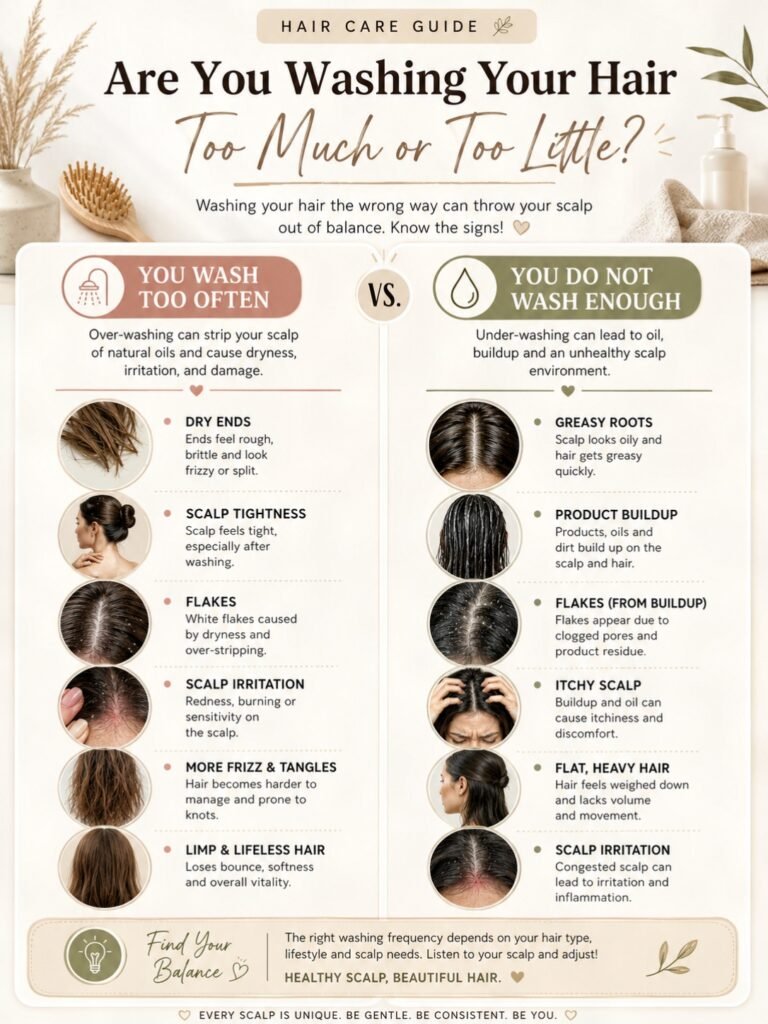
You may be washing too often if your hair or scalp feels worse after shampooing.
Common signs include:
- Dry, rough, or straw-like hair
- Itchy scalp after washing
- Frizz that appears immediately after shampooing
- Hair color fading quickly
- Ends that feel brittle
- More tangling than usual
- Scalp tightness
- Hair that feels clean but not soft
What to try:
- Add one extra day between washes
- Switch to a gentler shampoo
- Use conditioner every wash day
- Apply conditioner to the ends
- Use leave-in conditioner if needed
- Avoid shampooing the full hair length
If you wash daily because your scalp is oily but your ends are dry, you can still wash often. Just use a gentler shampoo and protect the ends with conditioner.
Signs You Are Not Washing Your Hair Enough
You may not be washing enough if your scalp feels uncomfortable or your hair looks coated.
Common signs include:
- Greasy roots
- Itchy scalp
- Bad odor
- Heavy product buildup
- Flakes mixed with oil
- Hair that looks dull or waxy
- Dry shampoo that no longer helps
- Scalp tenderness from buildup
- Styles that fall flat quickly
What to try:
- Add one wash day per week
- Shampoo the scalp more thoroughly
- Use a clarifying shampoo occasionally
- Rinse longer
- Use less dry shampoo
- Wash after heavy sweating
My Simple Wash Schedule Guide
If you are unsure where to start, use this as a practical guide and adjust from there.
If You Have Fine, Oily Hair
Wash daily or every other day.
Fine oily hair usually shows grease fast. Use lightweight shampoo, keep conditioner on the ends, and avoid heavy oils near the scalp.
If You Have Straight Hair
Wash every 1 to 3 days, depending on oil.
Straight hair often shows oil quickly because sebum moves down the strand easily. If your scalp is oily, daily washing may be reasonable.
If You Have Wavy Hair
Wash every 2 to 4 days, depending on scalp oil and styling product.
Wavy hair can get oily at the roots but dry at the ends. Shampoo the scalp and condition the length.
If You Have Curly Hair
Wash every few days to once a week, depending on your scalp.
Curly hair often needs more moisture and less rough handling. Wash when your scalp feels oily, itchy, sweaty, or coated.
If You Have Coily or Tightly Textured Hair
Wash once a week to every 2 weeks, or as needed.
Some coily hair routines need less frequent shampooing to protect moisture, but the scalp still needs regular cleansing. The schedule should depend on scalp comfort, buildup, and styling routine.
If You Have Thick or Coarse Hair
Wash once a week or as needed.
Thick hair may not show oil quickly, but buildup can still happen. Wash when the scalp feels dirty, itchy, sweaty, or heavy.
If You Have a Flaky or Itchy Scalp
Wash based on the scalp condition, not just hair type.
If flakes, itch, redness, or greasy scale continue, consider anti-dandruff shampoo and professional advice.
How to Wash Your Hair the Right Way
How you wash matters as much as how often you wash.
Step 1: Wet the Scalp Fully
Make sure water reaches the scalp before shampoo. This helps the shampoo spread and work better.
Step 2: Apply Shampoo to the Scalp
The AAD recommends applying shampoo to the scalp instead of the entire hair length. The rinse will carry shampoo through the ends.
Step 3: Massage With Fingertips
Use the pads of your fingers, not your nails. Focus on the hairline, crown, and nape.
Step 4: Rinse Thoroughly
Leftover shampoo can make the scalp feel coated or irritated.
Step 5: Condition the Length
Apply conditioner from mid-lengths to ends. The AAD recommends using conditioner after shampooing because it helps moisturize and detangle hair.
Step 6: Rinse and Dry Gently
Do not rough up your hair with a towel. Wrap or blot with a towel or T-shirt, especially if your hair is frizz-prone.
Product Types That Can Help Your Wash Routine
Gentle Shampoo
Best for frequent washing, dry hair, or sensitive scalps. It cleans without making the hair feel stripped.
Clarifying Shampoo
Best for occasional buildup from dry shampoo, oils, gels, mousse, hair spray, hard water residue, or heavy styling products. Use as needed, not necessarily every wash.
Moisturizing Shampoo
Best for dry, curly, coily, thick, or textured hair that feels rough after washing.
Balancing Shampoo
Best for oily roots and normal ends. It can help remove oil without feeling as harsh as a strong clarifier.
Anti-Dandruff Shampoo
Best when oiliness comes with flakes, itch, or scalp irritation. Follow label directions and see a dermatologist if symptoms continue.
Lightweight Conditioner
Best for fine, oily, or flat hair. Apply it to the ends only.
Rich Conditioner
Best for thick, dry, curly, coily, or color-treated hair. Use it where the hair feels dry, not necessarily on the scalp.
Common Hair Washing Mistakes
Mistake 1: Washing the Ends Like the Scalp
The scalp needs the most shampoo. The ends usually need more conditioner.
Mistake 2: Copying Someone Else’s Wash Schedule
Your friend’s weekly wash routine may not work for your oily scalp, fine hair, sweaty workouts, or dry curls.
Mistake 3: Using Dry Shampoo Instead of Washing
Dry shampoo is useful, but it does not fully cleanse the scalp. The AAD recommends applying dry shampoo only where hair feels greasy and using a small amount.
Mistake 4: Skipping Conditioner
Even oily hair can need conditioner on the ends. Skipping it can make the length dry, tangled, or frizzy.
Mistake 5: Washing Too Rarely Because of a Trend
Some people can stretch wash days. Others cannot. If your scalp is greasy, itchy, flaky, or uncomfortable, wash it.
Mistake 6: Using Heavy Products Near the Roots
Oils, creams, serums, and masks can make clean hair look greasy if they sit too close to the scalp.
Mistake 7: Ignoring Flakes or Itching
If flakes and itching keep coming back, your scalp may need targeted care. It may not be a simple wash-frequency issue.
FAQ
How often should you wash your hair if it gets greasy fast?
If your scalp gets greasy fast, you may need to wash daily or every other day. The AAD says straight hair with an oily scalp may need daily shampooing. Use conditioner on the ends so the hair length does not dry out.
Is it bad to wash your hair every day?
Not always. Daily washing can be fine for oily scalps, fine hair, heavy sweating, or buildup, especially if you use a gentle shampoo and condition the ends. It may be too much if your hair becomes dry, rough, itchy, or brittle.
How often should you wash curly hair?
Curly hair often needs less frequent shampooing than straight oily hair. Many people with curly hair wash every few days to once a week, but the best schedule depends on scalp oil, sweat, buildup, and dryness.
How often should you wash coily hair?
Coily or tightly textured hair may be washed once a week to every 2 weeks, or as needed. The scalp should still be kept clean, especially if there is sweat, buildup, itching, odor, or flakes.
How often should you wash fine hair?
Fine hair may need washing every day or every other day because it can show oil quickly. Use lightweight conditioner on the ends and avoid heavy products near the scalp.
Can washing less train your hair to be less oily?
I would not rely on “training” your hair as a guaranteed fix. Some people can stretch wash days by using fewer heavy products, but scalp oil production is influenced by factors like hair type, scalp type, age, hormones, and lifestyle. If your scalp is oily and uncomfortable, it is okay to wash.
Should I wash my hair after sweating?
If your scalp feels sweaty, itchy, salty, coated, or smells after exercise, washing or rinsing can help. People who sweat heavily may need more frequent cleansing than someone with a dry scalp and low activity level.
What happens if you do not wash your hair enough?
Oil, sweat, dead skin, dry shampoo, and styling products can build up. Your scalp may feel itchy, greasy, flaky, or uncomfortable, and your hair may look dull or heavy.
Should I shampoo twice?
You may shampoo twice if your scalp is very oily, sweaty, or covered in product buildup. If your hair is dry or your scalp is sensitive, one gentle wash may be enough.
How do I know my wash routine is working?
Your scalp should feel clean and comfortable, your roots should not look greasy too quickly, and your ends should not feel stripped. A good routine balances scalp cleansing with hair moisture.
Conclusion
So, how often should you wash your hair? The best answer depends on your scalp and hair type. Oily, fine, or straight hair may need washing daily or every other day. Medium hair may do well every few days. Thick, curly, coily, dry, or textured hair may need less frequent washing, as long as the scalp stays clean and comfortable.
I recommend starting with your scalp. If it is oily, itchy, sweaty, flaky, or coated, wash more often. If your hair feels dry, brittle, rough, or frizzy after every shampoo, wash less often or switch to a gentler routine.
Your best wash schedule is the one that keeps your scalp fresh and your hair soft, manageable, and healthy-looking.
Sources
- American Academy of Dermatology healthy hair tips: https://www.aad.org/public/everyday-care/hair-scalp-care/hair/healthy-hair-tips
- American Academy of Dermatology dry shampoo tips: https://www.aad.org/public/everyday-care/hair-scalp-care/hair/dry-shampoo-best-results
- American Academy of Dermatology seborrheic dermatitis overview: https://www.aad.org/public/diseases/a-z/seborrheic-dermatitis-overview
- American Academy of Dermatology seborrheic dermatitis treatment: https://www.aad.org/public/diseases/a-z/seborrheic-dermatitis-treatment
- Cleveland Clinic hair washing guidance: https://health.clevelandclinic.org/the-dirty-truth-about-washing-your-hair
- Mayo Clinic News Network hair washing guidance: https://newsnetwork.mayoclinic.org/discussion/mayo-clinic-minute-how-often-should-you-wash-your-hair/