

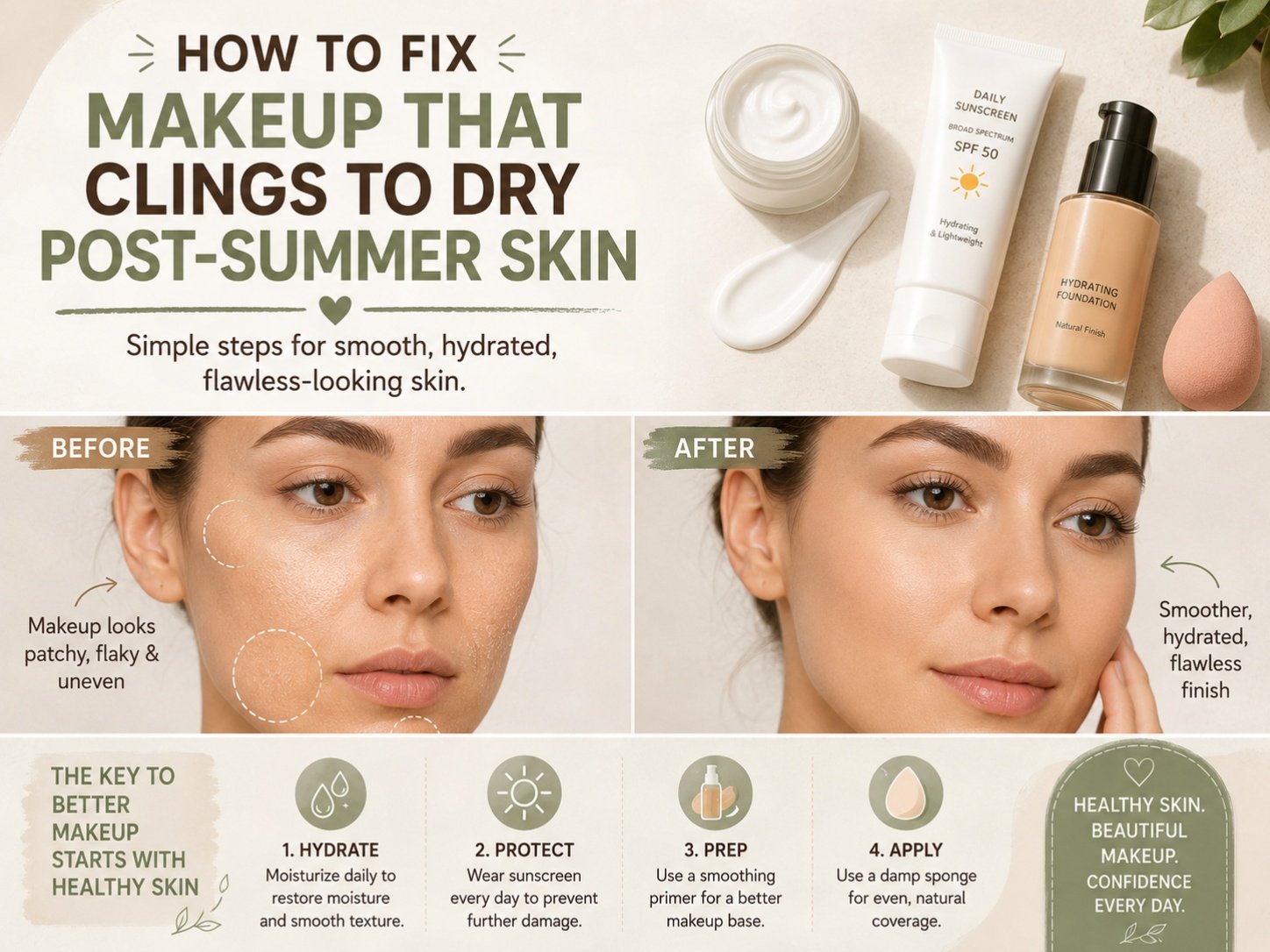
Makeup that clings to dry post-summer skin can make even your favorite foundation look patchy, flaky, heavy, or uneven.
If your makeup suddenly looks worse after summer, your skin may be trying to tell you something. Sun exposure, heat, sweating, sunscreen layers, pool water, salt water, air conditioning, and extra cleansing can all leave skin feeling drier or more textured than usual.
In my experience, the fix is usually not more foundation. It is better skin prep, gentler exfoliation, smarter hydration, and lighter makeup layers.
In this guide, I will explain why makeup that clings to dry post-summer skin happens and how to make your base look softer, smoother, and more natural again.
Why Makeup That Clings to Dry Post-Summer Skin Happens
Makeup that clings to dry post-summer skin happens because foundation and concealer sit on top of texture.
When skin is flaky, dehydrated, rough, or irritated, makeup can catch on uneven areas instead of blending smoothly. That is why foundation may look heavy around the nose, mouth, cheeks, forehead, or chin even when you apply only a small amount.
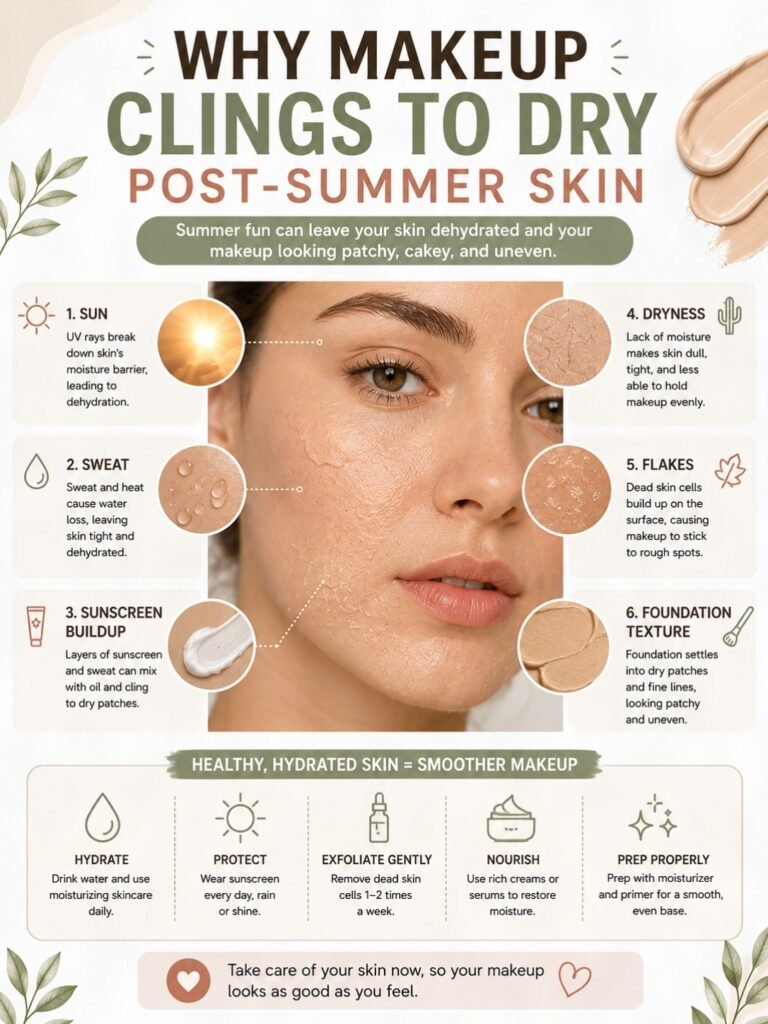
The American Academy of Dermatology explains that dry skin can feel rough, flaky, itchy, cracked, or tight, and it recommends using moisturizer and gentle skin-care habits to help relieve dryness.
The Mayo Clinic dry skin guide also notes that dry skin can be affected by weather, heat, harsh soaps, and other factors.
After summer, your skin may need a reset before makeup starts sitting well again.
1. Stop Applying Foundation Over Unprepped Dry Patches
If makeup that clings to dry post-summer skin is your main problem, the first thing I would check is skin prep.
Foundation is not designed to smooth flakes by itself. If you apply makeup directly over dry patches, it often makes them more visible. This is especially true with matte foundations, full-coverage formulas, powder foundations, and heavy concealers.
A better approach is to prep dry areas before foundation touches the skin.
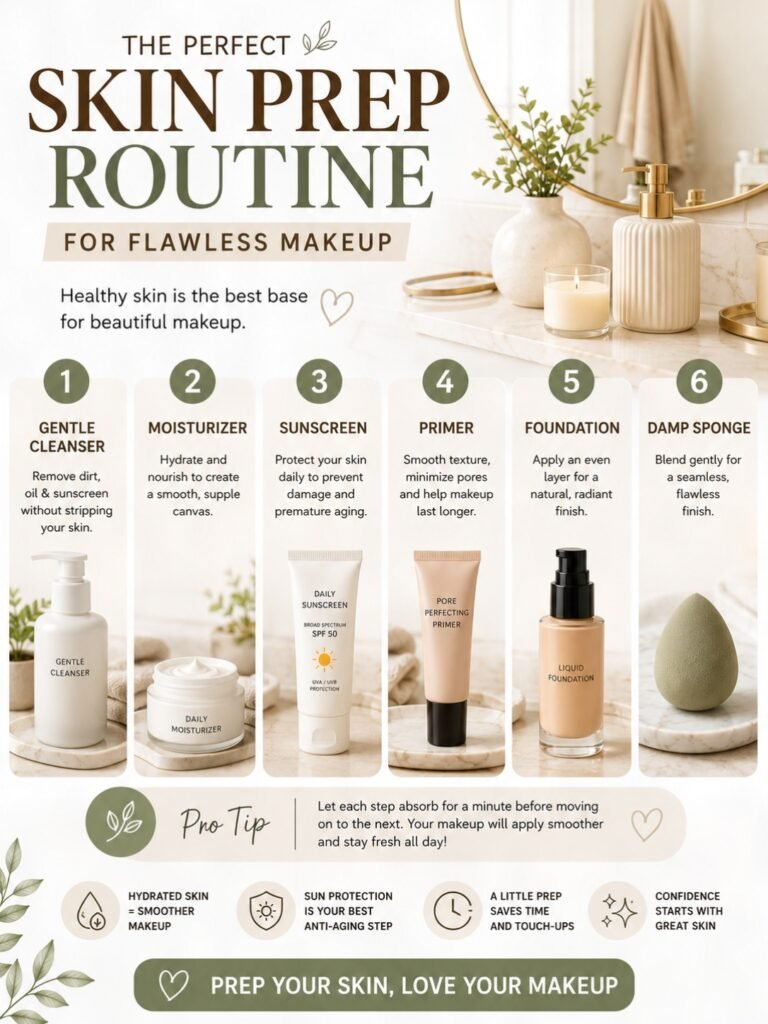
Quick Pre-Makeup Skin Prep
Try this simple routine:
- Cleanse gently
- Apply a hydrating serum if you use one
- Add moisturizer
- Let it settle for a few minutes
- Apply sunscreen during the day
- Use a small amount of primer only where needed
- Apply foundation in thin layers
The goal is to soften the surface before makeup goes on.
2. Use a Gentle Cleanser Instead of Stripping the Skin
Dry post-summer skin can become more noticeable if your cleanser is too harsh.
If your face feels tight right after washing, that may be a sign that your cleanser is removing too much oil or leaving your skin uncomfortable. Makeup often clings more when the skin is already tight before foundation.
The Mayo Clinic dry skin symptoms and causes page recommends using gentle cleansing habits and avoiding products that can irritate dry skin.
For dry or sensitive skin, I usually recommend a creamy, non-stripping cleanser. If you wear sunscreen or makeup, remove it thoroughly at night, but do not scrub your skin raw.
What to Avoid
Avoid harsh scrubs, very hot water, strong foaming cleansers, and too many active treatments at once when your skin already feels dry.
A calmer cleanser can make a big difference in how makeup sits the next morning.
3. Exfoliate Carefully, Not Aggressively
When foundation catches on flakes, exfoliation may help. But too much exfoliation can make the problem worse.
This is where many people get stuck. They see dry patches, scrub harder, and then the skin becomes more irritated. The next day, makeup clings even more.
I recommend gentle exfoliation only when your skin can tolerate it. If your skin is burning, cracked, peeling badly, or stinging, focus on barrier support first.
Gentle Exfoliation Tips
Start with one gentle exfoliation session per week.
Avoid layering multiple exfoliating acids, retinoids, scrubs, and peels at the same time. Do not exfoliate right before applying makeup if your skin tends to react quickly.
The goal is to smooth loose flakes, not polish the skin until it feels sensitive.
4. Choose a Moisturizer That Actually Supports Dry Skin
A light gel moisturizer may not be enough when makeup that clings to dry post-summer skin keeps showing up.
The American Academy of Dermatology’s dry skin tips recommend using a cream or ointment when skin feels dry and gently massaging moisturizer into the skin.
The Cleveland Clinic moisturizer guide explains that dry skin often benefits from moisturizing creams that support the skin’s moisture barrier.
If your makeup is catching on texture, try using a slightly richer moisturizer at night and a makeup-friendly moisturizer in the morning.
Ingredients I Look For
For dry post-summer skin, I usually look for moisturizers with ingredients like:
- Ceramides
- Glycerin
- Hyaluronic acid
- Squalane
- Shea butter
- Petrolatum in small amounts for very dry spots
- Colloidal oatmeal for comfort
You do not need every ingredient in one product. You just need a formula that leaves your skin comfortable, not greasy or tight.
5. Give Moisturizer Time Before Applying Makeup
Even a good moisturizer can cause problems if you apply foundation too quickly.
If the moisturizer has not settled, foundation may slide, separate, pill, or look streaky. If you wait too long and your skin dries down completely, foundation may cling again.
I like giving moisturizer a few minutes to absorb, then checking the skin before makeup. If a dry patch still looks rough, I press a tiny bit more moisturizer only on that area.
Simple Timing Guide
Cleanser
Serum if used
Moisturizer
Wait a few minutes
Sunscreen during the day
Wait again if needed
Primer or foundation
This small pause can help makeup blend more evenly.
6. Use Sunscreen That Works With Your Skin Type
Post-summer skin still needs sun protection. Skipping sunscreen because makeup is clinging is not the best solution.
The American Academy of Dermatology sunscreen guide recommends choosing a broad-spectrum sunscreen with SPF 30 or higher.
If your sunscreen makes makeup pill or cling, the issue may be texture, layering, or compatibility. Try a moisturizing sunscreen, a thinner makeup layer, or letting sunscreen set before foundation.
Sunscreen and Makeup Tip
Use sunscreen as skin care, not as something to hide under thick foundation.
If your sunscreen leaves a heavy cast or dry finish, consider trying a formula made for dry skin or a tinted sunscreen that gives light coverage on its own.
7. Switch to Thinner Makeup Layers
When skin is dry, heavy makeup usually makes texture more obvious.
A full pump of foundation, extra concealer, and powder on top can quickly turn dry patches into visible flakes. Instead, I recommend using thin layers and only adding coverage where you truly need it.
A Better Base Routine for Dry Post-Summer Skin
Try this:
- Apply foundation with a damp sponge, fingers, or a soft brush
- Use a small amount first
- Blend from the center of the face outward
- Add coverage only where needed
- Use concealer sparingly
- Powder only the areas that crease or get shiny
This approach helps the skin look more natural.
If makeup that clings to dry post-summer skin is frustrating you, less product often looks better than more product.
8. Choose Creamy, Flexible Formulas
Some formulas are simply not friendly to dry texture.
Matte, long-wear, transfer-resistant, and powder-heavy products can look beautiful on the right skin type, but they may cling when your skin is dry or flaky.
For post-summer dryness, I usually recommend looking for words like:
- Hydrating
- Radiant
- Natural finish
- Skin tint
- Serum foundation
- Creamy concealer
- Dewy finish
- Lightweight coverage
This does not mean your makeup has to look oily or shiny. It just means the formula should have enough flexibility to move with the skin.
What to Skip Temporarily
You may want to pause:
- Matte liquid foundation
- Heavy powder foundation
- Thick full-coverage concealer
- Dry setting powders
- Alcohol-heavy setting sprays
- Rough makeup sponges or dirty brushes
Once your skin feels smoother, you may be able to bring those products back in more carefully.
How to Fix Makeup That Already Looks Patchy
If your makeup is already clinging during the day, do not add more foundation right away.
More foundation usually creates more texture.
Quick Midday Fix
Try this instead:
- Press a clean finger or damp sponge over the patchy area.
- Add a tiny amount of moisturizer to the dry spot.
- Let it sit for a moment.
- Tap the edges to blend.
- Add a thin layer of concealer only if needed.
- Skip powder on that area.
This will not make texture disappear completely, but it can soften the look.
For very dry spots, a tiny amount of balm can help, but use caution. Too much balm can break down foundation.
Night Routine to Help Makeup Look Better Tomorrow
The best makeup fix often happens the night before.
If your skin is dry after summer, give it a few nights of simple care.
Simple Night Routine
Remove makeup gently.
Cleanse without stripping.
Apply a hydrating serum if you use one.
Apply a richer moisturizer.
Use a small amount of ointment on very dry patches if your skin tolerates it.
The American Academy of Dermatology recommends applying moisturizer when skin feels dry and using a humidifier if the air is dry.
If your skin barrier feels irritated, keep the routine simple. This is not the time to test several new active products at once.
What to Avoid When Makeup Clings to Dry Skin
Do Not Over-Powder
Powder can make dry patches look more obvious. Use it only where needed.
Do Not Scrub Right Before Makeup
Scrubbing can create redness, sensitivity, and more texture.
Do Not Use Too Many Actives at Once
Retinoids, exfoliating acids, vitamin C, acne treatments, and peels can irritate skin when layered too aggressively.
Do Not Skip Moisturizer
Even if you want makeup to last, dry skin usually needs moisturizer first.
Do Not Sleep in Makeup
The American Academy of Dermatology acne skin-care guidance reminds readers that even non-comedogenic makeup can contribute to breakouts if you sleep in it.
When to See a Dermatologist
Most dry, patchy post-summer makeup issues can improve with gentler cleansing, better moisturizer, careful exfoliation, and lighter makeup.
But if your skin is painful, cracked, bleeding, very itchy, burning, swollen, or not improving, I recommend speaking with a board-certified dermatologist or qualified health professional.
The Mayo Clinic dry skin diagnosis and treatment guide recommends seeing a healthcare professional if self-care does not relieve dry skin or symptoms get worse.
This article is for general information and is not a personal medical diagnosis.
FAQ
Why does my makeup cling to dry post-summer skin?
Makeup clings to dry post-summer skin because foundation catches on flakes, rough texture, dehydration, or irritated areas. Summer sun, heat, sweat, sunscreen, pool water, salt water, and extra cleansing can all make dryness more noticeable.
How do I stop foundation from clinging to dry patches?
Use a gentle cleanser, moisturize well, exfoliate carefully, let skin care settle, apply sunscreen, then use thin layers of foundation. Avoid heavy powder on dry patches.
Should I exfoliate before makeup?
Only exfoliate if your skin can tolerate it. If your skin is irritated, cracked, burning, or peeling badly, focus on moisturizer and barrier support first.
What foundation is best for dry post-summer skin?
Look for lightweight, hydrating, radiant, natural-finish, or serum-style formulas. Avoid very matte or powder-heavy formulas until your skin feels smoother.
Why does my makeup look patchy even after moisturizing?
Your moisturizer may not be rich enough, you may not be giving it time to settle, your sunscreen and foundation may not layer well, or your skin may need gentle exfoliation.
Can sunscreen make makeup cling?
Some sunscreens can pill, feel dry, or make foundation sit unevenly. The American Academy of Dermatology sunscreen guidance recommends choosing broad-spectrum sunscreen with SPF 30 or higher, so it is worth finding a formula that works with your dry skin and makeup routine.
Conclusion
Makeup that clings to dry post-summer skin is usually a sign that your skin needs more support before makeup goes on.
I recommend starting with the basics: gentle cleansing, careful exfoliation, a better moisturizer, sunscreen that works with your skin type, and thinner makeup layers. Then choose creamy, flexible formulas that do not emphasize every dry patch.
The goal is not to cover dryness with more product. The goal is to soften the skin first so makeup can sit more smoothly.
Sources
- American Academy of Dermatology: Dermatologists’ top tips for relieving dry skin
- Mayo Clinic: Dry skin symptoms and causes
- Mayo Clinic: Dry skin diagnosis and treatment
- Cleveland Clinic: How to choose the best moisturizer for dry skin
- American Academy of Dermatology: How to select a sunscreen
- American Academy of Dermatology: Acne skin-care habits to stop