

If your hair looks fresh in the morning but oily by the afternoon, it can feel frustrating. You wash it, style it, try not to touch it, and somehow your roots still look flat, shiny, or heavy before the day is over. If you have ever wondered why your hair gets greasy so fast, the answer usually comes down to your scalp, hair type, washing routine, product choices, hormones, lifestyle, or buildup.
I recommend thinking about greasy hair as a scalp issue first. Your scalp naturally produces sebum, which is oil that helps protect the skin and hair. The problem starts when that oil builds up quickly, spreads easily through the hair, or mixes with products, sweat, dry shampoo, and dead skin.
The American Academy of Dermatology healthy hair tips explain that hair should be washed based on how often it gets dirty or oily, and people with straight hair and an oily scalp may need to shampoo daily. That does not mean everyone should wash daily. It means your wash routine should match your scalp and hair type.
In this guide, I’ll walk you through why your hair gets greasy so fast, what habits can make it worse, and what to try if your roots get oily too quickly.
This article is for general beauty and hair care education only. If your scalp is painful, severely itchy, flaky, inflamed, bleeding, or you notice sudden hair loss, I recommend speaking with a dermatologist or qualified healthcare professional.
Why Hair Gets Greasy in the First Place
Greasy hair usually starts at the scalp. Your scalp has oil glands that produce sebum. That oil can move down the hair shaft, especially if your hair is fine, straight, or frequently brushed.
Greasy hair can show up as:
- Flat roots
- Shiny scalp
- Stringy pieces around the face
- Hair that feels heavy after washing
- Bangs that separate quickly
- Itchy scalp with oil buildup
- Flakes mixed with oil
- Hair that looks dirty even when it was recently washed
The Mayo Clinic News Network explains that shampooing is not only about the hair. The scalp also needs cleansing because oil residue and dead skin can build up when it is not washed regularly.
That is why the best solution is not always “wash less” or “wash more.” The right answer depends on what is causing the oiliness.
10 Reasons Your Hair Gets Greasy So Fast
1. Your Scalp Naturally Produces More Oil
Some people simply have a more active oily scalp. This can be influenced by genetics, hormones, age, hair type, and scalp condition.
If your scalp produces oil quickly, your roots may look greasy even when your ends feel normal or dry. This is common with fine or straight hair because oil can travel down the hair shaft more easily.
Cleveland Clinic notes that people with oily or greasy scalps may choose to wash daily if it bothers them, while finer hair may need washing at least every other day.
What to try:
- Wash based on your scalp, not someone else’s routine
- Focus shampoo on the scalp
- Keep conditioner off the roots
- Use lightweight products near the top of the head
- Try a gentle shampoo that cleans without leaving residue
- Avoid copying routines made for very dry or coily hair if your scalp gets oily quickly
If your roots are greasy but your ends are dry, you may need scalp cleansing and end conditioning at the same time.
2. Your Hair Type Shows Oil Faster
Hair type plays a big role in why your hair gets greasy so fast. Fine hair tends to show oil quickly because there is less hair density to absorb or hide the oil. Straight hair also allows sebum to move down the strand more easily than curly or coily hair.
Curly and coily hair often looks less greasy because oil has a harder time traveling down bends and coils. That does not mean the scalp is not producing oil. It just means the oil may stay closer to the scalp.
The AAD healthy hair tips recommend choosing hair products and routines based on your hair type because fine, straight, curly, coarse, and thick hair can all need different care.
What to try:
- Use lighter products if your hair is fine
- Avoid heavy creams near the roots
- Wash more often if your scalp gets oily quickly
- Condition the ends instead of the scalp
- Use volumizing or balancing shampoos if moisturizing shampoos feel too heavy
- Try a scalp-focused wash routine
If your hair gets greasy fast but your ends still feel dry, do not skip conditioner. Just apply it lower on the hair.
3. You Are Not Washing Your Scalp Well Enough
Sometimes hair looks greasy quickly because the scalp is not actually getting clean. This can happen if you use too little shampoo, rush the wash, focus shampoo on the ends, or do not rinse thoroughly.
The AAD recommends applying shampoo to your scalp, not the full length of the hair, because the scalp is where excess oil, dead skin, and buildup collect.
What to try:
- Wet your scalp fully before shampooing
- Apply shampoo directly to the scalp
- Massage gently with fingertips, not nails
- Spend extra time at the crown, hairline, and nape
- Rinse until your scalp feels clean
- Shampoo twice only when you have heavy oil or buildup
A second shampoo can help if your first lather disappears quickly. That usually means the shampoo is breaking through oil, sweat, or product buildup.
4. You Are Using Conditioner Too Close to the Roots
Conditioner is important, but it can make roots look greasy if you apply it to the scalp when your scalp is already oily.
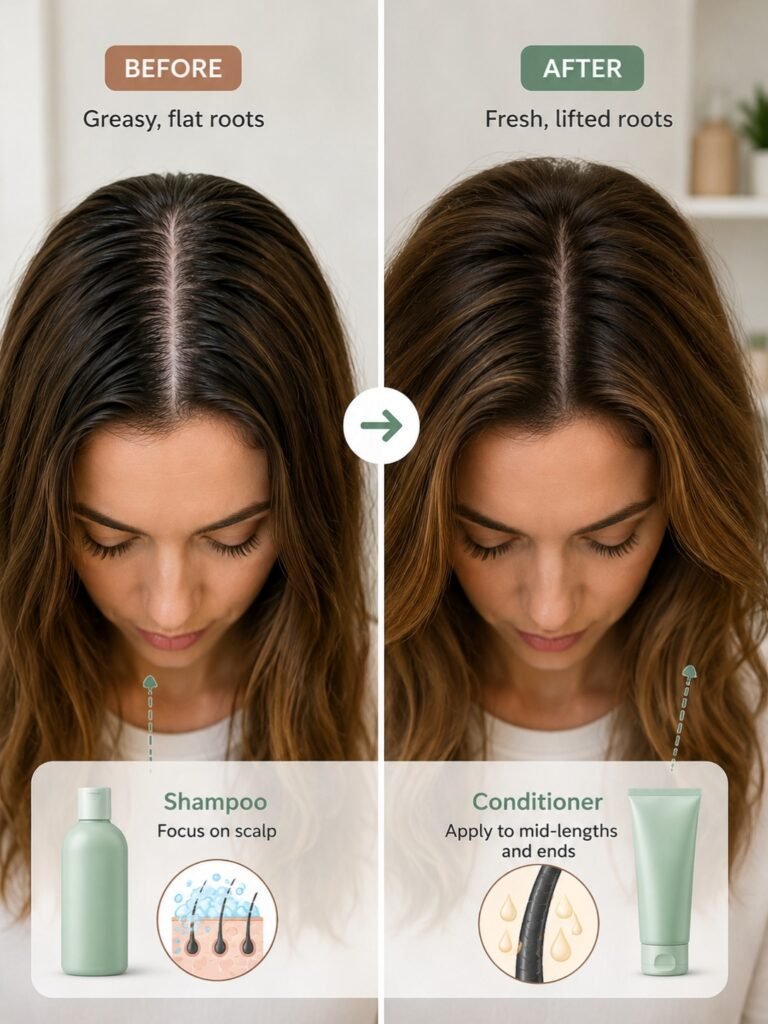
Cleveland Clinic recommends that shampoo should be applied to the scalp and conditioner should be applied to the ends, especially for people whose hair gets greasy or weighed down.
What to try:
- Apply conditioner from mid-lengths to ends
- Use less conditioner around the crown
- Rinse conditioner thoroughly
- Choose lightweight conditioner for fine hair
- Use richer conditioner only on dry ends
- Avoid conditioning masks on the scalp unless the product is made for scalp use
If your hair feels greasy right after washing, conditioner placement may be the problem.
5. Your Shampoo Is Too Heavy or Too Gentle for Your Scalp
A moisturizing shampoo can be helpful for dry hair, but it may be too rich for oily roots. On the other hand, if your shampoo is too mild and does not remove buildup well, your scalp may still feel greasy after washing.
This is one reason I recommend choosing shampoo based on your scalp first and your ends second. Your scalp may need a clarifying or balancing shampoo occasionally, while your ends still need conditioner.
What to try:
- Use a balancing shampoo if roots get oily fast
- Try a clarifying shampoo once in a while if you use many styling products
- Avoid heavy “repair” or “moisture” shampoos on very oily roots
- Keep conditioner on the ends to prevent dryness
- Rotate shampoos only if your scalp genuinely needs it
- Stop using a shampoo that leaves roots waxy or coated
If your scalp feels clean after washing but your ends feel dry, adjust conditioner instead of switching to a heavier shampoo.
6. You Are Using Too Much Dry Shampoo
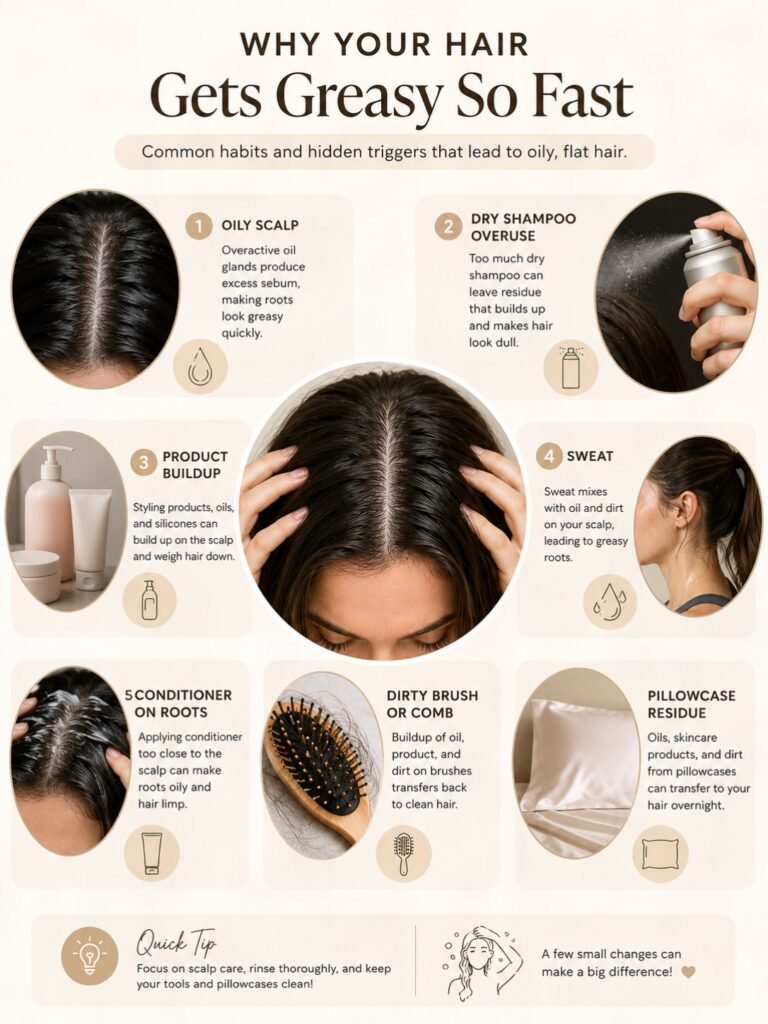
Dry shampoo can be helpful, but it should not replace regular washing. If you use it several days in a row, it can mix with oil, sweat, and product residue. That can make hair feel gritty, dull, itchy, or even greasier.
Cleveland Clinic explains that dry shampoo can absorb excess oil and dirt, but should not be a complete replacement for traditional shampoo.
What to try:
- Use dry shampoo before hair gets extremely oily
- Spray only at the roots
- Let it sit for a minute before brushing or massaging
- Use a small amount
- Wash your scalp regularly
- Avoid using dry shampoo as your main cleansing method
If your scalp feels itchy or coated after using dry shampoo, it may be time to wash instead of adding more.
7. You Touch or Brush Your Hair Too Much
Your hands carry oil, lotion, skincare, sunscreen, and sweat. Every time you run your fingers through your hair, you can transfer some of that to your roots and lengths.
Brushing can also move scalp oil down the hair. This is not always bad, but if your hair gets greasy fast, over-brushing can make oil more visible.
What to try:
- Avoid touching your roots during the day
- Keep bangs or face-framing pieces off oily skincare
- Brush only when needed
- Clean your brush regularly
- Avoid applying hand cream before touching your hair
- Tie hair loosely back during sweaty or busy days
If your front pieces get greasy first, your hands, skincare, or forehead oil may be part of the issue.
8. Your Styling Products Are Building Up
Leave-in conditioner, oils, serums, gels, mousse, heat protectants, edge control, shine sprays, and dry shampoo can all build up on the scalp and hair. Even good products can make hair greasy if they are too heavy, applied too close to the roots, or not washed out well.
What to try:
- Apply styling products mainly to mid-lengths and ends
- Use less oil or serum
- Avoid shine spray near the roots
- Clarify occasionally if your hair feels coated
- Use lightweight products for fine hair
- Wash brushes, combs, bonnets, and pillowcases regularly
A simple test: if your hair feels waxy or heavy after washing, product buildup may be involved.
9. Sweat, Workouts, Weather, and Hats Are Adding Oil Faster
Your hair may get greasy faster on hot days, after workouts, or when wearing hats. Sweat, scalp oil, and product residue can mix together and make roots look dirty even if you washed recently.
The Mayo Clinic News Network notes that scalp cleansing helps remove oil residue and dead skin buildup, which can contribute to discomfort or dandruff if it accumulates. You can read their guidance on washing your hair and scalp.
What to try:
- Rinse or wash after very sweaty workouts if your scalp feels coated
- Use dry shampoo lightly before sweating, not only after
- Wash hats, scarves, and headbands
- Avoid heavy oils before workouts
- Keep hair loosely tied back
- Clean your hairline after sunscreen or makeup use
If your hair gets greasy mostly after exercise or hot weather, your scalp may need more frequent cleansing during those times.
10. You May Have Dandruff or Seborrheic Dermatitis
Greasy roots with flakes, itchiness, redness, irritation, or yellowish scale may be more than ordinary oiliness. It may be dandruff or seborrheic dermatitis.
The American Academy of Dermatology explains that seborrheic dermatitis is a common skin condition that can cause a scaly rash on oily areas such as the scalp and face. The AAD also notes that dandruff may be considered the mildest form of seborrheic dermatitis.
For mild to moderate scalp seborrheic dermatitis, the AAD says dandruff shampoo can be part of treatment, but it should be used as directed.
What to try:
- Use an anti-dandruff shampoo if flakes and itch are present
- Leave medicated shampoo on long enough to work, following label directions
- Avoid scratching the scalp
- Do not cover persistent flakes with more dry shampoo
- See a dermatologist if symptoms continue
- Get medical help if there is pain, bleeding, swelling, or sudden hair loss
This is where I would not guess for too long. A greasy, itchy, flaky scalp may need targeted scalp care, not just a different beauty routine.
How to Fix Greasy Hair Fast
Sometimes you need a quick fix before work, school, errands, or a photo. These steps can help make greasy hair look fresher without rewashing immediately.
If Your Roots Look Oily
- Blot the roots with a clean tissue or paper towel
- Apply a small amount of dry shampoo
- Wait before massaging it in
- Flip hair gently for volume
- Avoid adding oil or shine spray
- Style hair away from the face
If Your Bangs Get Greasy First
- Wash only your bangs in the sink
- Blow dry or air dry them separately
- Keep skincare away from the hairline
- Use less forehead moisturizer during the day
- Clip bangs back while applying sunscreen or makeup
- Clean your hairline after sweating
If Your Crown Looks Flat
- Apply dry shampoo under the top layer
- Massage gently with fingertips
- Use a claw clip for a few minutes to lift roots
- Change your part slightly
- Avoid heavy smoothing creams near the scalp
- Try a loose half-up style
If Your Ends Are Dry but Roots Are Greasy
- Wash the scalp only
- Condition the ends only
- Use leave-in conditioner below the ears
- Avoid oils near the scalp
- Use a lightweight serum only on dry ends
- Try a balancing shampoo at the roots
This is the quick version of dealing with why your hair gets greasy so fast: clean the scalp, keep heavy products off the roots, and protect the ends separately.
My Simple Routine for Hair That Gets Greasy Fast
When hair gets greasy too quickly, I like to simplify the routine before adding more products.
Step 1: Shampoo the Scalp Properly
Wet the scalp fully. Apply shampoo to the roots and massage gently with fingertips. Focus on oily areas like the crown, hairline, and nape.
Step 2: Rinse Thoroughly
Rinse longer than you think you need to. Leftover shampoo can make hair feel coated or irritated.
Step 3: Condition Only the Length
Apply conditioner from mid-lengths to ends. If your hair is fine, apply conditioner only to the ends.
Step 4: Use Lightweight Styling Products
Keep creams, oils, and serums away from the roots. If you need volume, choose mousse or root spray carefully and avoid overapplying.
Step 5: Use Dry Shampoo Strategically
Use dry shampoo lightly between washes, but do not keep layering it for days. Your scalp still needs regular washing.
Step 6: Clean What Touches Your Hair
Wash pillowcases, bonnets, hats, headbands, combs, and brushes. These can hold oil and product residue.
Step 7: Adjust Your Wash Schedule
If your scalp is oily by the end of the day, it may be fine to wash more often. The AAD says people with straight hair and oily scalps may want to shampoo every day, while dry, textured, curly, or thick hair may need washing less often.
A good routine should leave your scalp clean and your ends comfortable.
Best Products and Tools for Greasy Hair
You do not need a huge routine. I would start with the basics and adjust slowly.
For Oily Roots
Look for:
- Balancing shampoo
- Clarifying shampoo for occasional use
- Lightweight conditioner
- Dry shampoo
- Clean hairbrush
- Scalp massager used gently
For Fine Greasy Hair
Look for:
- Lightweight shampoo
- Volumizing shampoo
- Light conditioner for ends only
- Powder dry shampoo
- Mousse instead of heavy creams
- Lightweight detangling spray
For Greasy Roots and Dry Ends
Look for:
- Scalp-focused shampoo
- Hydrating conditioner for ends
- Lightweight leave-in conditioner
- Serum for ends only
- Occasional clarifying shampoo
- Microfiber towel
For Greasy Hair With Flakes
Look for:
- Anti-dandruff shampoo
- Gentle regular shampoo
- Lightweight conditioner
- Scalp-friendly products
- Clean pillowcases
- Dermatologist guidance if flakes persist
If you are using a medicated shampoo, follow the product directions or your dermatologist’s instructions. The AAD notes that dandruff shampoos need enough contact time on the scalp to work properly when treating seborrheic dermatitis.
Common Mistakes That Make Hair Greasy Faster
Mistake 1: Putting Conditioner on the Scalp
This can weigh roots down quickly, especially if your scalp is already oily.
Mistake 2: Using Too Much Oil or Serum
Oil and serum should usually go on dry ends, not the scalp.
Mistake 3: Relying on Dry Shampoo for Too Many Days
Dry shampoo absorbs oil, but it does not cleanse the scalp.
Mistake 4: Not Washing Brushes and Combs
A dirty brush can transfer old oil and product back onto clean hair.
Mistake 5: Using Heavy Products for the Wrong Hair Type
Products made for very dry, thick, or coily hair may be too rich for fine oily roots.
Mistake 6: Washing Only the Hair, Not the Scalp
The scalp is where oil starts. If the scalp is not clean, the hair will look greasy faster.
Mistake 7: Believing You Must Train Your Hair Forever
Some people can stretch wash days, but an oily scalp may still need frequent cleansing. Your routine should match your real scalp, not a trend.
How Often Should You Wash Hair That Gets Greasy Fast?
There is no one perfect schedule. I recommend choosing your wash routine based on your scalp, hair type, lifestyle, and how your hair feels.
The AAD says to wash based on how dirty or oily your hair gets. Cleveland Clinic also explains that washing frequency depends on hair type and texture, and oily scalps may choose daily washing if needed.
A practical guide:
- Very oily scalp: daily or every other day may work
- Fine hair: every day to every two days may work
- Medium hair: every two to four days may work
- Thick hair: once a week or as needed may work
- Curly or coily hair: less frequent washing may work, depending on scalp needs
- Flaky or itchy scalp: may need medicated shampoo or dermatologist guidance
The goal is not to win the longest no-wash streak. The goal is a clean, comfortable scalp and healthy-looking hair.
FAQ
Why does my hair get greasy so fast after washing?
Your hair may get greasy fast after washing because your scalp naturally produces more oil, your hair is fine or straight, your shampoo is too heavy, conditioner is too close to your roots, or product buildup is still on the scalp.
Is it bad to wash greasy hair every day?
Not always. The AAD says people with straight hair and oily scalps may want to shampoo daily. If daily washing keeps your scalp clean and comfortable without drying your ends, it may be fine. Use conditioner on the ends to protect the hair length.
Why are my roots greasy but my ends dry?
This happens when the scalp produces oil quickly but the ends do not receive enough moisture. Shampoo the scalp, condition the ends, and avoid heavy products near the roots.
Can dry shampoo make hair greasier?
Dry shampoo can make hair feel greasier if you layer it too often without washing. It absorbs oil temporarily, but it does not remove oil, sweat, dead skin, or product buildup from the scalp.
Why does my hair get greasy overnight?
Your hair may get greasy overnight because oil builds up while you sleep, your pillowcase has residue on it, your skincare touches your hairline, or your scalp naturally produces oil quickly.
Can hormones make hair greasy?
Yes, hormonal changes can affect oil production. Cleveland Clinic explains that oil glands are influenced by androgens, which is one reason younger people may have more active oil glands. If oiliness changes suddenly or comes with acne, scalp irritation, or hair loss, consider speaking with a healthcare professional.
Does greasy hair mean my hair is unhealthy?
Not necessarily. Oil production is normal. Greasy hair usually means oil is building up faster than your routine removes it. If grease comes with itching, flakes, redness, pain, or sudden shedding, get professional guidance.
What should I avoid if my hair gets greasy fast?
Avoid applying conditioner to your scalp, using too much oil, overusing dry shampoo, touching your roots often, skipping scalp cleansing, and using heavy styling products near the roots.
Conclusion
Understanding why your hair gets greasy so fast starts with your scalp. Your scalp may produce oil quickly, your hair type may show oil easily, or your routine may be leaving behind conditioner, dry shampoo, styling products, sweat, or buildup.
I recommend starting with the basics: shampoo your scalp well, condition only the ends, use lightweight products, clean your brushes and pillowcases, and wash your hair based on how oily your scalp actually gets. If oiliness comes with flakes, itching, redness, soreness, or sudden hair loss, speak with a dermatologist.
Greasy hair does not mean you are doing everything wrong. It usually means your scalp needs a routine that fits your real hair type, not a trend.
Sources
- American Academy of Dermatology healthy hair tips: https://www.aad.org/public/everyday-care/hair-scalp-care/hair/healthy-hair-tips
- Mayo Clinic News Network hair washing guidance: https://newsnetwork.mayoclinic.org/discussion/mayo-clinic-minute-how-often-should-you-wash-your-hair/
- Cleveland Clinic hair washing guidance: https://health.clevelandclinic.org/the-dirty-truth-about-washing-your-hair
- American Academy of Dermatology seborrheic dermatitis overview: https://www.aad.org/public/diseases/a-z/seborrheic-dermatitis-overview
- American Academy of Dermatology seborrheic dermatitis treatment: https://www.aad.org/public/diseases/a-z/seborrheic-dermatitis-treatment