

Frizzy hair can make your hair look dry, puffy, rough, or unfinished, even when you just washed it. One section looks fluffy, another section will not lie smooth, and the ends may look dry, no matter how carefully you style them. If you want to know how to fix frizzy hair without heat styling, the answer usually starts before your hair is fully dry. Your shampoo, conditioner, towel, leave-in product, styling cream, sleeping routine, and brushing habits all affect how smooth your hair looks.
I recommend treating frizz like a moisture and friction problem. Something in the routine may be drying the hair out, roughing up the cuticle, removing too much moisture, or disturbing the hair while it dries. Once you reduce those triggers, fixing frizzy hair without heat styling becomes much easier.
The American Academy of Dermatology healthy hair tips recommend using conditioner after shampooing, detangling wet hair gently with a wide-tooth comb, and wrapping hair in a towel or T-shirt instead of rubbing it dry. Those habits matter because hair is more delicate when wet.
This article is for general beauty and hair care education only. If your scalp is painful, burning, bleeding, severely itchy, flaking heavily, or shedding hair suddenly, I recommend speaking with a dermatologist or other qualified healthcare professional.
Why Hair Gets Frizzy in the First Place
Hair gets frizzy when the outer layer of the hair does not lie smoothly. This can happen because of dryness, humidity, rough towel drying, harsh shampoo, brushing, damage, product buildup, or not using enough hold while the hair air dries.
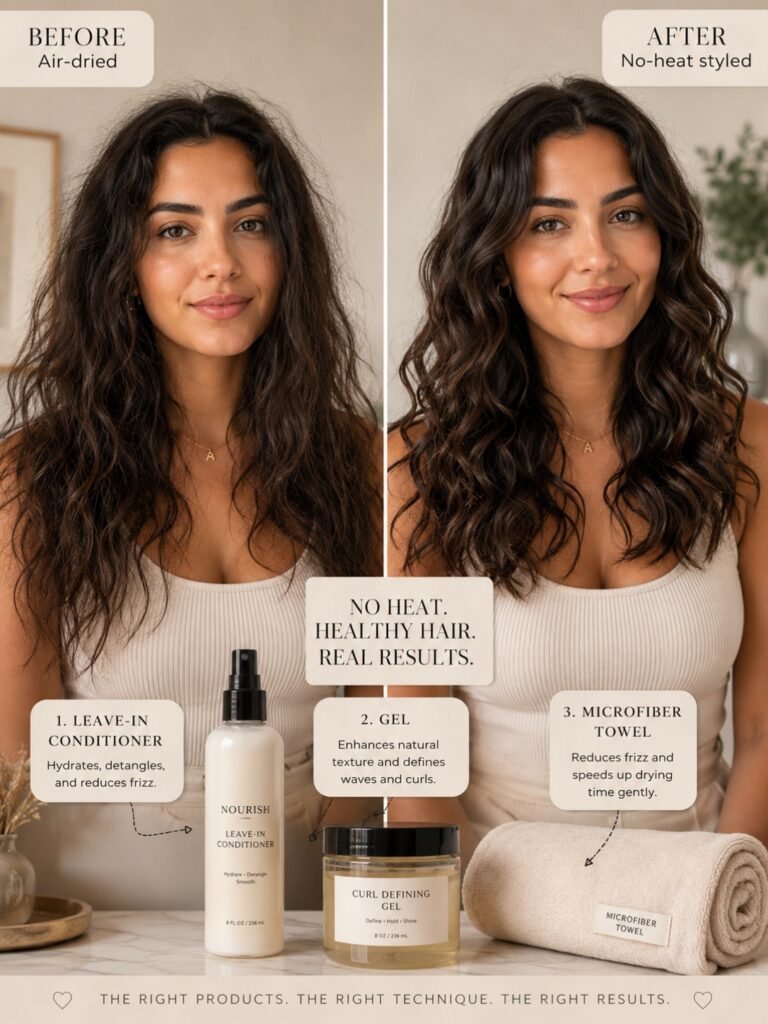
Frizz can show up as:
- Puffy roots
- Flyaways
- Dry-looking ends
- Undefined waves or curls
- Hair that expands in humidity
- Rough texture after washing
- Hair that looks smooth wet but frizzy dry
The AAD leave-in conditioner guidance says leave-in conditioner can help reduce frizz, static, and flyaway strands while making hair easier to detangle and style. That is why I do not recommend relying on water alone to calm frizz. Hair usually needs moisture, slip, and some kind of styling support.
10 Reasons Your Hair Looks Frizzy Without Heat Styling
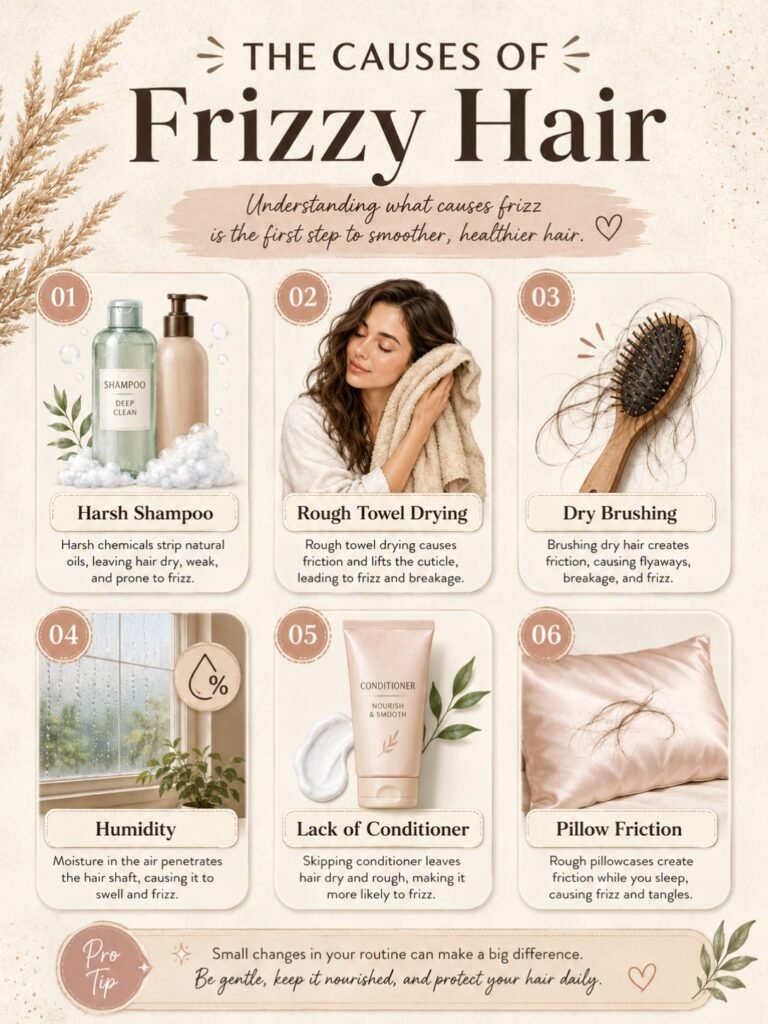
1. Your Shampoo Is Too Harsh or Used Too Often
One of the most common reasons you need how to fix frizzy hair without heat styling is that your wash routine may be too drying.
Shampoo should clean your scalp, but it should not leave your hair feeling stiff, squeaky, tangled, or straw-like. When shampoo removes too much oil or moisture from the hair length, frizz can show up quickly after washing.
The AAD healthy hair tips recommend applying shampoo mainly to the scalp instead of scrubbing it through the full length of the hair. As you rinse, the shampoo naturally moves through the rest of the hair.
What to try:
- Shampoo your scalp instead of your ends
- Use less shampoo on the hair length
- Try washing less often if your hair is dry, curly, thick, or textured
- Choose a gentle moisturizing shampoo
- Avoid aggressively scrubbing the ends
- Pay attention to whether your hair feels rough before conditioner
If your hair looks frizzy right after washing, your shampoo routine may need softening before you change every styling product.
2. You Are Skipping Conditioner or Rinsing It Too Quickly
Conditioner is not optional if your hair is frizz-prone. It helps add slip, soften the hair, reduce tangles, and make the hair easier to style without heat.
The AAD healthy hair tips recommend using conditioner after every shampoo. Fine or straight hair may only need conditioner on the ends, while dry or curly hair may need conditioner through more of the hair length.
What to try:
- Apply conditioner from mid-lengths to ends
- Use more conditioner on dry ends
- Let conditioner sit for a few minutes
- Detangle while conditioner is still in the hair
- Rinse gently instead of roughing up the hair
- Try a richer conditioner if your hair still feels dry
If your hair feels tangled before you even leave the shower, your conditioner may not be moisturizing enough.
3. You Are Detangling Too Roughly
Rough detangling can turn small tangles into breakage, flyaways, and frizz. This is especially common if you brush wet hair quickly or start detangling from the roots.
The AAD recommends using a wide-tooth comb on wet hair and slowly combing from the ends upward to reduce damage. For thick or curly hair, the best time to comb may be in the shower before rinsing out conditioner.
What to try:
- Detangle with conditioner in your hair
- Start at the ends, not the roots
- Use a wide-tooth comb or fingers
- Work in small sections
- Stop pulling if you hit a knot
- Add more conditioner or leave-in before continuing
If detangling feels like a fight, your hair needs more slip before you comb it.
4. You Are Rubbing Your Hair With a Towel
A regular towel can create friction, especially if you rub your hair back and forth. That friction can make frizz worse before your hair even starts drying.
The AAD healthy hair tips recommend wrapping hair in a towel or T-shirt to gently absorb water instead of roughly rubbing hair dry.
What to try:
- Squeeze water out with your hands first
- Use a soft T-shirt or microfiber towel
- Blot or scrunch instead of rubbing
- Avoid twisting hair tightly in a towel
- Remove the towel while hair is still damp
- Apply product before hair starts drying unevenly
This is one of the easiest changes in how to fix frizzy hair without heat styling because it costs almost nothing and can make hair look smoother right away.
5. You Are Not Using Leave-In Conditioner
Rinse-out conditioner helps in the shower, but some hair needs moisture and slip after the shower too. That is where leave-in conditioner helps.
The AAD leave-in conditioner tips explain that leave-in conditioner can diminish frizz, static, and flyaways, and can make hair easier to detangle and style.
What to try:
- Apply leave-in conditioner to damp hair
- Start with a small amount
- Focus on mid-lengths and ends
- Use less near the roots if your hair gets flat
- Comb or rake it through evenly
- Add more only where hair still feels dry
If your hair dries puffy but not greasy, you may need leave-in conditioner. If it dries greasy and limp, you may be using too much or applying it too close to the scalp.
6. Your Hair Needs Hold, Not Just Moisture
A common mistake is trying to fix frizz with conditioner only. Moisture matters, but many hair types also need hold to keep the shape smooth as hair dries.
Wavy, curly, and coily hair often frizzes when the curl pattern is not supported. Straight hair can also look fluffy if there is no smoothing product or finishing product.
What to try:
- Use mousse for light hold and volume
- Use gel for stronger curl or wave control
- Use styling cream for softness and smoothing
- Apply product while hair is damp
- Scrunch waves and curls once, then stop touching
- Smooth straight hair downward and let it dry undisturbed
If your hair looks smooth when wet but frizzy when dry, your routine may need a styling product with hold.
7. You Touch Your Hair Too Much While It Air Dries
Air drying can work beautifully, but touching the hair too much while it dries can create frizz. The more you separate, flip, brush, or scrunch half-dry hair, the more likely it is to puff up.
What to try:
- Apply products evenly while hair is damp
- Set your part early
- Scrunch once if you have waves or curls
- Smooth once if you have straight hair
- Avoid brushing while hair dries
- Let hair dry completely before fluffing or separating
This is a simple part of how to fix frizzy hair without heat styling because you may not need more product. You may need to leave your hair alone while it sets.
8. You Are Brushing Curls or Waves When They Are Dry
Dry brushing can break apart waves and curls, which makes hair look larger, fuzzier, and less defined. Some straight hair can handle dry brushing better, but textured hair often needs a gentler refresh method.
The AAD curly hair tips recommend avoiding brushing curly hair when it is dry because it can cause breakage and frizz.
What to try:
- Detangle curls in the shower with conditioner
- Refresh curls with water and leave-in conditioner
- Use your fingers instead of a brush
- Smooth frizzy pieces with damp hands
- Re-scrunch with a small amount of gel or cream
- Sleep with hair protected to reduce morning tangles
If your curls look good before brushing and frizzy after brushing, the brush is probably the problem.
9. Your Sleep Routine Is Causing Friction
Hair can look smooth at bedtime and frizzy in the morning if it rubs against a rough pillowcase all night. This is especially true for curly, wavy, long, dry, or color-treated hair.
The AAD curly hair tips recommend loose protective styles, satin or silk bonnets, and satin or silk pillowcases to reduce friction and help preserve the hairstyle.
What to try:
- Sleep on a satin or silk pillowcase
- Use a satin or silk bonnet or scarf
- Put long hair in a loose braid
- Try a loose pineapple for curls
- Avoid tight elastics
- Make sure hair is fully dry before bed
This step can make a big difference if your frizz is worse in the morning than it was the night before.
10. Your Hair Is Dry, Damaged, or Overprocessed
Coloring, bleaching, chemical treatments, frequent heat styling, sun exposure, and rough handling can all make hair more prone to frizz. Damaged hair often needs more conditioning, gentler styling, and regular trims.
Some shampoos can also make dryness worse. Mayo Clinic Press notes that sulfates can be harsh for some hair types and may strip natural oils, which can contribute to dryness and frizz for some people.
What to try:
- Use a gentler shampoo
- Deep condition weekly or as needed
- Protect hair from friction
- Trim split ends when needed
- Avoid tight hairstyles
- Take breaks from bleach, harsh color changes, or frequent hot tools
If the ends always look frizzy no matter what you apply, they may need a trim or a more repair-focused routine.
How to Fix Frizzy Hair Without Heat Styling After It Dries
Sometimes you notice frizz after your hair is already dry. You may not need to rewash or use a hot tool.
If It Looks Puffy
- Mist your hands with water
- Smooth the outer layer gently
- Add a pea-size amount of leave-in conditioner
- Press the hair down instead of rubbing
- Use a clip for 10 minutes to help the section settle
If It Looks Dry on the Ends
- Rub a tiny amount of oil or serum between your palms
- Smooth only the ends
- Avoid the roots
- Add more only if needed
- Trim ends if they stay rough and split
If Curls Look Fuzzy
- Mist curls lightly with water
- Add a small amount of leave-in conditioner
- Scrunch upward
- Add a little gel if curls need hold
- Let curls dry without touching
If Flyaways Are Standing Up
- Use damp hands first
- Smooth with a tiny amount of cream or gel
- Use a clean toothbrush for hairline flyaways
- Avoid loading the whole head with oil
- Sleep with less friction that night
This is the quick version of how to fix frizzy hair without heat styling: add a little moisture, add a little control, and avoid rubbing or brushing the frizz bigger.
My No-Heat Routine for Smoother Hair
When I want hair to look smoother without heat, I keep the routine simple and repeatable.
Step 1: Wash the Scalp Gently
Shampoo the scalp and let the rinse move through the ends. Do not pile all your hair on top of your head and scrub it into knots.
Step 2: Condition the Length
Apply conditioner from mid-lengths to ends. If your hair is curly, thick, or dry, use enough conditioner that your fingers can move through the hair more easily.
Step 3: Detangle With Slip
Use fingers or a wide-tooth comb while conditioner is in the hair. Start at the ends and work upward.
Step 4: Blot With a T-Shirt or Microfiber Towel
Squeeze, blot, or wrap. Do not rub.
Step 5: Apply Leave-In Conditioner
Apply leave-in conditioner while hair is damp. Use less for fine hair and more for thick, curly, or coily hair.
Step 6: Add Hold Where Needed
Use gel, mousse, or cream based on your hair type. Smooth or scrunch it in evenly.
Step 7: Let Hair Dry Without Disturbing It
Avoid brushing, flipping, or touching while it dries. Once fully dry, soften any product cast with clean hands or a tiny amount of oil.
This routine helps prevent frizz without relying on a blow dryer, flat iron, or curling iron.
Best Products and Tools for Frizzy Hair Without Heat
For Dry Frizz
Look for:
- Moisturizing shampoo
- Rich conditioner
- Leave-in conditioner
- Styling cream
- Lightweight hair oil
- Microfiber towel
- Satin or silk pillowcase
For Fine Frizzy Hair
Look for:
- Lightweight conditioner
- Spray leave-in conditioner
- Light mousse
- Anti-frizz serum
- Wide-tooth comb
- Soft hair towel
For Wavy Frizzy Hair
Look for:
- Gentle shampoo
- Conditioner with slip
- Leave-in conditioner
- Curl cream or mousse
- Light gel
- Cotton T-shirt for plopping
For Curly or Coily Frizzy Hair
Look for:
- Moisturizing cleanser
- Rich conditioner
- Leave-in conditioner
- Curl cream
- Gel for hold
- Satin bonnet or scarf
- Wide-tooth comb
For Frizzy Ends
Look for:
- Leave-in conditioner
- Hair oil
- Smoothing serum
- Split-end sealing cream
- Regular trims
- Protective sleep style
The product goal is not to coat the hair heavily. The goal is to give the hair enough moisture, slip, and hold to dry smoother.
No-Heat Styling Methods That Help Frizz
Plopping
Plopping works well for some wavy and curly hair types. After applying leave-in conditioner and styling product, place hair into a soft T-shirt for 10 to 30 minutes, then let it air dry.
Loose Braids
Loose braids can help long hair dry with softer shape. Keep the braid relaxed so it does not create tension or dents.
Twists
Twists can help curls and coils dry with more definition. Use leave-in conditioner and cream first, then twist in sections.
Claw Clip Smoothing
For straight or slightly wavy hair, smooth damp hair downward, twist it gently into a loose shape, and secure it with a claw clip for a short time. Do not clip it so tightly that it creates dents or tension.
Satin Overnight Protection
Sleeping on satin or silk can reduce friction and help preserve the style. This is especially helpful if your hair gets frizzy overnight.
FAQ
Can you really fix frizzy hair without heat styling?
Yes. You can fix frizzy hair without heat styling by using a gentler shampoo routine, conditioning properly, detangling carefully, drying with less friction, applying leave-in conditioner, using a styling product for hold, and protecting hair while sleeping.
What is the fastest way to calm frizzy hair without heat?
The fastest way is to dampen your hands, smooth the frizzy area, apply a tiny amount of leave-in conditioner or styling cream, and press the hair into place. For curls, mist lightly and scrunch.
Is leave-in conditioner good for frizzy hair?
Yes. The AAD leave-in conditioner tips say leave-in conditioner can reduce frizz, static, and flyaways while making hair easier to detangle and style.
Why does my hair get frizzy after air drying?
Hair can get frizzy after air drying if it is rubbed with a towel, brushed while drying, touched too much, left without leave-in conditioner, or dried without enough styling hold.
Should I use oil or leave-in conditioner for frizz?
I recommend leave-in conditioner first because it helps with moisture and slip. Oil is better as a finishing step for dry ends or flyaways. If your hair feels dry and you only add oil, it may look shiny but still feel rough.
How do I stop frizz while sleeping?
Use a satin or silk pillowcase, bonnet, or scarf. You can also put long hair in a loose braid or curly hair in a loose pineapple. The goal is to reduce friction while you sleep.
What should I avoid if my hair is frizzy?
Avoid rough towel drying, brushing dry curls, skipping conditioner, using too much shampoo on the ends, touching hair while it air dries, and using too much oil near the roots.
Conclusion
Learning how to fix frizzy hair without heat styling starts with a gentler routine. Shampoo the scalp, condition the length, detangle with slip, blot with a T-shirt or microfiber towel, apply leave-in conditioner on damp hair, add hold when needed, and protect your hair overnight.
You do not need a complicated routine or a hot tool to make frizz look better. You need consistent habits that reduce dryness, friction, and rough handling. Once those basics are in place, smoother no-heat hair becomes much easier to maintain.
Sources
- American Academy of Dermatology healthy hair tips: https://www.aad.org/public/everyday-care/hair-scalp-care/hair/healthy-hair-tips
- American Academy of Dermatology leave-in conditioner tips: https://www.aad.org/public/everyday-care/hair-scalp-care/hair/leave-in-conditioner-tips
- American Academy of Dermatology curly hair tips: https://www.aad.org/news/6-curly-hair-tips-from-dermatologists
- Mayo Clinic Press shampoo ingredient guidance: https://mcpress.mayoclinic.org/living-well/looking-to-improve-your-hair-and-scalp-health-know-the-ingredients-to-avoid-in-shampoos/