
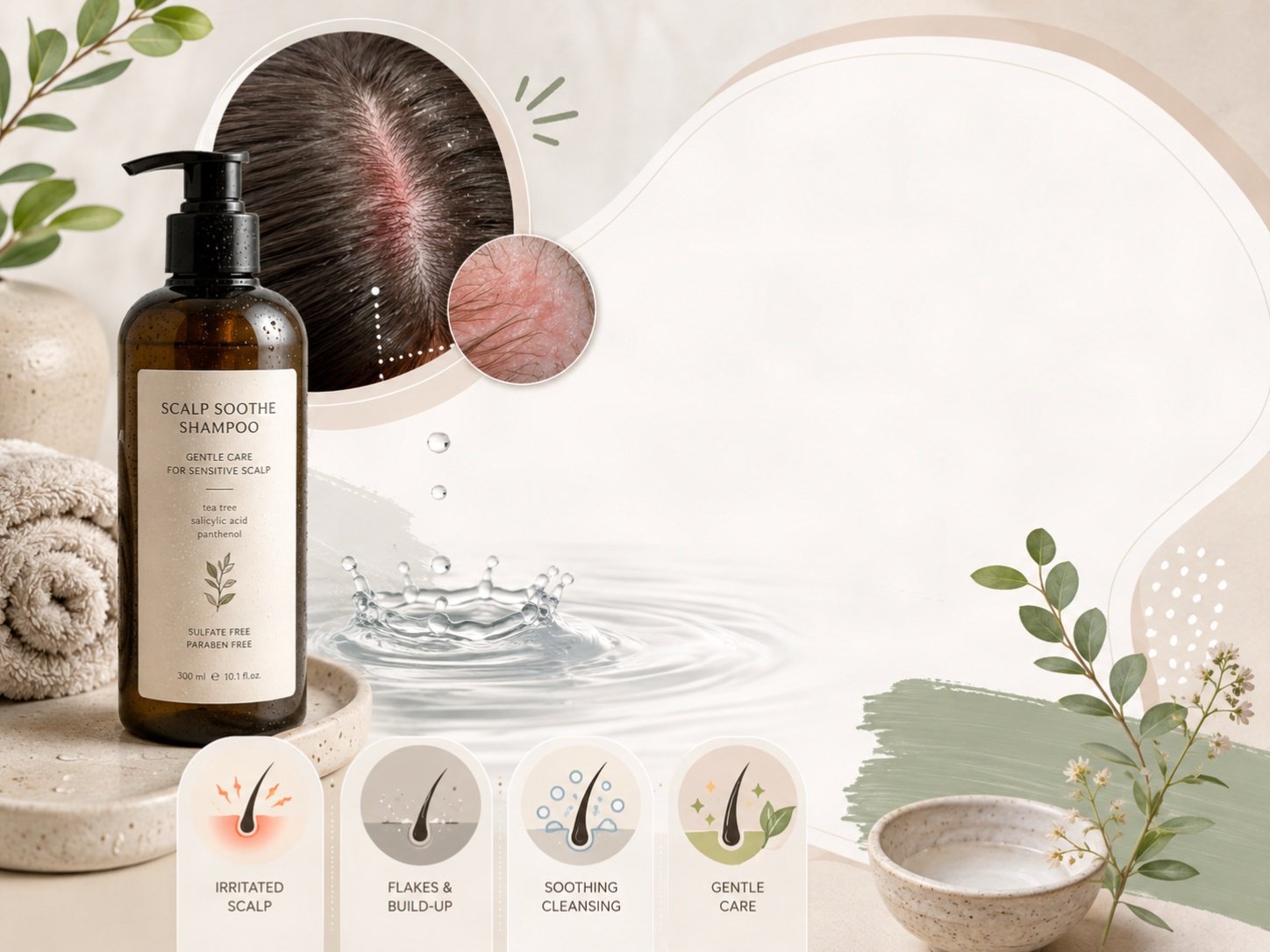
If your scalp feels itchy right after washing your hair, it can feel confusing. You just cleaned your hair, so why does your scalp feel tight, tingly, dry, flaky, irritated, or uncomfortable afterward? If you have been wondering why your scalp feels itchy after washing, the reason may be your shampoo, rinsing habits, wash frequency, product buildup, dry scalp, dandruff, contact dermatitis, or an underlying scalp condition.
I recommend looking at the timing first. If the itch starts within minutes of shampooing, your scalp may be reacting to a product, leftover shampoo, hot water, or over-cleansing. If the itch shows up later that day or the next day, buildup, flakes, oil, sweat, dry shampoo, or dandruff may be involved.
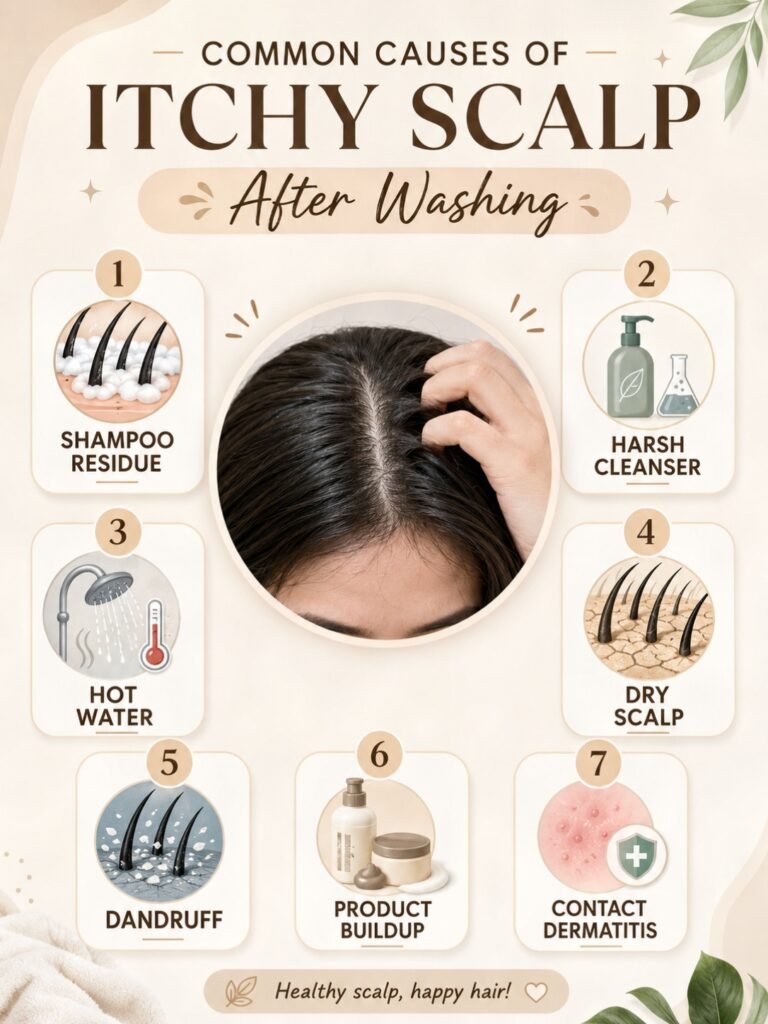
The American Academy of Dermatology explains that leaving shampoo on your scalp can irritate it, and an itchy scalp with a rash may also be linked to allergic contact dermatitis from a shampoo, conditioner, hair dye, or another product touching the scalp.
In this guide, I’ll walk you through why your scalp feels itchy after washing, what to try at home, what mistakes to avoid, and when it is better to get help from a dermatologist.
This article is for general beauty and scalp care education only. If your scalp is painful, bleeding, swollen, crusting, severely flaky, very red, infected-looking, or you notice sudden hair loss, I recommend speaking with a dermatologist or qualified healthcare professional.
Why Your Scalp Feels Itchy After Washing
Your scalp can itch after washing for several reasons. Sometimes the issue is simple, like shampoo residue that was not rinsed out well. Other times, the scalp may be dry, irritated, allergic, flaky, or inflamed.
An itchy scalp after washing can feel like:
- Tightness
- Burning
- Tingling
- Dryness
- Crawling sensation
- Flakes
- Redness
- Small bumps
- Tender spots
- Greasy itch
- Itch that gets worse after certain products
The Cleveland Clinic dry scalp guide explains that hair care products can cause contact dermatitis, and many products may dry out the hair by stripping natural oils, which can leave the scalp irritated.
That is why I do not recommend guessing based on one symptom. A dry, tight itch needs a different approach than a greasy, flaky itch or a burning rash after shampoo.
10 Reasons Your Scalp Feels Itchy After Washing & Fixes
1. You Did Not Rinse Out Shampoo Completely
One of the most common reasons why your scalp feels itchy after washing is simple shampoo residue. If shampoo stays on the scalp, it can dry, irritate, or leave the skin feeling tight and itchy.
The AAD says leftover shampoo on the scalp can irritate it. This can happen more easily if you have thick hair, dense roots, braids, extensions, or a habit of rushing your rinse.
What to try:
- Rinse your scalp longer than usual
- Lift sections of hair so water reaches the roots
- Rinse around the crown, nape, and behind the ears
- Use less shampoo
- Avoid piling hair on top of your head
- Check whether the itch improves when you rinse more thoroughly
If your scalp feels itchy only after certain washes, your rinse step may need more time.
2. Your Shampoo Is Too Harsh for Your Scalp
Some shampoos cleanse well, but they may be too strong for your scalp if they leave your skin tight, dry, or itchy. This is especially common if you wash often, use hot water, or have a sensitive scalp.
Cleveland Clinic explains that many hair care products can dry out hair by stripping natural oils and leave the scalp irritated.
What to try:
- Switch to a gentle shampoo
- Avoid using clarifying shampoo every wash
- Use lukewarm water instead of very hot water
- Shampoo the scalp without scrubbing aggressively
- Condition the hair length so the ends do not dry out
- Stop using a shampoo that causes burning, stinging, or intense itching
If your scalp feels tight right after washing, your cleanser may be too drying.
3. You Are Washing Too Often for Your Scalp and Hair Type
Washing too often can make some scalps feel dry, tight, or itchy, especially if your shampoo is strong or your hair is naturally dry, curly, coily, thick, color-treated, or textured.
The AAD healthy hair tips recommend washing based on how oily or dirty your hair gets. Straight hair with an oily scalp may need daily shampooing, while dry, textured, curly, or thick hair may only need shampooing when needed.
What to try:
- Add one extra day between washes if your scalp feels dry
- Use a gentler shampoo if you wash often
- Avoid shampooing the full hair length
- Focus shampoo on the scalp
- Use conditioner after every shampoo
- Watch whether itching improves with a softer wash routine
If your scalp is oily, daily washing may still work for you. The goal is not to wash less at all costs. The goal is to wash in a way that keeps the scalp comfortable.
4. You Are Not Washing Often Enough
An itchy scalp after washing can also happen when oil, sweat, dead skin, dry shampoo, styling products, or flakes build up between wash days. When you finally wash, the scalp may already be irritated.
The AAD healthy hair guidance notes that flakes can sometimes happen when hair is not shampooed frequently enough or when the wrong conditioner, oil, or scalp moisturizer is used for the hair type.
What to try:
- Wash more often if your scalp gets oily, sweaty, or coated
- Shampoo the scalp, not just the hair length
- Use dry shampoo less often
- Clean brushes, combs, hats, scarves, bonnets, and pillowcases
- Rinse thoroughly after workouts
- Try a clarifying shampoo occasionally if buildup is obvious
If your scalp itches before wash day and still itches after washing, buildup or dandruff may be part of the problem.
5. You May Be Reacting to a Shampoo, Conditioner, Dye, or Fragrance
If your scalp feels itchy, burning, swollen, bumpy, or rashy after washing, a product reaction may be possible. This can happen with shampoo, conditioner, hair dye, fragrance, preservatives, essential oils, styling products, or scalp treatments.
The AAD says that if you have an itchy scalp and a rash, you may have allergic contact dermatitis, and the reaction can come from a shampoo, conditioner, or another product that touches your scalp.
The AAD also explains that contact dermatitis can cause intense itching, rash, tender skin, burning, stinging, or very dry cracked skin, and personal care product fragrance can be a trigger for some people.
What to try:
- Stop using the product that seems to trigger the itch
- Switch to fragrance-free or sensitive-scalp products
- Avoid applying conditioner directly to the scalp unless made for scalp use
- Patch test new hair products when possible
- Do not reapply a product that causes burning or swelling
- See a dermatologist if rash, swelling, or intense itching continues
If the itch happens every time you use one specific product, that product is worth removing from your routine.
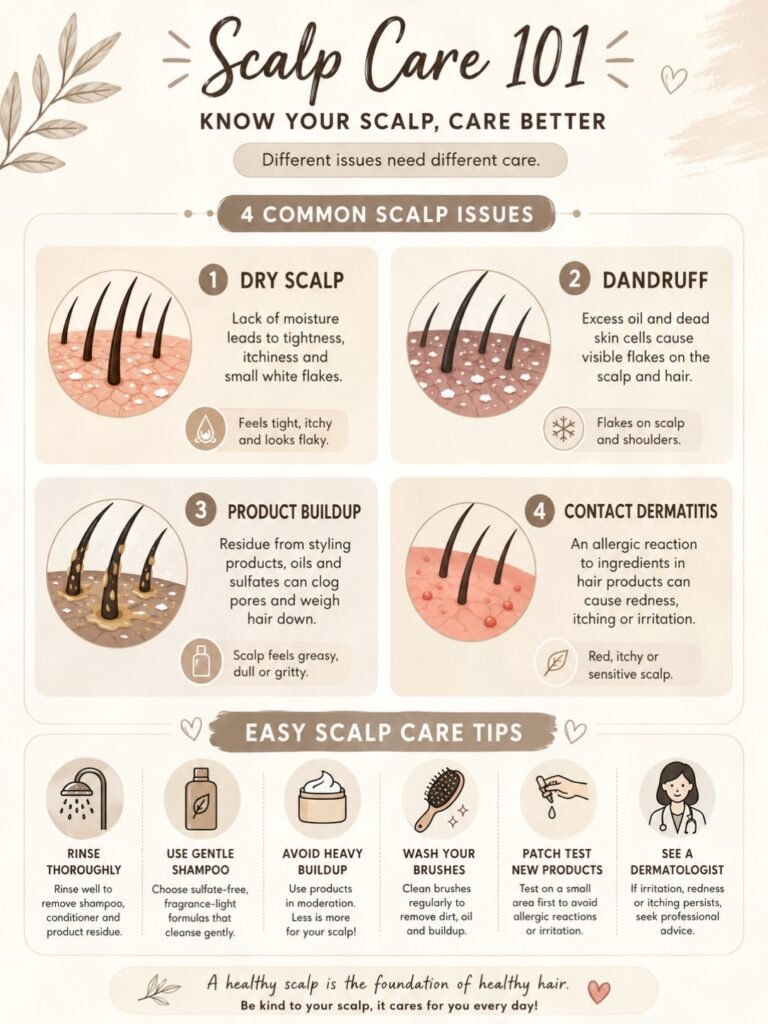
6. Your Scalp Is Dry
Dry scalp can feel tight, itchy, flaky, or uncomfortable after washing. It may happen because of harsh shampoo, cold weather, dry indoor air, hot water, over-washing, or products that strip too much oil.
The Cleveland Clinic dry scalp guide explains that dry scalp can happen when the skin on the head loses too much moisture, and contact dermatitis from hair products may also cause itchiness and irritation.
What to try:
- Use lukewarm water
- Choose a gentle moisturizing shampoo
- Avoid overusing clarifying shampoos
- Use conditioner on the hair length
- Avoid scratching the scalp
- Reduce alcohol-heavy or strongly fragranced products if they irritate you
- Consider a dermatologist if dryness is severe or persistent
Dry scalp usually feels tight or powdery. Dandruff and seborrheic dermatitis often feel more oily, flaky, or inflamed.
7. You May Have Dandruff
Dandruff is a common reason for scalp itching, and washing can make you notice the itch more. Dandruff may show up as flakes, itchiness, oiliness, or recurring scalp irritation.
The AAD explains that dandruff can be itchy and is often associated with seborrheic dermatitis, which can be linked to yeast that lives on the skin, stress, cold weather, or overall health.
What to try:
- Use an anti-dandruff shampoo if flakes and itch are present
- Look for ingredients such as zinc pyrithione, selenium sulfide, ketoconazole, salicylic acid, sulfur, or coal tar
- Follow the directions on the bottle
- Let medicated shampoo sit long enough to work
- Avoid scratching flakes loose aggressively
- See a dermatologist if dandruff does not improve
The AAD dandruff treatment guidance lists common dandruff shampoo ingredients and recommends choosing treatment based on the active ingredient.
8. You May Have Seborrheic Dermatitis
Seborrheic dermatitis is another common reason the scalp can itch after washing. It can cause flakes, greasy scale, redness, irritation, and itching. Some people describe it as dandruff that keeps coming back.
The AAD seborrheic dermatitis overview explains that this common skin condition can cause a scaly rash on oily areas of the body, including the scalp and face. The AAD also notes that yeast on the skin and sebum may play a role.
What to try:
- Use medicated dandruff shampoo if symptoms are mild
- Follow product directions carefully
- Avoid heavy oils that may trap buildup
- Wash as often as your scalp needs
- Do not use dry shampoo as your main cleanser
- See a dermatologist if redness, thick scale, or itching continues
For mild to moderate scalp seborrheic dermatitis, the AAD says dandruff shampoo can treat symptoms such as itch, rash, flaking, scales, and irritation.
9. You Are Using Medicated Shampoo Incorrectly
Medicated shampoos can help dandruff and seborrheic dermatitis, but they need to be used correctly. If you rinse too fast, the active ingredient may not have enough time to work. If you overuse it, some formulas may irritate or dry the scalp.
What to try:
- Read the label directions
- Let the shampoo sit for the recommended time
- Rinse thoroughly
- Avoid using multiple medicated shampoos at once unless directed
- Use conditioner on the hair length if the shampoo dries your ends
- Ask a dermatologist if you are unsure which active ingredient to use
Mayo Clinic also advises that if a dandruff shampoo causes itching, burning, or stinging, you should stop using it.
10. Dry Shampoo or Styling Product Buildup Is Irritating Your Scalp
Dry shampoo can help oily roots, but it does not replace washing with water and shampoo. If you layer dry shampoo, oils, gels, sprays, edge control, scalp serums, or heavy creams, your scalp can become coated and itchy.
The AAD dry shampoo tips explain that dry shampoo can make hair dry, stiff, gritty, or irritating if too much is used. The AAD also recommends washing hair after one or two dry shampoo uses.
What to try:
- Use dry shampoo only where roots feel greasy
- Use a small amount
- Wash after one or two dry shampoo uses
- Clarify occasionally if your scalp feels coated
- Keep oils and heavy creams off the scalp
- Clean brushes, combs, hats, pillowcases, and bonnets
If your scalp feels itchy and gritty after washing, product buildup may not have been fully removed.
How to Soothe an Itchy Scalp After Washing
If your scalp feels itchy after washing, I recommend starting gently. Do not panic and add five new products at once.
If Your Scalp Feels Tight and Dry
- Use lukewarm water next wash
- Switch to a gentle shampoo
- Avoid clarifying shampoo for a few washes
- Do not scrub with nails
- Rinse thoroughly
- Avoid fragranced scalp products if they bother you
If Your Scalp Feels Greasy and Itchy
- Shampoo the scalp more thoroughly
- Wash more often if oil builds up quickly
- Use less dry shampoo
- Avoid heavy oils on the scalp
- Try an anti-dandruff shampoo if flakes are present
- Clean brushes and pillowcases
If Your Scalp Burns or Stings
- Stop using the product that triggered it
- Rinse thoroughly with cool to lukewarm water
- Avoid adding more active products
- Do not scratch
- Watch for rash, swelling, or worsening irritation
- Contact a dermatologist if symptoms continue
If Your Scalp Has Flakes
- Notice whether flakes are dry and powdery or greasy and yellowish
- Try a dandruff shampoo if itch and flakes continue
- Follow directions and let the shampoo sit if required
- Avoid picking or scratching flakes off
- See a dermatologist if flakes are thick, painful, or persistent
This is the quick version of dealing with why your scalp feels itchy after washing: match the fix to the type of itch. Dry itch, greasy itch, rashy itch, and flaky itch are not always the same problem.
My Simple Routine for an Itchy Scalp After Washing
When someone has scalp itch after shampooing, I like to simplify the routine before adding treatments.
Step 1: Use Lukewarm Water
Hot water can make the scalp feel tighter and more irritated. Lukewarm water is usually a better starting point.
Step 2: Shampoo the Scalp Gently
Apply shampoo to the scalp and massage with fingertips, not nails. Focus on the oily or itchy areas, such as the crown, hairline, and nape.
Step 3: Rinse Longer
This step is easy to overlook. Rinse until the scalp feels clean and there is no slippery or foamy residue left.
Step 4: Condition the Length, Not the Scalp
Apply conditioner from mid-lengths to ends unless your product is specifically made for scalp use. Conditioner on the scalp can make some people feel coated or itchy.
Step 5: Dry Gently
Do not scratch your scalp with a towel. Blot the hair and avoid rough rubbing.
Step 6: Keep Products Simple
Use fewer leave-ins, oils, sprays, and dry shampoos while you are figuring out the cause of the itch.
Step 7: Track Triggers
Write down which shampoo, conditioner, dye, styling product, or dry shampoo you used when the itch started. Patterns are helpful.
If your scalp improves when you simplify the routine, one of your products or habits may have been the trigger.
Best Products and Tools for an Itchy Scalp After Washing
You do not need every scalp product on the shelf. I recommend choosing based on what your scalp feels like.
For Dry, Tight Scalp
Look for:
- Gentle shampoo
- Fragrance-free shampoo if you are sensitive
- Moisturizing shampoo
- Lightweight conditioner for the hair length
- Soft towel
- Lukewarm water routine
For Greasy, Itchy Scalp
Look for:
- Balancing shampoo
- Clarifying shampoo for occasional buildup
- Anti-dandruff shampoo if flakes are present
- Lightweight conditioner
- Clean hairbrush
- Washable pillowcases and bonnets
For Flaky, Itchy Scalp
Look for:
- Dandruff shampoo
- Zinc pyrithione
- Selenium sulfide
- Ketoconazole
- Salicylic acid
- Coal tar
- Dermatologist guidance if symptoms do not improve
For Sensitive or Reactive Scalp
Look for:
- Fragrance-free shampoo
- Dye-free formulas
- Gentle cleansers
- Simple ingredient lists
- Products made for sensitive scalps
- Dermatologist patch testing if reactions continue
The product goal is not to cover up the itch. The goal is to remove the trigger and support a calmer scalp.
Common Mistakes That Make Scalp Itch Worse
Mistake 1: Scratching With Your Nails
Scratching can create tiny injuries, irritation, and scabs. Use fingertips gently while shampooing.
Mistake 2: Using Hot Water
Very hot water can leave the scalp feeling tight, dry, or irritated.
Mistake 3: Rushing the Rinse
Leftover shampoo can irritate the scalp. Rinse longer, especially if your hair is thick or dense.
Mistake 4: Layering Dry Shampoo for Too Many Days
Dry shampoo is not a replacement for washing. It can build up and make the scalp feel gritty or itchy.
Mistake 5: Switching Products Too Often
If you change five products at once, it becomes harder to know what helped or hurt.
Mistake 6: Ignoring a Rash
An itchy rash after shampoo, conditioner, dye, or fragrance may be contact dermatitis. Do not keep using a product that repeatedly causes a reaction.
Mistake 7: Treating Every Flake Like Dry Scalp
Dandruff, seborrheic dermatitis, dry scalp, psoriasis, and contact dermatitis can all look similar. If flakes do not improve, get a professional opinion.
When to See a Dermatologist
I recommend getting professional guidance if your scalp itch is persistent, painful, or paired with other symptoms.
See a dermatologist or qualified healthcare professional if you notice:
- Severe itching
- Burning or stinging that keeps happening
- Rash
- Swelling
- Open sores
- Bleeding
- Thick crusts
- Pus
- Hair loss
- Painful scalp
- Flakes that do not improve with dandruff shampoo
- Symptoms after hair dye
- Itch that wakes you up at night
The AAD itchy scalp guidance notes that many conditions can cause scalp itch, including dandruff, allergic reactions, hives, lice, scabies, ringworm, psoriasis, and nerve problems. That is why persistent symptoms should not be ignored.
FAQ
Why does my scalp feel itchy right after washing?
Your scalp may feel itchy right after washing because of leftover shampoo, a harsh cleanser, hot water, dry scalp, product sensitivity, contact dermatitis, or a shampoo that does not suit your scalp.
Can shampoo cause an itchy scalp?
Yes. The AAD explains that an itchy scalp with a rash may come from an allergy to a shampoo, conditioner, or another product touching the scalp. If one product repeatedly causes itching, burning, or rash, stop using it and consider professional advice.
Why does my scalp itch after using dandruff shampoo?
Dandruff shampoo can irritate some scalps, especially if it is used too often, left on too long, or contains an ingredient your scalp does not tolerate. Mayo Clinic advises stopping a dandruff shampoo if it causes itching, burning, or stinging.
Does an itchy scalp mean my hair is dirty?
Not always. An itchy scalp can come from dryness, irritation, product reaction, dandruff, seborrheic dermatitis, or buildup. Hair can be clean and the scalp can still be irritated.
Should I wash more often if my scalp itches?
It depends. If your scalp is oily, sweaty, flaky, or coated, washing more often may help. If your scalp is dry and tight, washing less often or using a gentler shampoo may help.
Can dry shampoo make my scalp itchy?
Yes. The AAD says too much dry shampoo can make hair dry, stiff, gritty, or irritating. Dry shampoo absorbs oil temporarily, but it does not fully cleanse the scalp.
How do I know if it is dandruff or dry scalp?
Dry scalp often feels tight and may have small dry flakes. Dandruff often comes with recurring itch and flakes, and it may be linked to seborrheic dermatitis. A dermatologist can help if you are unsure or if symptoms continue.
What should I avoid if my scalp itches after washing?
Avoid very hot water, harsh scrubbing, leaving shampoo behind, overusing dry shampoo, applying heavy oils to the scalp, using strongly fragranced products if sensitive, and continuing products that cause burning or rash.
Conclusion
Understanding why your scalp feels itchy after washing starts with noticing the type of itch. A tight, dry itch may come from over-washing, harsh shampoo, or hot water. A greasy, flaky itch may point to buildup, dandruff, or seborrheic dermatitis. A burning or rashy itch may mean your scalp is reacting to a shampoo, conditioner, dye, fragrance, or another product.
I recommend starting with the basics: rinse longer, use lukewarm water, switch to a gentler shampoo, keep conditioner mostly on the hair length, reduce dry shampoo buildup, and watch for patterns. If itching is severe, persistent, painful, flaky, swollen, or paired with hair loss, get help from a dermatologist.
Your scalp should feel clean and comfortable after washing. If it does not, your routine may need a calmer, more scalp-friendly approach.
Sources
- American Academy of Dermatology itchy scalp guidance: https://www.aad.org/public/everyday-care/itchy-skin/itch-relief/relieve-scalp-itch
- American Academy of Dermatology healthy hair tips: https://www.aad.org/public/everyday-care/hair-scalp-care/hair/healthy-hair-tips
- American Academy of Dermatology dry shampoo tips: https://www.aad.org/public/everyday-care/hair-scalp-care/hair/dry-shampoo-best-results
- American Academy of Dermatology dry scalp and dandruff guidance: https://www.aad.org/public/everyday-care/hair-scalp-care/scalp/dry-scalp-conditions
- American Academy of Dermatology dandruff treatment guidance: https://www.aad.org/public/diseases/hair-and-scalp-problems/dandruff-how-to-treat
- American Academy of Dermatology contact dermatitis symptoms: https://www.aad.org/public/diseases/eczema/types/contact-dermatitis/symptoms
- American Academy of Dermatology seborrheic dermatitis overview: https://www.aad.org/public/diseases/a-z/seborrheic-dermatitis-overview
- American Academy of Dermatology seborrheic dermatitis causes: https://www.aad.org/public/diseases/a-z/seborrheic-dermatitis-causes
- American Academy of Dermatology seborrheic dermatitis treatment: https://www.aad.org/public/diseases/a-z/seborrheic-dermatitis-treatment
- Cleveland Clinic dry scalp guidance: https://my.clevelandclinic.org/health/symptoms/23326-dry-scalp
- Mayo Clinic seborrheic dermatitis treatment guidance: https://www.mayoclinic.org/diseases-conditions/seborrheic-dermatitis/diagnosis-treatment/drc-20352714
- Mayo Clinic dandruff treatment guidance: https://www.mayoclinic.org/diseases-conditions/dandruff/diagnosis-treatment/drc-20353854