
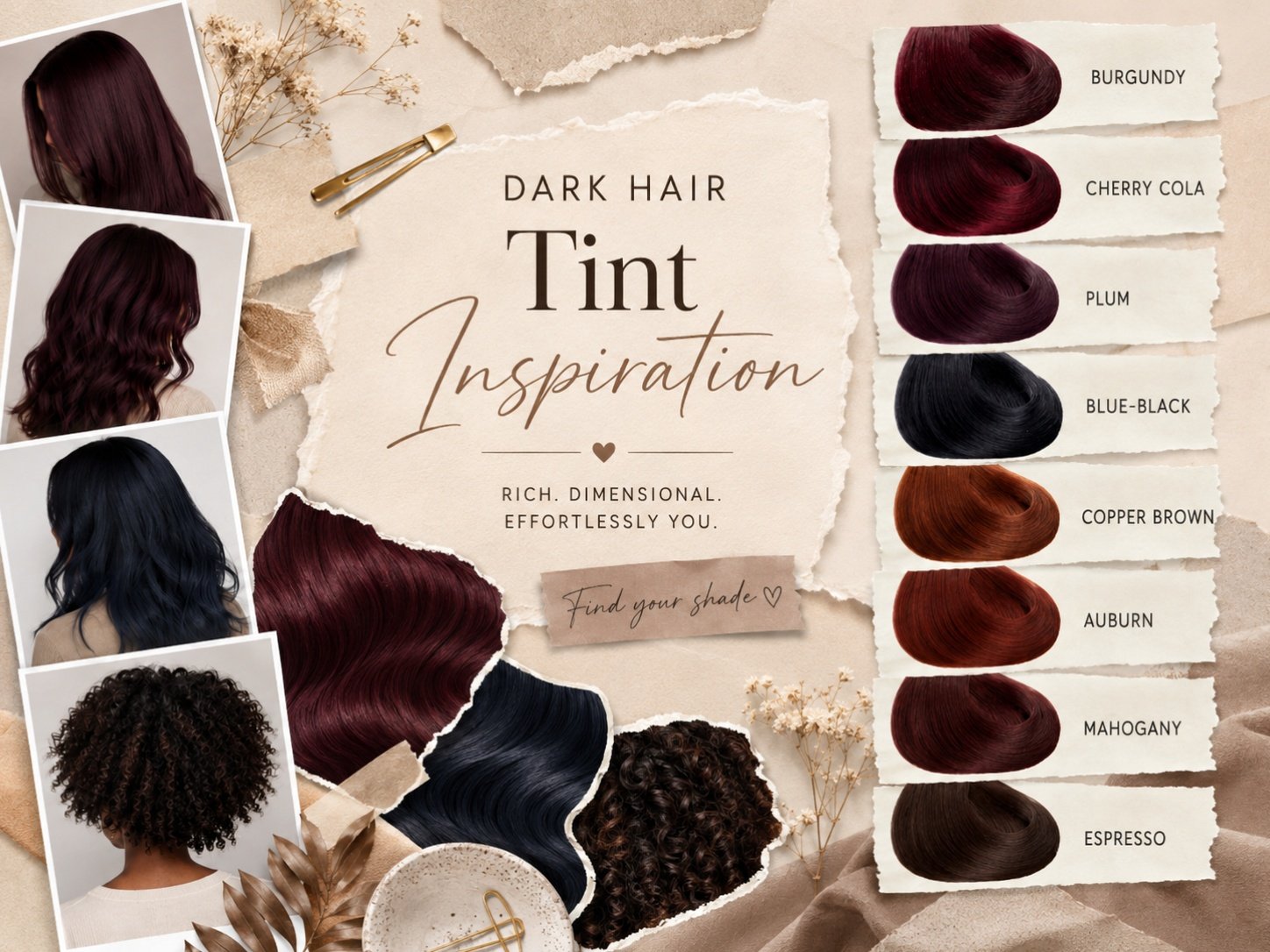
If you have dark brown or black hair, you may feel like every fun hair color idea starts with bleach. Pastel pink, icy blue, silver, and lavender usually need a much lighter base to show clearly. But that does not mean you have no options. The best hair tint colors for dark hair without bleach are rich, deep, glossy shades that can add tone, shine, and visible color without taking your hair lighter first.
In my experience, the key is choosing colors that work with dark hair instead of fighting against it. Think burgundy, cherry cola, plum, blue-black, copper brown, auburn, espresso, violet black, mahogany, and deep red tones. These shades may look subtle indoors and more noticeable in sunlight, which makes them a good choice if you want color without a dramatic lightening process.
Before using any at-home tint or dye, I recommend reading the directions carefully and doing the recommended skin test. The American Academy of Dermatology recommends testing store-bought hair color before using it, and the FDA explains that some hair dyes can cause allergic reactions or sensitization, even if you have dyed your hair before without a problem.
This article is for general beauty and hair color education only. If your scalp is irritated, painful, broken, itchy, flaky, inflamed, or reacting to dye, I recommend speaking with a licensed stylist, dermatologist, or qualified healthcare professional before applying color.
Can You Tint Dark Hair Without Bleach?
Yes, you can tint dark hair without bleach, but the result depends on your starting hair color, the product formula, and the shade you choose.
A tint can add tone, depth, shine, or a visible color shift to dark hair. What it usually cannot do without lightener is turn black or dark brown hair into pastel pink, baby blue, silver, or bright neon purple. Those lighter shades need a pale base to show clearly.
The AAD recommends staying within three shades of your natural color when dyeing hair, and explains that lightening hair more than three shades typically requires higher volumes of peroxide, which can cause more hair damage. That is why no-bleach hair tint works best when you choose deeper shades that sit close to your natural color level.
For dark hair, I recommend looking for shades with strong depth and pigment, such as:
- Burgundy
- Cherry cola
- Plum
- Blue-black
- Violet black
- Mahogany
- Auburn brown
- Copper brown
- Red velvet
- Espresso gloss
- Chocolate cherry
- Deep rose brown
These shades are usually more realistic than pastels if you want a noticeable tint without bleach.
12 Best Hair Tint Colors for Dark Hair Without Bleach
The best hair tint colors for dark hair without bleach are shades that add richness, shine, or undertone instead of trying to create a light pastel effect. Here are my favorite options.
1. Burgundy
Burgundy is one of the most reliable shades for dark hair because it has enough depth to show over brown or black hair. It can look wine-toned, red-purple, or deep berry depending on your base color.
Best for: dark brown hair, black hair, neutral skin tones, cool skin tones, bold but wearable color.
What to try:
- Full burgundy tint
- Burgundy gloss over dark brown hair
- Burgundy money pieces
- Burgundy ends
- Burgundy peekaboo panels
- Burgundy curls or coils
Burgundy is a good first choice if you want color that looks polished, not too bright, and easy to wear with everyday makeup and outfits.
2. Cherry Cola
Cherry cola is a deep brown-red shade that looks beautiful on dark hair. It feels richer than plain brown but softer than bright red.
Best for: brunettes, black hair, warm undertones, neutral undertones, low-maintenance red lovers.
What to try:
- Cherry cola brunette
- Cherry red-brown gloss
- Cherry cola waves
- Cherry cola ends
- Cherry cola face-framing pieces
- Red-brown tint over espresso hair
I recommend cherry cola if you want red hair but do not want it to look too vivid or high-maintenance.
3. Plum Purple
Plum is a deep purple shade that works well on dark hair because it already has a darker base. It can look subtle in indoor light and more purple in sunlight.
Best for: black hair, dark brown hair, cool undertones, curly hair, coily hair.
What to try:
- Plum brown
- Dark plum tint
- Purple-black gloss
- Plum underlayer
- Plum money piece
- Violet plum ends
Plum is one of the best hair tint colors for dark hair without bleach if you want a fashion color that still feels mature and wearable.
4. Blue-Black
Blue-black is sleek, dramatic, and glossy. It adds a cool-toned finish to black or very dark brown hair without needing lightener.
Best for: black hair, espresso hair, cool undertones, sleek styles, shiny dark hair.
What to try:
- All-over blue-black tint
- Navy-black gloss
- Blue-black bob
- Blue-black straight hair
- Blue-black curls
- Blue-black underlayer
Blue-black can look almost black indoors and more blue in bright light, so it is a good choice if you want a subtle statement.
5. Violet Black
Violet black is similar to blue-black, but the undertone is more purple. It can make dark hair look richer and more dimensional.
Best for: dark brown hair, black hair, cool undertones, purple lovers.
What to try:
- Violet-black gloss
- Purple-black tint
- Violet black curls
- Violet black money pieces
- Violet black peekaboo color
- Violet black ends
I like violet black for anyone who wants a deep fantasy shade without going bright purple.
6. Copper Brown
Copper brown is a warm, glowing shade that can brighten dark brown hair without bleach. On very black hair, it may show more subtly, but on medium to dark brown hair, it can add a beautiful warm reflection.
Best for: dark brown hair, medium brown hair, warm skin tones, autumn hair color.
What to try:
- Copper brunette
- Cinnamon brown
- Copper brown gloss
- Copper money pieces
- Copper ends
- Warm copper curls
Copper brown is especially pretty if your dark hair already has warm undertones.
7. Auburn Brown
Auburn brown is a red-brown shade that looks natural, warm, and dimensional. It is less intense than cherry red but still gives dark hair a noticeable change.
Best for: brown hair, warm undertones, neutral undertones, natural-looking red.
What to try:
- Auburn brunette
- Deep auburn tint
- Auburn gloss
- Auburn curls
- Auburn face-framing pieces
- Auburn brown ends
Auburn is one of the best hair tint colors for dark hair without bleach if you want something pretty but not too bold.
8. Mahogany
Mahogany blends brown, red, and violet tones. It is rich, elegant, and very flattering on dark hair.
Best for: dark brown hair, black hair, neutral skin tones, cool skin tones, polished color.
What to try:
- Mahogany brown
- Mahogany gloss
- Mahogany red-brown
- Mahogany curls
- Mahogany money piece
- Mahogany underlayer
Mahogany is a good choice if burgundy feels too purple and auburn feels too warm.
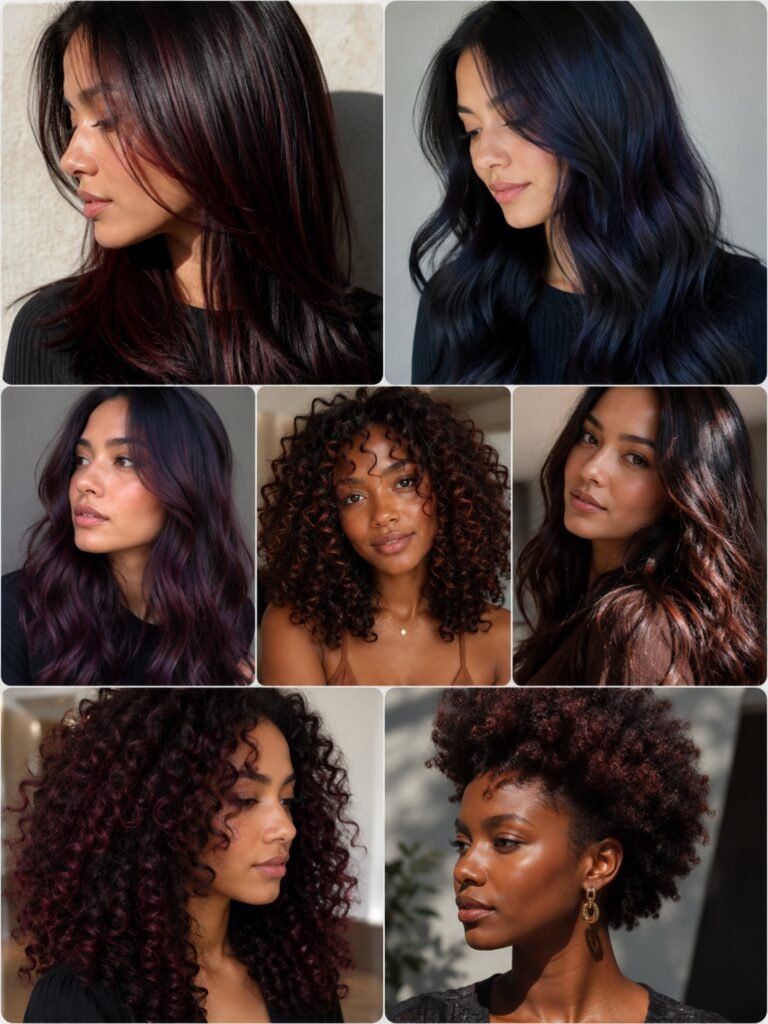
9. Chocolate Cherry
Chocolate cherry is a deep brunette shade with red undertones. It looks glossy, rich, and soft on dark hair.
Best for: dark brunettes, natural-looking color, warm undertones, neutral undertones.
What to try:
- Chocolate cherry gloss
- Cherry brown tint
- Dark cherry brunette
- Chocolate cherry waves
- Chocolate cherry ends
- Chocolate cherry curls
This shade works well if you want your hair to look different without looking obviously dyed.
10. Espresso Gloss
Espresso gloss is one of the most natural-looking options. It deepens dark brown hair and adds a healthy-looking shine.
Best for: black hair, dark brown hair, natural color lovers, low-maintenance routines.
What to try:
- Espresso brown gloss
- Soft black tint
- Deep brunette refresh
- Espresso shine treatment
- Espresso curls
- Espresso bob
If you want a polished change without a bold color, espresso gloss is a safe starting point.
11. Red Velvet
Red velvet is deeper than bright red and softer than burgundy. It gives dark hair a bold red tone while staying rich.
Best for: dark brown hair, black hair, bold red lovers, warm undertones.
What to try:
- Red velvet tint
- Deep red gloss
- Red velvet ends
- Red velvet money pieces
- Red velvet curls
- Red velvet underlayer
This is a good option if cherry cola feels too subtle but bright red feels too loud.
12. Rose Brown
Rose brown is a muted pink-brown shade. It usually shows best on medium to dark brown hair, but it can still add a soft rosy reflection to darker hair.
Best for: brown hair, neutral undertones, soft color lovers, romantic hair color.
What to try:
- Rose brown gloss
- Rosy brunette tint
- Rose brown ends
- Rose brown money pieces
- Muted pink-brown tint
- Rose brown waves
Rose brown is not the same as pastel pink. It is softer, darker, and much more realistic for dark hair without bleach.
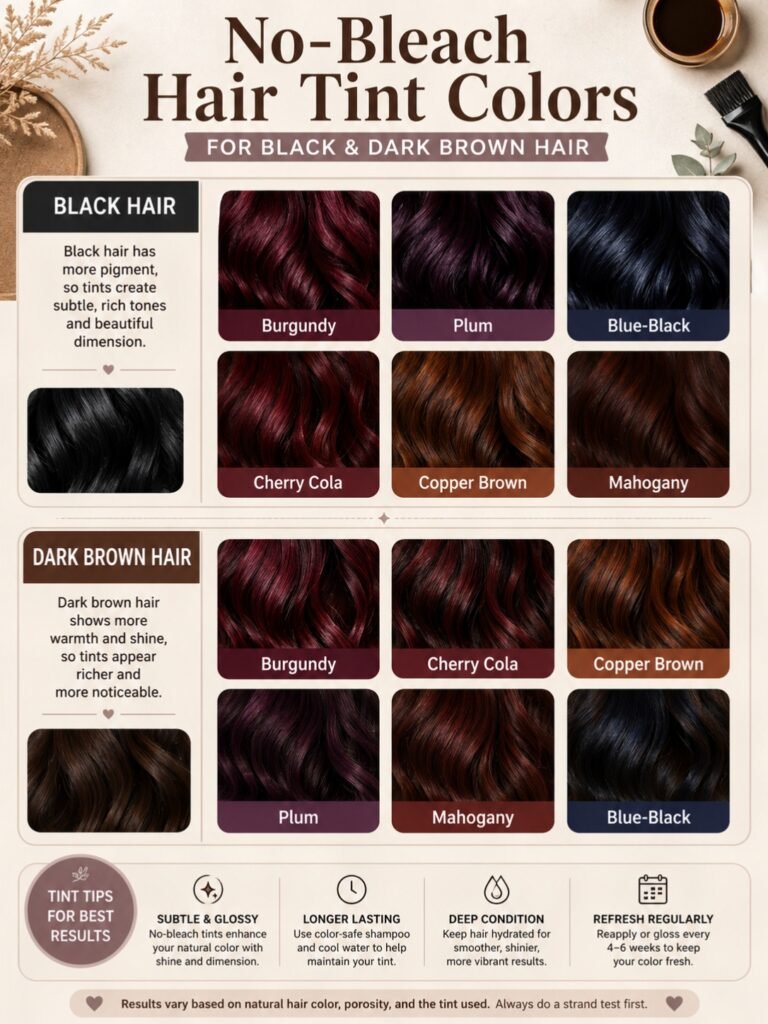
Best Hair Tint Colors for Black Hair Without Bleach
Black hair needs deeper, more saturated shades. The color may be subtle indoors, so I recommend choosing tones that create shine and reflection.
Best options include:
- Blue-black
- Violet black
- Burgundy
- Red-black
- Plum black
- Espresso
- Soft black gloss
- Mahogany black
- Cherry black
- Deep wine
What to Try on Black Hair
If you have black hair, I would start with:
- Blue-black for a cool glossy finish
- Burgundy for a red-purple reflection
- Violet black for a deep purple effect
- Red-black for a warm dramatic tone
- Espresso for a natural shine refresh
Very light colors like pastel pink, lavender, mint, and icy blue will usually not show clearly on black hair without lightening.
Best Hair Tint Colors for Dark Brown Hair Without Bleach
Dark brown hair has more flexibility than black hair. Some warm and red tones can show more noticeably, especially in sunlight.
Best options include:
- Cherry cola
- Burgundy
- Auburn brown
- Copper brown
- Mahogany
- Plum
- Rose brown
- Chocolate cherry
- Red velvet
- Violet brown
What to Try on Dark Brown Hair
If your hair is dark brown, I would start with:
- Cherry cola for a trendy red-brown look
- Copper brown for warmth
- Mahogany for richness
- Plum for a cool-toned change
- Chocolate cherry for a soft red tint
Dark brown hair is one of the best bases for no-bleach tint because you can get visible warmth, depth, or color shift without aiming for pastel.
Best Hair Tint Colors for Curly Dark Hair
Curly dark hair can make tint look dimensional because curls catch light in different places. I recommend choosing shades that add depth without requiring constant color overlap.
Good options include:
- Burgundy
- Cherry cola
- Plum
- Auburn brown
- Copper brown
- Mahogany
- Chocolate cherry
- Blue-black
- Red velvet
- Violet black
What to Try on Curly Dark Hair
- Tint only the ends for dimension
- Add a few face-framing pieces
- Try burgundy or copper on curls
- Use a gloss for shine
- Keep curls moisturized after coloring
- Avoid repeatedly coloring dry ends
The AAD healthy hair tips recommend using conditioner after washing because it helps moisturize, detangle, and improve manageability. This matters even more when hair is curly, dry, or color-treated.
Best Hair Tint Colors for Coily and Natural Dark Hair
Coily and natural dark hair looks beautiful with deep, warm, and jewel-toned tints. Since this hair type can be dryness-prone, I recommend choosing shades that do not require repeated bleaching or constant processing.
Good options include:
- Burgundy
- Plum
- Red velvet
- Copper brown
- Auburn brown
- Blue-black
- Violet black
- Chocolate cherry
- Mahogany
- Honey brown if the hair is already lighter brown
What to Try on Coily and Natural Hair
- Use color on stretched hair for easier placement
- Try tint on ends, twists, or face-framing pieces
- Choose a rich shade instead of pastel
- Moisturize before and after coloring
- Avoid tinting damaged or breaking sections
- See a professional for major color changes
If your goal is pastel pink or electric blue on very dark natural hair, I recommend working with a stylist. Lightening may be needed, and that can be drying if done incorrectly.
Hair Tint Colors That May Not Show on Dark Hair Without Bleach
Some shades look beautiful online but may not be realistic on dark hair without bleach.
Colors that may not show clearly include:
- Pastel pink
- Baby blue
- Mint green
- Icy lavender
- Silver
- Platinum
- Neon yellow
- Pale peach
- Light rose gold
- Soft lilac
This does not mean you can never wear them. It means they usually need a lighter base first.
If you want a softer version without bleach, try these alternatives:
- Pastel pink alternative: rose brown or cherry cola
- Baby blue alternative: blue-black or navy-black
- Lavender alternative: plum or violet black
- Silver alternative: espresso gloss or smoky black
- Peach alternative: copper brown
- Rose gold alternative: rose brown or copper rose
How to Choose the Right No-Bleach Hair Tint
The best hair tint colors for dark hair without bleach should match your base color, undertone, and maintenance level.
If You Want Something Subtle
Try:
- Espresso gloss
- Soft black
- Chocolate cherry
- Rose brown
- Mahogany brown
- Violet brown
If You Want Something Noticeable
Try:
- Burgundy
- Cherry cola
- Red velvet
- Plum
- Copper brown
- Auburn brown
If You Want Something Bold
Try:
- Blue-black
- Violet black
- Deep red
- Burgundy underlayer
- Plum money piece
- Cherry red ends
If You Want Low Maintenance
Try:
- Espresso
- Mahogany
- Chocolate cherry
- Auburn brown
- Soft black
- Plum brown
If You Want a Pinterest-Friendly Look
Try:
- Cherry cola brunette
- Burgundy dark hair
- Blue-black shine
- Plum peekaboo hair
- Copper brown curls
- Chocolate cherry waves
How to Tint Dark Hair at Home Without Bleach
At-home tinting can work well when you choose a realistic shade and follow the directions. I recommend keeping the process simple.
Step 1: Choose the Right Formula
Look for semi-permanent color, demi-permanent color, gloss, color-depositing conditioner, temporary tint, or a no-bleach dye formula designed for dark hair.
Always read the box or product page carefully. Some formulas deposit color only. Others use developer. Some are temporary. Some last longer.
Step 2: Do the Recommended Skin Test
Do not skip this. The FDA says people can develop sensitivities with repeated exposure to hair dye, and a reaction can happen even if you have dyed your hair before.
Step 3: Do a Strand Test
A strand test shows how the color may look on your actual hair. This is helpful because dark hair can make tint appear softer than expected.
Step 4: Protect Your Skin and Clothing
Use gloves, an old shirt, and a towel you do not care about. Apply barrier cream or petroleum jelly around the hairline, ears, and neck.
Step 5: Section Your Hair
Dark hair can hide missed spots. Sectioning helps you apply the tint more evenly.
Step 6: Apply Product Evenly
Follow the product directions. Saturate each section carefully, especially if your hair is thick, curly, or coily.
Step 7: Rinse as Directed
Some tints require shampoo. Others only require rinsing until the water runs mostly clear. Follow the directions on your specific product.
Step 8: Condition and Style Gently
Use conditioner after rinsing if the product allows it. The AAD recommends using conditioner after washing hair because it helps moisturize and detangle.
Common Mistakes to Avoid
Mistake 1: Expecting Pastel Results on Dark Hair
Pastels usually need a light base. If your hair is dark, choose deeper shades like burgundy, plum, blue-black, cherry cola, or copper brown.
Mistake 2: Skipping the Strand Test
A strand test can prevent disappointment. It helps you see whether the color shows, looks too subtle, or grabs unevenly.
Mistake 3: Coloring Over Product Buildup
Heavy oils, gels, dry shampoo, and styling products can affect how evenly tint applies. Start with clean, product-free hair unless the product directions say otherwise.
Mistake 4: Applying Color Unevenly
Dark hair can make missed spots hard to see during application. Section carefully and use enough product.
Mistake 5: Tinting an Irritated Scalp
Do not apply tint to a scalp that is itchy, burning, scratched, broken, or inflamed. Cleveland Clinic recommends watching for scalp redness, irritation, itching, scaling, flaking, or blisters after coloring and seeking care if symptoms are severe or last more than two days. You can read more in Cleveland Clinic’s guide to hair dye safety and signs of dye-related problems.
Mistake 6: Using Clarifying Shampoo Too Often After Coloring
Clarifying shampoo can help remove buildup, but it can also fade tint faster if used too often. Use it only when needed.
Mistake 7: Forgetting That No-Bleach Tint Is Usually Subtle
No-bleach tint on dark hair can be beautiful, but it may not look neon or pastel. Expect shine, tone, and color reflection rather than a dramatic lightened result.
How to Make No-Bleach Hair Tint Last Longer
Once you find a shade you like, aftercare matters.
What to try:
- Wait as directed before your first wash
- Wash with cooler water
- Use color-safe shampoo
- Condition after washing
- Wash less often if your scalp allows
- Avoid heavy clarifying shampoos unless needed
- Use a color-depositing conditioner to refresh tone
- Protect hair from too much sun
- Sleep on a satin or silk pillowcase
- Avoid overusing hot tools
The AAD explains that sun exposure can make dyed hair look faded, dry, weak, rough, and brittle, so covering hair or limiting intense sun exposure can help color-treated hair look better longer.
Best Products and Tools for No-Bleach Hair Tint
You do not need a huge setup, but the right tools make tinting easier and cleaner.
For Applying Hair Tint
Look for:
- Gloves
- Tint brush
- Mixing bowl
- Sectioning clips
- Wide-tooth comb
- Old towel
- Dark shirt
- Timer
- Barrier cream
- Shower cap
For Maintaining Color
Look for:
- Color-safe shampoo
- Moisturizing conditioner
- Leave-in conditioner
- Color-depositing conditioner
- Gentle detangling brush
- Satin or silk pillowcase
- Heat protectant if you use hot tools
The AAD leave-in conditioner guidance notes that leave-in conditioner can help reduce frizz, static, and flyaways while making hair easier to detangle and style, which can be helpful for color-treated hair that feels dry.
For Temporary Color
Look for:
- Color-depositing masks
- Hair tint sprays
- Hair color wax
- Clip-in color extensions
- Temporary glosses
- Wash-out hair makeup
Temporary color can be a good option if you want to test a shade before using longer-lasting tint.
My Favorite No-Bleach Shade Ideas by Goal
If You Want a Natural-Looking Change
Try espresso, soft black, mahogany, chocolate cherry, or auburn brown.
If You Want a Red Tint
Try cherry cola, burgundy, red velvet, mahogany red, or chocolate cherry.
If You Want a Purple Tint
Try plum, violet black, purple-black, or violet brown.
If You Want a Blue Tint
Try blue-black or navy-black.
If You Want a Warm Tint
Try copper brown, auburn brown, cinnamon brown, or mahogany.
If You Want a Trendy Dark Hair Color
Try cherry cola, burgundy, blue-black, plum, or copper brown.
FAQ
What are the best hair tint colors for dark hair without bleach?
The best hair tint colors for dark hair without bleach are burgundy, cherry cola, plum, blue-black, violet black, mahogany, copper brown, auburn brown, chocolate cherry, red velvet, rose brown, and espresso gloss.
What hair tint colors show up on black hair without bleach?
Blue-black, violet black, burgundy, red-black, plum black, espresso, mahogany black, and deep wine shades are more likely to show as a visible tint or reflection on black hair without bleach.
Can I get pink hair on dark hair without bleach?
Pastel pink usually will not show clearly on dark hair without bleach. For a no-bleach pink-inspired look, try rose brown, cherry cola, berry brown, or burgundy.
Can I get blue hair on dark hair without bleach?
Bright blue may not show clearly on dark hair without bleach, but blue-black or navy-black can create a cool-toned blue reflection.
What no-bleach hair tint is best for dark brown hair?
Dark brown hair usually works well with cherry cola, burgundy, auburn brown, copper brown, mahogany, plum, chocolate cherry, and violet brown.
Does no-bleach hair tint damage dark hair?
It depends on the formula and your hair condition. Temporary and color-depositing products may be gentler than permanent dye, but any hair color product can irritate the scalp or dry the hair if used incorrectly. Always follow directions and avoid applying color to an irritated scalp.
How long does hair tint last on dark hair?
It depends on the product. Temporary tints may last until the next wash, while semi-permanent and demi-permanent color can last several washes or longer. Always check the product label for expected wear time.
Should I wash my hair before tinting it?
Follow the directions on your specific product. Some products work best on clean, dry hair. Others may recommend slightly unwashed hair. If your hair has heavy oil, dry shampoo, or styling buildup, the tint may apply unevenly.
How do I make dark hair tint look brighter without bleach?
Choose highly pigmented deep shades, apply evenly, leave on for the directed processing time, and do a strand test first. If you want a much brighter color, you may need professional lightening.
What is the safest way to try hair tint on dark hair?
Start with a temporary tint, color-depositing conditioner, gloss, ends-only color, or peekaboo section. Do the recommended skin test and strand test before applying the product more widely.
Conclusion
The best hair tint colors for dark hair without bleach are rich, deep shades that work with your natural color. Burgundy, cherry cola, plum, blue-black, violet black, copper brown, auburn brown, mahogany, chocolate cherry, red velvet, rose brown, and espresso gloss can all give dark hair a fresh tint without needing a full lightening process.
I recommend choosing your shade based on your base color and your expectations. Black hair usually shows color as reflection and shine, while dark brown hair may show red, copper, plum, or cherry tones more clearly. If you want pastel or neon results, bleach may be needed, and that is when a professional stylist is usually the safer choice.
A no-bleach tint can still feel exciting, especially when you choose a shade that fits your real hair, your routine, and your maintenance level.