
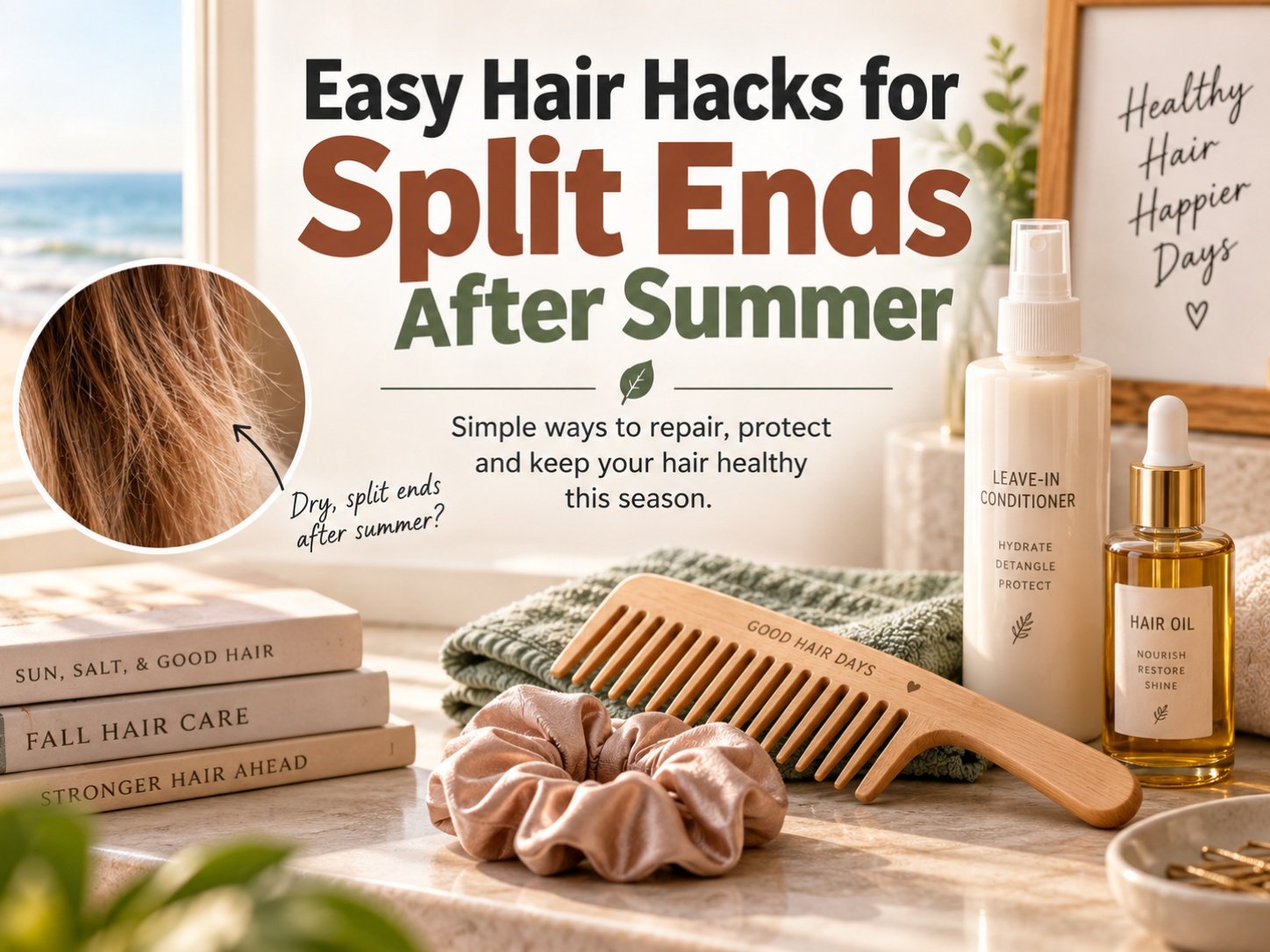
Split ends after summer are incredibly common because summer is hard on hair.
Sun, chlorine, salt water, wind, heat styling, ponytails, travel, and extra washing can all leave the ends feeling rough, dry, thin, and frayed. By September, even hair that looked healthy in June can start catching on brushes, tangling at the bottom, or looking fuzzy no matter how much you smooth it.
The honest truth is that split ends cannot truly be glued back together forever. Once the hair fiber has split, the permanent fix is trimming the damaged end. But that does not mean you have to cut off more hair than necessary. The right routine can make split ends look smoother, reduce breakage, protect the hair you still have, and help you keep more length over time.
In this guide, I will walk through easy hair hacks for split ends after summer, including what helps, what does not, and when a trim is the smartest choice.
Why Split Ends After Summer Happen
Split ends after summer usually happen because the oldest part of the hair, the ends, gets the most wear.
The ends have been through more washing, brushing, heat, sun exposure, friction, color, styling, and weather than the newer hair closer to your scalp. Summer adds even more stress.
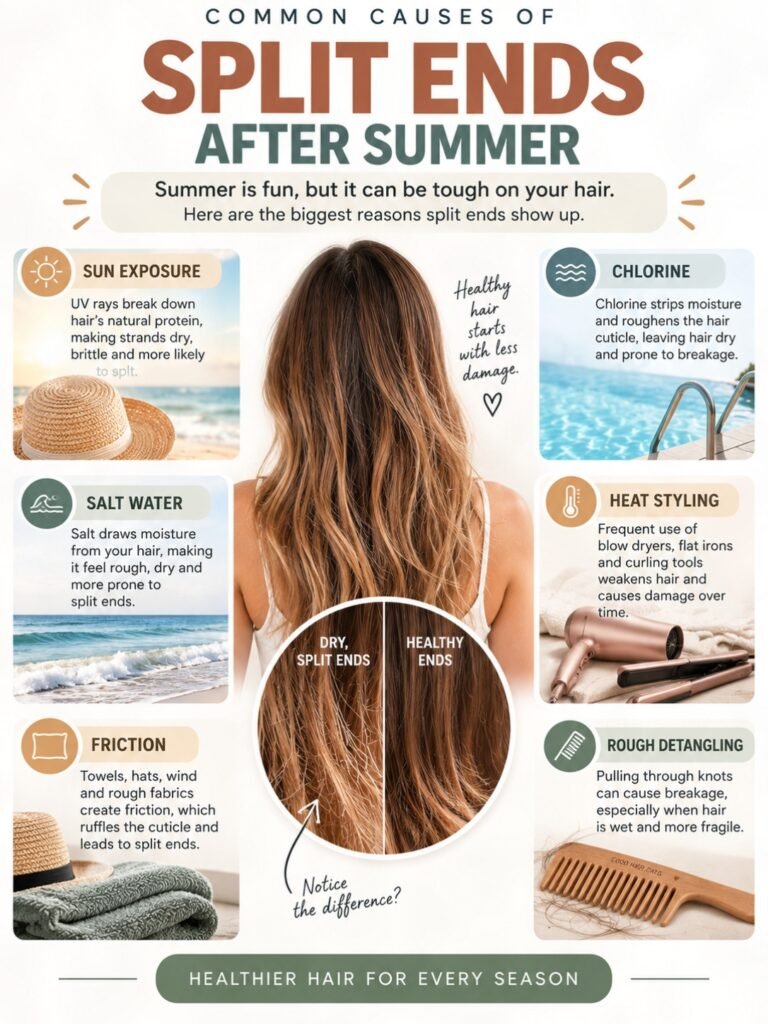
The American Academy of Dermatology’s hair-care habits guide explains that swimming and sun exposure can damage hair, and it recommends rinsing hair after swimming and protecting hair from the sun with a wide-brimmed hat or a leave-in conditioner containing zinc oxide.
The Cleveland Clinic guide to sun-damaged hair also notes that UV exposure can leave hair brittle and contribute to split ends over time. Its 2026 guidance on chlorine and hair explains that chlorine can dry the hair and recommends rinsing pool water out after swimming.
That is why the end of summer is the right time for a hair reset. You are not just adding more product. You are changing the habits that keep making the ends worse.
1. Get a Small Dusting Trim First
I know this is not the hack people always want to hear, but it is the most practical one.
If the ends are already split, a tiny trim can stop the damage from traveling farther up the strand. You do not always need a dramatic haircut. A dusting trim can remove the worst ends while keeping the overall shape and length.
The McGill Office for Science and Society explanation of split ends explains that products can temporarily make split ends look smoother, but they cannot permanently reverse a split once it has happened.
How to Do This Without Losing Too Much Length
Ask your stylist for a light dusting, not a full reshaping, if your main goal is to remove frayed ends.
You can say:
“I want to keep as much length as possible, but I need the split ends cleaned up.”
That gives the stylist a clear goal. After that, your routine can focus on preventing new split ends after summer instead of trying to hide old ones forever.
2. Switch to a Gentler Detangling Routine
Rough detangling can turn dry ends into split ends quickly.
After summer, hair often tangles more because the cuticle feels rougher. If you start brushing from the roots and pull through knots, the ends take the most stress.
The American Academy of Dermatology’s styling without damage guidance warns that brushing hair 100 strokes a day can cause split ends. That is a helpful reminder that more brushing is not always better.
My Detangling Method
Start at the ends first.
Work in small sections:
- Apply conditioner, leave-in conditioner, or detangling spray.
- Use your fingers or a wide-tooth comb first.
- Detangle the bottom few inches.
- Move upward slowly.
- Stop pulling if you hit a knot.
- Add more slip instead of more force.
This one habit can make a big difference if your ends feel fragile after summer.
3. Use Conditioner on the Ends Every Wash Day
Conditioner is not optional when you are dealing with split ends after summer.
Shampoo cleans the scalp and roots. Conditioner helps the lengths and ends feel smoother, softer, and less rough. It cannot permanently repair split ends, but it can reduce friction and make hair easier to manage.
The AAD hair-loss management tips recommend applying conditioner every time after washing and conditioning to help reduce breakage, split ends, and frizz.
How to Use Conditioner Better
Focus conditioner on the mid-lengths and ends.
Try this:
- Shampoo mainly at the scalp.
- Squeeze excess water from the hair.
- Apply conditioner from mid-length to ends.
- Let it sit for a few minutes.
- Detangle gently while conditioner is in.
- Rinse with lukewarm or cool water.
If your roots get oily fast, keep conditioner away from the scalp and concentrate it where the hair needs the most slip.
4. Add a Leave-In Conditioner Before Styling
A leave-in conditioner is one of the easiest hair hacks for split ends after summer because it stays on the hair after washing.
It can help reduce friction, soften rough ends, and make hair less likely to snag while brushing or styling.
The American Academy of Dermatology’s damaged-hair habits guide recommends using conditioner after every shampoo and using leave-in conditioner when hair is dry, damaged, or frizzy.
How to Apply It
Use a small amount first.
Apply leave-in conditioner to damp hair, focusing on the ends. Comb gently. Add more only if your hair still feels rough.
Fine hair may need a lightweight spray. Thick, curly, coily, or high-porosity hair may need a creamier leave-in.
The goal is not to coat the hair heavily. The goal is to give the ends enough slip so they stop catching and breaking.
5. Reduce Heat for Two to Four Weeks
Heat styling can make summer-damaged ends worse.
If your ends are already dry, brittle, or split, flat irons, curling irons, and high-heat blow-drying can make the hair feel rougher and increase breakage.
The AAD styling without damage guide recommends using flat irons on dry hair with a low or medium heat setting and not using them more often than every other day. The same guide also recommends using the lowest heat setting when blow-drying.
What to Do Instead
Try a short heat break.
For two to four weeks, use:
- Air-drying when practical
- Heatless curls
- Loose braids
- Claw clips
- Soft buns
- Roller sets
- Low-heat blow-drying
- Heat protectant when heat is necessary
If you still use heat, lower the temperature and avoid repeatedly passing the tool over the ends.
6. Protect Ends Before Swimming or Outdoor Time
This hack matters if you are still swimming, traveling, or spending time outside in early fall.
Hair that has already been through summer needs extra protection. Chlorine, salt water, and sun can make the ends feel even drier.
The AAD summer hair-care guide says chlorinated pools and UV rays can stress hair during warm months. The Cleveland Clinic chlorine hair guide recommends rinsing pool water out after swimming to help protect the hair.
Easy Protection Steps
Before swimming:
- Wet hair with clean water first.
- Apply a little conditioner or leave-in to the ends.
- Wear a swim cap when possible.
- Rinse hair right after swimming.
- Use a gentle shampoo if hair feels coated.
- Condition the ends well afterward.
Before sun exposure:
- Wear a hat.
- Use a UV-protective hair product if you already like one.
- Keep fragile ends tucked into a loose braid or bun.
These small steps can help prevent new split ends after summer.
7. Stop Sleeping on Rough, Loose Ends
Nighttime friction can make split ends worse.
If your hair rubs against a rough pillowcase, tangles while you sleep, or gets trapped under your shoulders, the ends can fray faster.
This matters even more after summer because the hair may already be dry or brittle.
My Nighttime Hair Hack
Protect the ends before bed.
Try one of these:
- Loose braid
- Low loose bun
- Satin or silk pillowcase
- Satin bonnet
- Scrunchie instead of tight elastic
- A tiny amount of leave-in on dry ends
- Hair fully dry before bed
Avoid sleeping with wet hair if it tangles easily. Wet hair can be more fragile, and tossing during sleep can create knots that turn into breakage the next morning.
8. Use Oils or Serums as a Finishing Layer, Not a Cure
Hair oils and serums can make split ends look better, but they should not be treated as a permanent repair.
The Cleveland Clinic guide to olive oil for hair explains that olive oil cannot repair split ends or damaged hair, although it may help reduce additional breakage. That distinction matters.
A finishing oil or serum can smooth the look of frayed ends, reduce friction, and add shine. It cannot fuse the split permanently.
How to Use Oils Without Weighing Hair Down
Use a tiny amount.
Rub the oil or serum between your palms first. Lightly smooth it over the last few inches of hair.
Use less than you think you need, especially if your hair is fine.
Good places to apply:
- Dry ends
- Frizzy outer layer
- Braid ends
- Hair before a loose bun
- Ends before outdoor exposure
Avoid applying heavy oil to the scalp unless your scalp tolerates it well.
9. Build a Simple End-Care Routine for Fall
The best way to manage split ends after summer is to stop treating the ends as an afterthought.
Your ends need their own routine because they are the oldest and most fragile part of the hair.
The AAD guide for Black hair care notes that the ends are the oldest and most fragile part of the hair and recommends coating the ends with conditioner. That advice is especially important for textured hair, but the principle applies to many hair types.
A Simple Weekly End-Care Routine
Try this:
- Wash gently.
- Condition the ends every wash day.
- Use leave-in conditioner on damp hair.
- Detangle from the ends upward.
- Limit heat.
- Use a small amount of serum or oil on dry ends.
- Sleep with the ends protected.
- Trim small amounts when needed.
This routine is simple, but consistency matters.
What Actually Helps Split Ends Look Better
These habits can help improve the look and feel of split ends:
- Dusting trim
- Conditioner
- Leave-in conditioner
- Hair masks
- Gentle detangling
- Wide-tooth comb
- Heat reduction
- Satin or silk pillowcase
- Protective loose styles
- Lightweight oil or serum
- UV and swim protection
These habits do not permanently repair split ends, but they can make hair look smoother and reduce extra breakage.
What Does Not Actually Fix Split Ends
Some habits make split ends worse or give false hope.
Be careful with:
- Brushing too much
- Flat ironing the ends every day
- Skipping trims for too long
- Pulling through knots
- Tight hairstyles
- Sleeping with tangled hair
- Using harsh shampoos on the ends
- Relying only on oils
- Believing every “split-end repair” claim
- Using kitchen DIY treatments that irritate the scalp
The goal is not to panic about every frayed strand. The goal is to stop the cycle of dryness, friction, and breakage.
When You Really Need a Trim
Sometimes the best hair hack is knowing when to stop trying to hide the damage.
You may need a trim if:
- Ends feel rough even after conditioning
- Hair tangles immediately after brushing
- Ends look see-through
- Splits are traveling upward
- Hair catches on clothing
- The bottom shape looks uneven
- You see many white dots or broken tips
- Styling takes longer because the ends will not cooperate
A small trim can make the entire head of hair look healthier. It can also make your products work better because you are no longer trying to smooth ends that are too damaged to behave.
When to Ask a Professional
Split ends are common, but sudden breakage or shedding deserves more attention.
The AAD hair-loss care guidance recommends seeing a board-certified dermatologist if you are concerned about hair loss or hair-care damage. The MedlinePlus dry hair guide also says to contact a health care provider if dry hair does not improve with gentle treatment.
I recommend getting professional advice if you notice:
- Sudden heavy shedding
- Patchy hair loss
- Scalp pain
- Scalp redness
- Itching or scaling
- Breakage close to the scalp
- Hair that keeps snapping despite gentle care
- Dryness that does not improve
- Damage after chemical services
A stylist can help with shape and trims. A dermatologist can help if the problem may involve the scalp, shedding, or a medical cause.
Easy 7-Day Split-End Reset After Summer
Here is a simple way to start without overwhelming yourself.
Day 1: Check the Ends
Look at the bottom few inches of your hair in good light. Notice dryness, thinning, white dots, splits, and tangles.
Day 2: Book or Do a Small Trim
If the ends are badly frayed, schedule a dusting trim or small haircut.
Day 3: Reset Wash Day
Shampoo the scalp, condition the ends, detangle gently, and apply leave-in conditioner.
Day 4: Take a Heat Break
Skip hot tools or use the lowest practical setting with heat protectant.
Day 5: Protect Hair Overnight
Use a loose braid, satin pillowcase, bonnet, or scrunchie.
Day 6: Smooth the Ends Lightly
Use a small amount of serum or oil on dry ends to reduce friction and improve shine.
Day 7: Choose Your Fall Routine
Decide how often you will wash, condition, heat style, protect at night, and trim.
The simpler the routine, the more likely you are to keep doing it.
Common Mistakes to Avoid
Trying to Repair Split Ends Forever
Split ends cannot be permanently repaired. Smooth them temporarily, then trim when needed.
Skipping Conditioner
Dry ends need slip. Conditioner helps reduce friction and makes detangling easier.
Detangling Too Fast
Ripping through knots can turn a few split ends into more breakage.
Using Too Much Protein
Protein treatments can help some damaged hair, but too much can make hair feel stiff or brittle for some people. Balance protein with moisture.
Overusing Oils
Oil can seal and smooth, but it is not the same as hydration or repair.
Ignoring Swim and Sun Damage
Summer damage can keep showing up after summer ends. Protect the hair before the next exposure.
Waiting Until the Ends Are See-Through
Small trims are often easier emotionally than waiting until the ends look thin and uneven.
FAQ
What causes split ends after summer?
Split ends after summer are often caused by sun exposure, chlorine, salt water, wind, heat styling, tight hairstyles, friction, and rough detangling. The AAD hair-care habits guide recommends protecting hair from sun and rinsing after swimming to reduce damage.
Can split ends be repaired without cutting?
Split ends can look smoother with conditioners, leave-ins, oils, and serums, but they cannot be permanently repaired once the hair fiber splits. The McGill Office for Science and Society explains that products may temporarily improve the appearance, but they do not permanently reverse the split.
What is the fastest way to make split ends look better?
The fastest way to make split ends look better is to use a leave-in conditioner, gently detangle, smooth a tiny amount of serum or oil over the ends, and style the hair in a way that reduces frizz. For long-term improvement, trim the damaged ends.
How do I prevent split ends after summer?
Prevent split ends after summer by conditioning the ends, using leave-in conditioner, detangling gently, reducing heat, protecting hair from sun and swimming damage, sleeping on smoother fabric, and getting small trims before splits travel upward.
Is hair oil good for split ends?
Hair oil can help smooth the look of dry ends and may reduce friction, but it does not permanently repair split ends. The Cleveland Clinic olive oil guide explains that olive oil cannot repair split ends or damaged hair, although it may help reduce additional breakage.
When should I see a dermatologist for hair breakage?
See a dermatologist if breakage is sudden, severe, close to the scalp, or comes with shedding, patchy hair loss, scalp pain, redness, itching, or scaling. Dry hair that does not improve with gentle treatment should also be checked.
Conclusion
Split ends after summer are frustrating, but they are not a mystery.
Summer exposes hair to sun, chlorine, salt water, heat, friction, and extra styling. By the end of the season, the ends often need a gentler routine and, sometimes, a small trim.
I recommend starting with the truth: products can smooth split ends, but they cannot permanently repair them. From there, focus on what actually helps: a dusting trim, conditioner, leave-in conditioner, gentle detangling, less heat, better swim and sun protection, nighttime protection, and a simple fall end-care routine.
Your hair does not need a complicated reset. It needs less stress on the ends and more consistent care.
Smooth Your Summer Split Ends →
Sources
- American Academy of Dermatology: 10 Hair-Care Habits That Can Damage Your Hair
- American Academy of Dermatology: Hair Styling Without Damage
- American Academy of Dermatology: Must-Try Summer Hair Care
- American Academy of Dermatology: Hair Loss Tips for Managing
- American Academy of Dermatology: Black Hair, Tips for Everyday Care
- American Academy of Dermatology: Experiencing Hair Loss? Your Hair Care Matters
- Cleveland Clinic: How to Protect Your Hair From Sun Damage
- Cleveland Clinic: How to Protect Your Hair From Chlorine
- Cleveland Clinic: Is Olive Oil Good for Your Hair?
- McGill Office for Science and Society: Can You Repair Split Ends?
- MedlinePlus: Dry Hair