

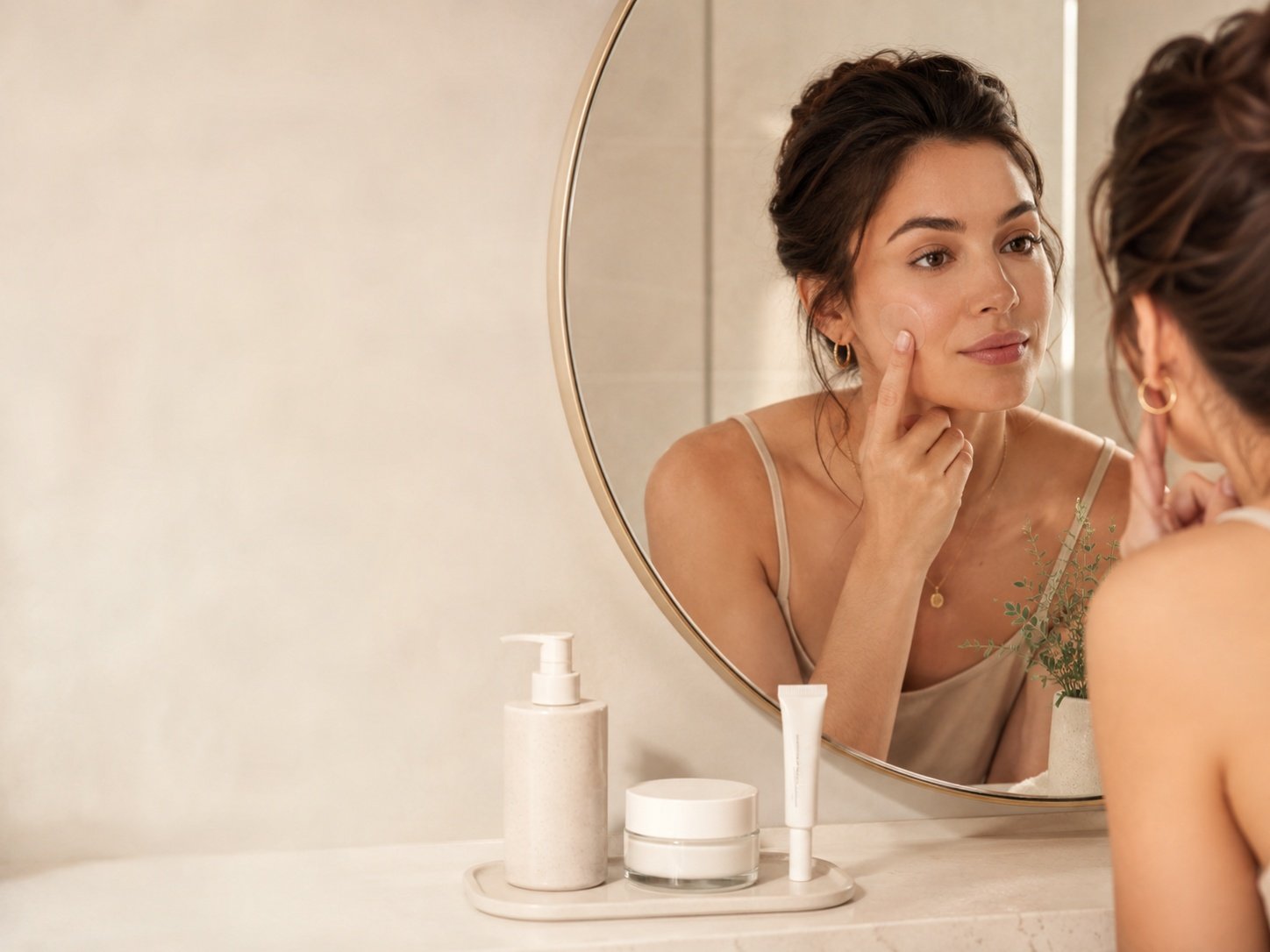
A breakout can make your hands feel busy before your brain catches up. You notice one angry bump, then another, and suddenly you are leaning into the mirror, trying to “fix” something that usually looks worse after squeezing. If you are searching for how to calm a breakout without picking your skin, the first step is not another harsh treatment. It is creating a plan that keeps your hands away while giving the breakout a better chance to settle.
I recommend thinking in two parts: calm the skin and interrupt the picking habit. A breakout needs gentle cleansing, targeted treatment, moisture, and patience. Your hands need a barrier, a replacement habit, and fewer mirror-checking moments.
Why Picking Makes Breakouts Harder to Calm
When you are learning how to calm a breakout without picking your skin, it helps to remember that picking is not a treatment. It is usually a setback.
Popping or squeezing can push inflammation deeper, irritate the surrounding skin, increase the risk of infection, and raise the chance of discoloration or scarring. The American Academy of Dermatology pimple-popping guidance explains that popping pimples yourself can lead to infection and scars, and that dermatologists use sterile tools and proper technique when extraction is needed.
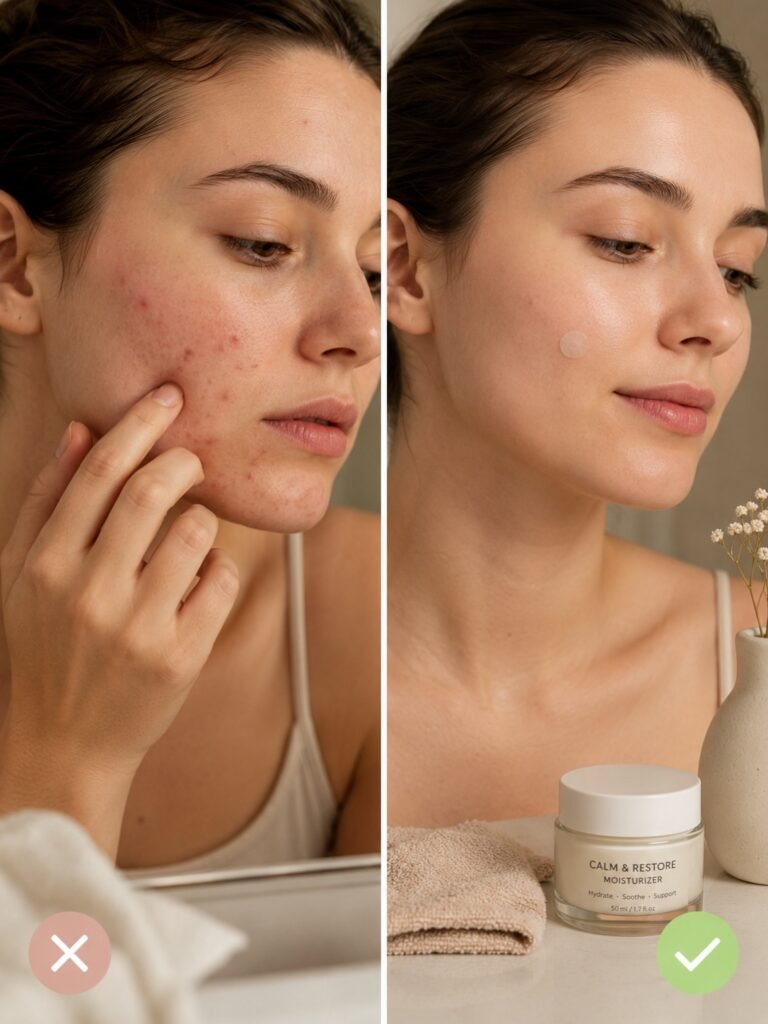
The AAD acne habits guide also recommends resisting the temptation to pop or squeeze acne and treating it with acne medication instead. If acne is deep or painful, AAD says seeing a dermatologist is necessary to help clear it.
This article is for general skincare education only. If your breakout is painful, cystic, infected, spreading, leaving scars, or not improving, I recommend speaking with a dermatologist or qualified healthcare professional.
10 Steps for How to Calm a Breakout Without Picking Your Skin
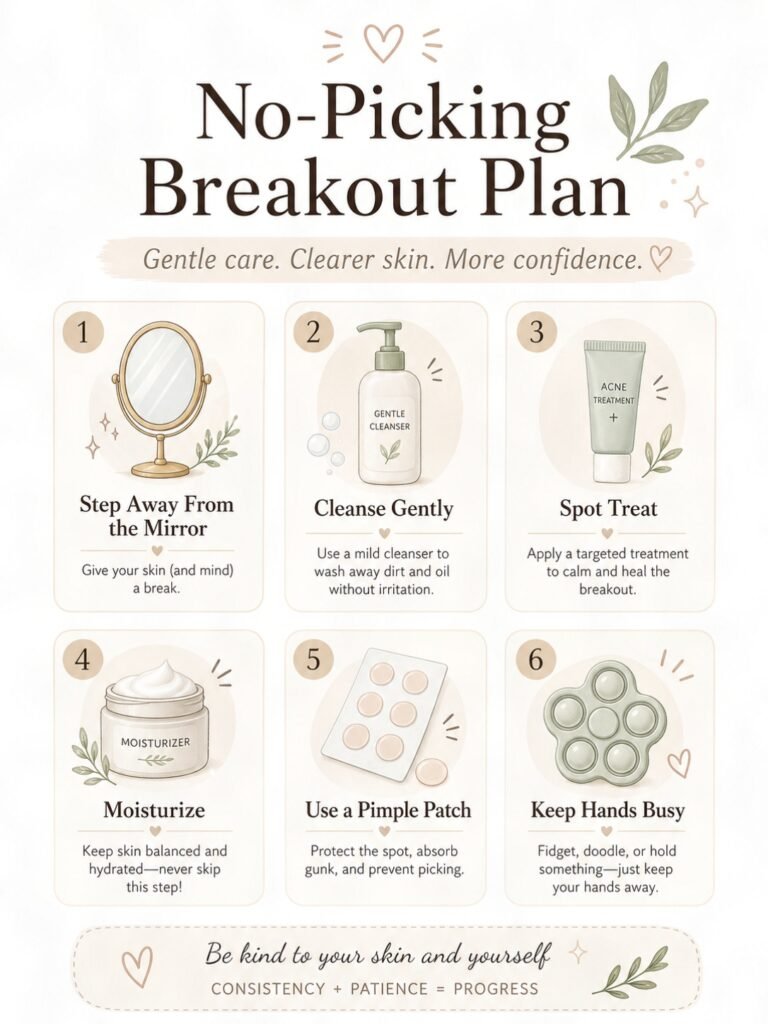
1. Step Away From the Mirror First
The first step in how to calm a breakout without picking your skin is to interrupt the moment before picking starts.
Most picking happens close to a mirror, under bright light, with enough time to inspect every pore. The longer you stare, the easier it becomes to convince yourself that one squeeze will help.
I recommend creating distance before you apply anything.
What to do:
- Take one step back from the mirror
- Turn off harsh magnifying lights
- Wash your hands and move away from the sink
- Set a five-minute timer before touching skincare
- Put a pimple patch on the spot if that helps you stop touching it
- Keep your nails short if you pick without realizing it
This may sound simple, but it works because picking often starts as inspection. Less inspection means fewer chances to dig at your skin.
2. Cleanse Gently, Not Aggressively
A breakout can make you want to scrub your face clean, but aggressive cleansing often makes the skin more irritated.
The AAD acne management tips recommend using gentle skincare products and avoiding products that can irritate the skin, such as astringents, toners, and exfoliants, because they can dry the skin and make acne appear worse.
For how to calm a breakout without picking your skin, the cleanser should remove oil, sweat, sunscreen, and makeup without leaving your face tight or burning.
What to do:
- Use a gentle cleanser
- Wash with your fingertips, not a rough scrubber
- Avoid harsh exfoliating cleansers during an active breakout
- Pat dry with a clean towel
- Do not wash repeatedly throughout the day
- Cleanse after heavy sweating
The goal is calm skin, not squeaky skin. If your face feels stripped after washing, your breakout may become more irritated.
3. Use a Targeted Acne Treatment
Once your skin is clean, choose one targeted acne treatment instead of layering several strong products at once.
The Mayo Clinic nonprescription acne treatment guide explains that benzoyl peroxide helps kill acne-causing bacteria, remove excess oil, and remove dead skin cells that can clog pores. It also notes that lower-strength benzoyl peroxide products may be as effective as stronger ones and may reduce the risk of side effects.
The Mayo Clinic acne diagnosis and treatment guide also lists over-the-counter options such as benzoyl peroxide, adapalene, salicylic acid, glycolic acid, and alpha hydroxy acids.
What to do:
- Use one acne treatment at a time
- Start with a lower strength if your skin is sensitive
- Apply only as directed
- Avoid layering multiple drying spot treatments
- Give the product time to work
- Moisturize if your skin gets dry
This is an important part of how to calm a breakout without picking your skin because treatment works better when your skin is not being picked open.
4. Use a Pimple Patch as a Physical Barrier
A hydrocolloid pimple patch can be helpful because it gives your fingers something to meet before they reach the breakout.
A patch will not fix every type of acne, but it can protect the spot from picking, rubbing, and accidental touching. It may be especially useful for a surface-level pimple that has already come to a head or a small open spot you are tempted to keep touching.
What to do:
- Apply the patch to clean, dry skin
- Do not apply thick cream underneath it unless the patch instructions allow it
- Change it as directed
- Use it during mirror-checking times
- Use it overnight if you pick while watching TV or lying in bed
A pimple patch is not a permission slip to squeeze first. It works best as a no-picking tool.
5. Calm Redness With a Cold Compress
If a breakout feels hot, swollen, or angry, a cold compress can help you stop touching it long enough for the urge to pass.
Cold will not cure acne, but it may make an inflamed bump feel less uncomfortable. It also gives you something gentle to do instead of picking.
What to do:
- Wrap ice or a cold pack in a clean soft cloth
- Hold it on the area briefly
- Remove it if your skin feels numb or painful
- Follow with moisturizer if your skin feels tight
- Do not press hard on the breakout
This can be especially helpful when you are trying how to calm a breakout without picking your skin and the pimple feels swollen enough to keep drawing your attention.
6. Try a Warm Compress for a Deep, Painful Pimple
A deep, painful bump should not be squeezed. If it is under the skin, picking at it usually causes more swelling and damage.
The American Academy of Dermatology guide to treating a deep painful pimple at home recommends applying a warm, damp washcloth to a deep pimple for 10 to 15 minutes, three times daily, using a clean washcloth each time, and resisting the urge to pop it.
The AAD article on painful pimples also warns that picking at or squeezing an acne nodule can increase the risk of infection, discoloration, and scarring.
What to do:
- Use a clean warm washcloth
- Hold it on the pimple for 10 to 15 minutes
- Repeat up to three times daily if needed
- Do not squeeze afterward
- See a dermatologist if the bump is large, painful, or recurring
For deep acne, patience is not passive. It is part of preventing scars.
7. Moisturize So Your Skin Barrier Does Not Spiral
Many people skip moisturizer during breakouts because they are afraid of making acne worse. I understand the fear, but dry irritated skin can make picking more tempting because every flaky edge becomes something to pull.
The AAD acne habits guide recommends using skincare and makeup labeled “non-comedogenic,” “won’t clog pores,” “oil free,” or “non-acnegenic” if you are acne-prone.
For how to calm a breakout without picking your skin, moisturizer should feel light, soothing, and non-greasy.
What to do:
- Choose a lightweight non-comedogenic moisturizer
- Apply after acne treatment if your product directions allow it
- Use moisturizer even if you have oily skin
- Avoid heavy fragranced creams if your skin is reactive
- Use sunscreen during the day
Moisturized skin is often easier to leave alone because it feels less tight, flaky, and irritated.
8. Replace the Picking Habit With a Safer Action
Picking is not always about skincare. Sometimes it is stress, boredom, anxiety, perfectionism, or a habit your hands have learned.
The Cleveland Clinic body-focused repetitive behavior guide explains that body-focused repetitive behavior disorders include skin picking and may cause harm such as bleeding, infections, and scarring. The Cleveland Clinic habit reversal training guide says habit reversal training can help with dermatillomania, also called skin picking.
What to do instead of picking:
- Hold an ice roller or cold spoon wrapped in tissue
- Use a fidget ring or stress ball
- Apply hand cream
- Put on a pimple patch
- Sit on your hands for one minute
- Keep tweezers and extraction tools out of the bathroom
- Cover the mirror if nighttime picking is a problem
If picking feels compulsive or hard to stop, support from a mental health professional or dermatologist can be very helpful. You do not have to handle it with willpower alone.
9. Keep Makeup Light While the Breakout Heals
Makeup can help you feel more comfortable, but heavy layers over an irritated breakout can make picking more tempting later when the texture shows through.
For an active breakout, I prefer light coverage and careful removal.
What to do:
- Use non-comedogenic makeup if you are acne-prone
- Spot conceal instead of applying heavy foundation everywhere
- Avoid rubbing makeup aggressively over the breakout
- Remove makeup before bed
- Wash brushes and sponges regularly
- Do not keep adding makeup over oil and texture all day
The AAD acne habits guide recommends choosing makeup labeled non-comedogenic or won’t clog pores and removing makeup before bed.
A breakout does not mean you cannot wear makeup. It just means your makeup should not become another reason to touch, rub, or pick.
10. Know When a Breakout Needs More Than Home Care
Some breakouts are not simple surface pimples. If acne is deep, painful, recurring, widespread, or leaving scars, it may need professional treatment.
The AAD acne diagnosis and treatment page explains that dermatologists can create an effective treatment plan for acne, especially when acne continues despite trying treatments.
The Mayo Clinic acne treatment guide recommends seeing a doctor if acne does not respond to self-care and over-the-counter treatments. It also notes that early effective treatment may reduce the risk of scarring.
I recommend getting help if:
- Breakouts are deep or painful
- Acne leaves scars or dark marks
- You cannot stop picking
- Pimples keep coming back in the same area
- You have swelling, warmth, pus, or spreading redness
- Over-the-counter products are not helping
- Acne affects your confidence or daily life
Professional help is not “too much” for acne. It can prevent months of trial, irritation, and picking.
A Simple No-Picking Breakout Routine
If you want a practical routine for how to calm a breakout without picking your skin, keep it simple.
Morning
- Cleanse gently
- Apply a lightweight non-comedogenic moisturizer
- Apply sunscreen
- Use light non-comedogenic makeup if desired
- Put a pimple patch over spots you keep touching, if compatible with your routine
Night
- Remove makeup and sunscreen
- Cleanse gently
- Apply one acne treatment as directed
- Moisturize
- Put a pimple patch on tempting spots
- Move away from the mirror
During the Day
- Do not squeeze or scratch
- Blot oil instead of rubbing
- Use a cold compress for swelling
- Keep hands busy during stress moments
- Avoid checking the breakout repeatedly
This routine works because it gives your skin care and your hands boundaries.
What to Use Instead of Picking
When you feel the urge to pick, try replacing the action before the urge grows.
Helpful alternatives include:
- Hydrocolloid patches
- Cold compress
- Warm compress for deep painful bumps
- Lightweight moisturizer
- Spot treatment
- Fidget ring
- Stress ball
- Hand cream
- Short nails
- Soft lighting instead of magnifying mirrors
The goal is not to pretend the breakout is not there. The goal is to respond without damaging the skin.
Common Mistakes That Make Breakouts Worse
Picking “Just a Little”
One squeeze can turn into swelling, scabbing, discoloration, and more picking.
Using Too Many Spot Treatments
Layering benzoyl peroxide, salicylic acid, retinoids, acids, and drying lotion can irritate your skin quickly.
Scrubbing the Breakout
Scrubbing does not unclog acne faster. It often creates more irritation.
Skipping Moisturizer
Dry, flaky skin can make acne look worse and make picking more tempting.
Staring in a Magnifying Mirror
Magnifying mirrors can make normal texture look like a problem that needs fixing.
Covering Infected or Open Skin With Heavy Makeup
If a spot is open, oozing, painful, or looks infected, it needs gentle care and possibly medical advice.
How Long Does It Take a Breakout to Calm Down?
A surface pimple may look calmer in a few days with gentle care. A deep or painful pimple can take longer. Acne treatments also need consistency, and many over-the-counter products take several weeks to show improvement.
The Mayo Clinic acne treatment guide notes that it may take a few weeks of using an acne product before improvement appears.
While you wait, focus on what you can control:
- Do not pick
- Use one treatment consistently
- Keep skin moisturized
- Protect skin from sun exposure
- Avoid harsh scrubs
- Seek help for painful or scarring acne
Calming a breakout is not always instant, but picking almost always makes the timeline longer.
When Picking Feels Hard to Stop
Sometimes picking is not just a bad skincare habit. It can become repetitive, compulsive, or emotionally driven.
The Cleveland Clinic dermatillomania guide explains that dermatillomania, also called excoriation disorder, is a mental health condition where a person compulsively picks or scratches their skin, causing injuries or scarring.
I recommend getting support if:
- You pick until your skin bleeds
- You feel unable to stop
- You hide your skin because of picking
- Picking causes scars or infections
- You spend a lot of time checking your skin
- You feel shame, anxiety, or distress around picking
This is not about being careless. Skin picking can be a real body-focused repetitive behavior, and treatment can help.
FAQ
How do you calm a breakout without picking your skin?
To calm a breakout without picking your skin, cleanse gently, use one targeted acne treatment, moisturize, apply sunscreen during the day, use a pimple patch as a barrier, try cold compresses for swelling, and keep your hands busy when the urge to pick appears.
What can I put on a pimple instead of popping it?
You can use a targeted acne treatment such as benzoyl peroxide or salicylic acid if your skin tolerates it, apply a hydrocolloid pimple patch, use a cold compress for swelling, or use a warm compress for a deep painful pimple.
Why does picking make acne worse?
Picking can increase irritation, push inflammation deeper, create open skin, raise infection risk, and increase the chance of discoloration or scarring.
Are pimple patches good for stopping picking?
Yes, pimple patches can help stop picking because they create a physical barrier between your fingers and the breakout. They are especially helpful for spots you keep touching.
Should I ice a breakout?
A cold compress may help calm swelling and discomfort. Always wrap ice or a cold pack in a clean cloth and avoid holding it on the skin too long.
What should I do for a deep painful pimple?
Do not pop it. AAD recommends applying a warm, damp washcloth for 10 to 15 minutes, three times daily, using a clean washcloth each time. If the bump is painful, large, recurring, or leaving marks, see a dermatologist.
When should I see a dermatologist for breakouts?
See a dermatologist if acne is deep, painful, scarring, recurring, infected-looking, not improving with over-the-counter products, or affecting your confidence. Also seek help if you cannot stop picking your skin.
Conclusion
Learning how to calm a breakout without picking your skin is really about protecting the healing process. Your skin needs gentle cleansing, one smart treatment, moisture, sun protection, and time. Your hands need barriers, replacement habits, and fewer chances to inspect every pore.
I recommend starting with the simplest rule: do not turn a breakout into a wound. Use a pimple patch, step away from the mirror, apply treatment carefully, and keep your routine calm.
When you understand how to calm a breakout without picking your skin, breakouts become easier to manage without creating extra redness, scabs, discoloration, or scars.
Sources
- American Academy of Dermatology pimple-popping guidance: https://www.aad.org/public/diseases/acne-and-rosacea/pimple-popping-why-only-a-dermatologist-should-do-it
- American Academy of Dermatology acne habits guide: https://www.aad.org/public/diseases/acne/skin-care/habits-stop
- American Academy of Dermatology acne management tips: https://www.aad.org/public/diseases/acne/skin-care/tips
- American Academy of Dermatology deep painful pimple tips: https://www.aad.org/public/diseases/acne/diy/treat-deep-painful-pimple
- American Academy of Dermatology painful pimple home care article: https://www.aad.org/news/how-to-treat-painful-pimple-home
- American Academy of Dermatology acne diagnosis and treatment: https://www.aad.org/public/diseases/acne/derm-treat/treat
- Mayo Clinic nonprescription acne treatment guide: https://www.mayoclinic.org/diseases-conditions/acne/in-depth/acne-treatments/art-20045814
- Mayo Clinic acne diagnosis and treatment: https://www.mayoclinic.org/diseases-conditions/acne/diagnosis-treatment/drc-20368048
- Cleveland Clinic body-focused repetitive behavior guide: https://my.clevelandclinic.org/health/diseases/body-focused-repetitive-behavior-bfrb
- Cleveland Clinic dermatillomania guide: https://my.clevelandclinic.org/health/diseases/22706-dermatillomania-skin-picking
- Cleveland Clinic habit reversal training guide: https://my.clevelandclinic.org/health/treatments/habit-reversal-training