

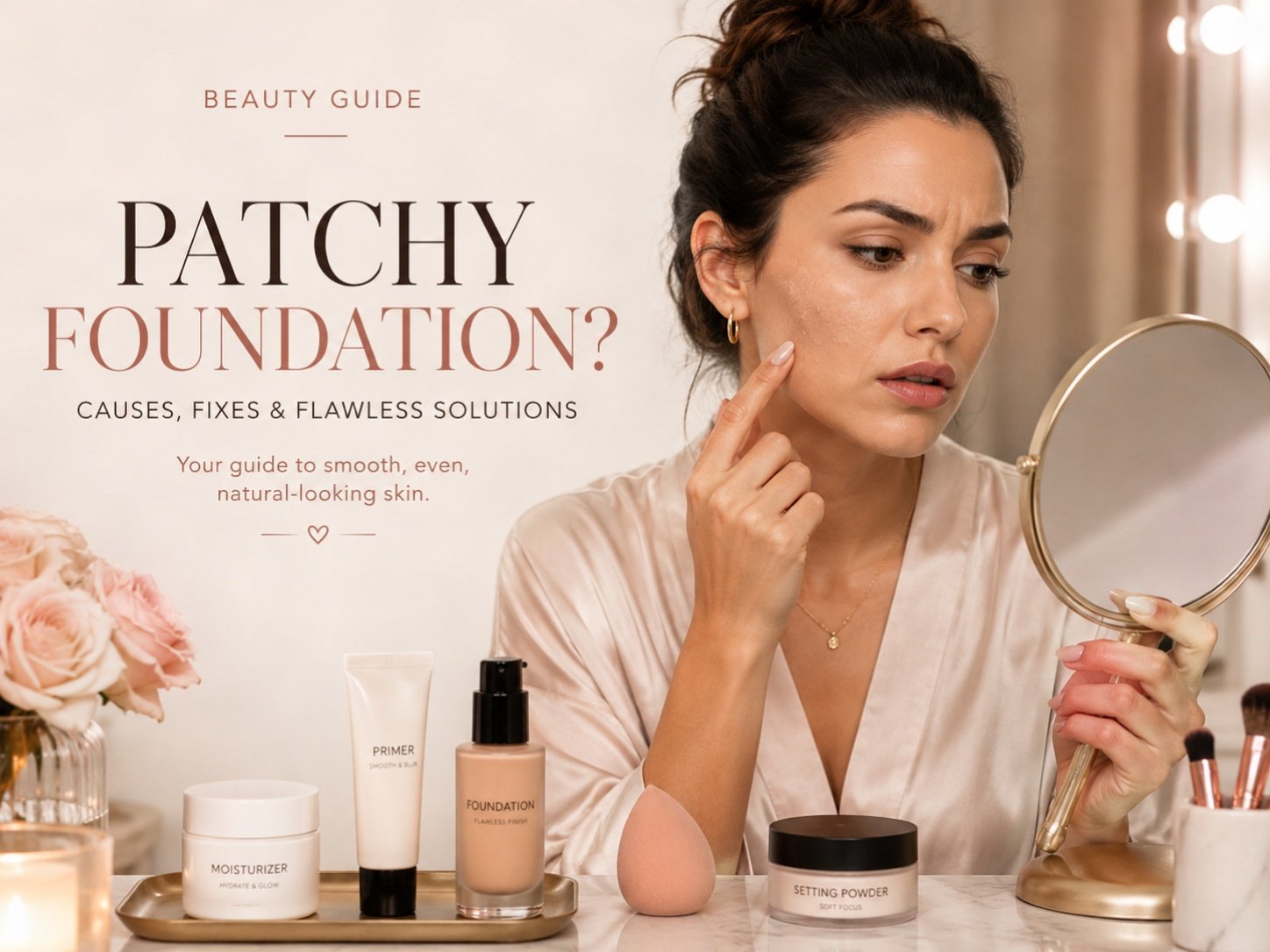
Patchy foundation can make your makeup look unfinished even when you took your time. One area clings to dry skin, another area separates around your nose, and your cheeks somehow look both bare and heavy. If you want to know how to fix patchy foundation, the answer usually starts before the foundation bottle opens.
Your skin prep, moisturizer, sunscreen, primer, formula, brush, sponge, powder, and touch-up habits all affect how evenly your base wears. I recommend treating patchiness like a layering problem. Something underneath is too dry, too oily, too slippery, too thick, or not fully settled. Once you find that weak layer, fixing patchy foundation becomes much easier.
Why Foundation Gets Patchy in the First Place
Foundation can look patchy for many reasons, but most issues fall into three categories: skin texture, product compatibility, and application technique.
If your skin is dry or flaky, foundation can grip unevenly. If your skin is oily, foundation can separate in certain areas. If your moisturizer, sunscreen, primer, and foundation do not layer well, the base can pill, slide, or break apart.
The American Academy of Dermatology dry skin tips recommend using gentle, fragrance-free skincare products and applying moisturizer after washing to help relieve dry skin. That matters because dry, rough, or irritated skin can make foundation cling in patches.
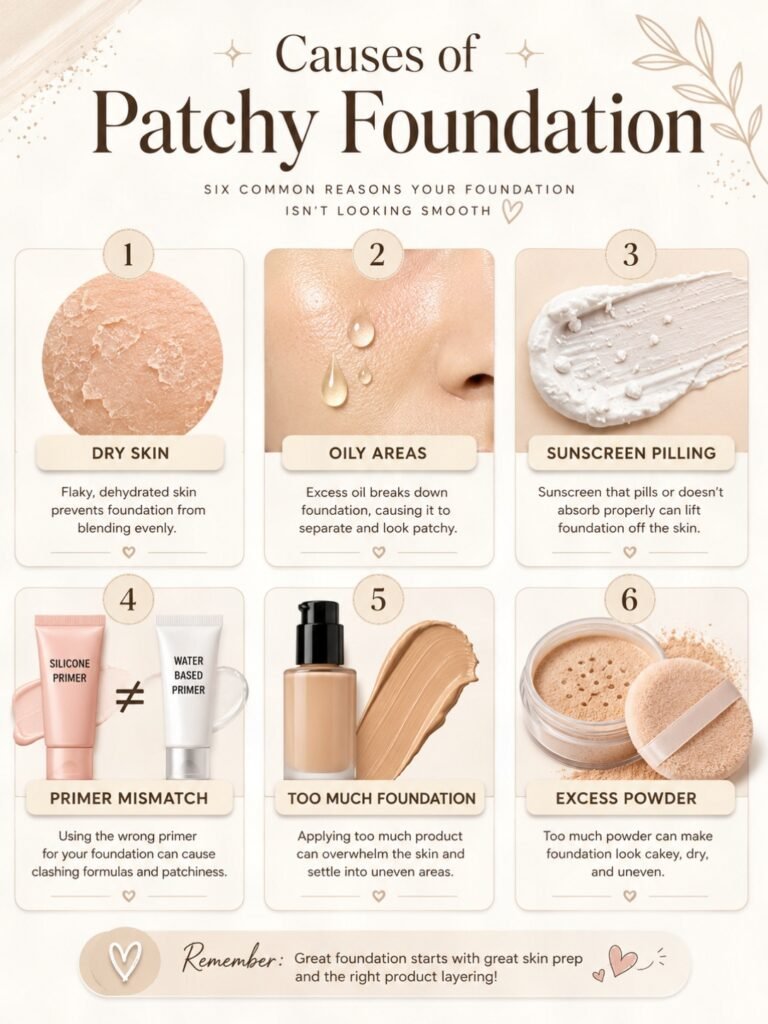
The AAD oily skin tips recommend choosing products labeled “oil free” and “noncomedogenic,” and using blotting papers to absorb oil without rubbing it around the face. That can help when foundation breaks apart from excess shine.
This article is for general beauty and skincare education only. If your skin is painful, burning, severely peeling, inflamed, infected, or suddenly reacting to products, I recommend speaking with a dermatologist or qualified healthcare professional.
10 Reasons Your Foundation Looks Patchy
1. Your Skin Is Dry or Flaky
One of the most common reasons you need how to fix patchy foundation is dry skin.
Foundation tends to grab onto flakes, rough texture, and tight areas. Instead of blending smoothly, it gathers in dry patches and makes them more visible. This often happens around the nose, between the brows, on the cheeks, around the mouth, and on the chin.
Dry skin may feel:
- Tight
- Rough
- Flaky
- Dull
- Itchy
- Sensitive
- Uneven under makeup
The AAD dry skin guidance recommends using fragrance-free products, limiting hot water exposure, and applying moisturizer immediately after drying your skin.
What to try:
- Use a gentle cleanser
- Apply moisturizer before makeup
- Let moisturizer settle before foundation
- Avoid harsh scrubs before makeup
- Use a damp sponge over flaky areas
- Apply less foundation where skin is rough
If your foundation is patchy only on dry areas, your makeup may not be the real problem. Your skin prep may need more support.
2. Your Moisturizer Is Too Light, Too Heavy, or Not Absorbed
Moisturizer can make foundation look smoother, but only if the texture works with your makeup.
A moisturizer that is too light may not soften dry patches enough. A moisturizer that is too rich may leave a slippery layer that makes foundation slide. A moisturizer that has not absorbed may mix with foundation and create uneven coverage.
What to try:
- Use a richer moisturizer if foundation clings to flakes
- Use a lighter moisturizer if foundation slides around
- Wait a few minutes before applying makeup
- Blot excess skincare if your face feels greasy
- Use different moisturizer amounts on dry and oily zones
This is a simple part of how to fix patchy foundation because you may not need a new foundation. You may need better timing between skincare and makeup.
3. Your Sunscreen Is Pilling or Separating Under Makeup
Sunscreen is important, but some formulas do not sit well under foundation.
A thick sunscreen can make foundation streak. A greasy sunscreen can make foundation slide. A silicone-heavy or fast-drying sunscreen can pill when foundation is rubbed over it.
The AAD sunscreen FAQ recommends choosing a sunscreen that is broad-spectrum, water resistant, and SPF 30 or higher. I would not skip sunscreen to make makeup easier. I would choose a sunscreen texture that works better with your base.
What to try:
- Let sunscreen settle before foundation
- Avoid rubbing foundation aggressively over sunscreen
- Try a lighter sunscreen texture
- Use tinted sunscreen on minimal makeup days
- Apply foundation in thin layers
- Press makeup on instead of dragging it
If your foundation looks patchy only after sunscreen, test your foundation without sunscreen once indoors to check compatibility, then find a better SPF pairing.
4. Your Primer and Foundation Do Not Work Together
Primer is supposed to help makeup, but the wrong primer can make foundation worse.
If your primer is too gripping, too silicone-heavy, too oily, or too hydrating for your foundation, your base may cling in patches or separate. Primer is not always necessary, especially if your skin prep is already balanced.
What to try:
- Skip primer for one day and compare
- Use primer only where needed
- Try mattifying primer on oily zones only
- Try hydrating primer on dry patches only
- Avoid layering too many primers
- Let primer settle before foundation
A common mistake is treating primer like a required step. I prefer using it strategically.
5. You Are Applying Too Much Foundation
Too much foundation can create patchiness because the product has nowhere to go.
A thick layer may look smooth at first, but it can gather around texture, crease near the mouth, separate around the nose, or lift when you blend concealer on top.
If you are learning how to fix patchy foundation, start with less product than you think you need.
What to try:
- Start with a thin layer
- Apply foundation in the center of the face first
- Blend outward
- Build only where needed
- Use concealer for spots instead of more foundation everywhere
- Step back from the mirror before adding more
A thin, even layer usually wears better than a thick layer trying to hide everything.
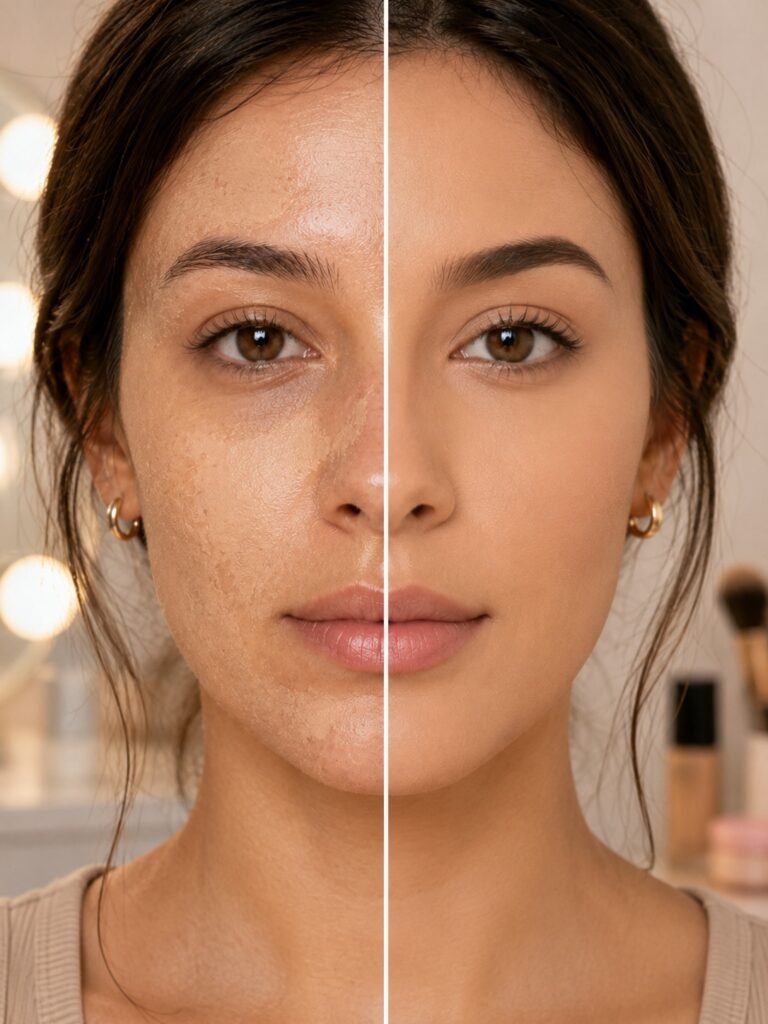
6. You Are Using the Wrong Tool
The same foundation can look smooth with one tool and patchy with another.
A dense brush can give coverage, but it can also leave streaks if the foundation dries quickly. A damp sponge can soften patchiness, but it may lift product if bounced too hard. Fingers can work beautifully with some formulas, but they can make others uneven.
What to try:
- Use a damp sponge for dry or textured areas
- Use a brush for quick blending and more coverage
- Press product into the skin instead of dragging
- Blend edges around the nose, chin, and jawline
- Clean brushes and sponges regularly
- Try a different tool before replacing your foundation
If your foundation always looks patchy, test one side with a brush and the other with a sponge. The difference can be surprising.
7. You Are Setting With Too Much Powder
Powder can help foundation last, but too much powder can create dry, uneven patches.
This often happens under the eyes, around the mouth, on the chin, and on dry cheeks. Powder can grab onto foundation and make it look chalky or separated.
For oily skin, the AAD oily skin guide suggests using blotting papers and pressing them gently instead of rubbing. That is useful because sometimes oil should be blotted before powder is added.
What to try:
- Powder only where makeup moves or gets shiny
- Use a small brush for targeted powder
- Avoid baking dry areas
- Blot oil before adding more powder
- Use less powder around smile lines
- Try setting spray lightly if the finish looks too dry
Patchy foundation often gets worse when you keep adding powder to fix texture.
8. Oil Is Breaking Down Your Foundation
If foundation looks smooth in the morning but patchy by lunch, oil may be breaking it apart.
This usually happens around the nose, forehead, chin, and smile lines. Foundation can separate, look dotted in pores, or disappear in certain spots.
What to try:
- Use lightweight skincare in the morning
- Try an oil-free or soft matte foundation
- Use primer only on oily zones
- Set lightly where you get shiny
- Blot before touching up
- Avoid adding liquid foundation over oily powder
If you have oily skin, patchiness is not always from poor application. It may be wear breakdown.
9. Your Foundation Formula Does Not Match Your Skin Type
A foundation can be good and still be wrong for your skin.
Matte foundations can cling to dry patches. Dewy foundations can separate on oily skin. Full-coverage foundations can look heavy on texture. Skin tints can disappear unevenly if you need more grip or longevity.
What to try:
- Dry skin: try hydrating, satin, or natural-finish foundation
- Oily skin: try oil-free, soft matte, or long-wear foundation
- Combination skin: prep different zones differently
- Textured skin: use thinner layers
- Acne-prone skin: look for non-comedogenic formulas
The AAD makeup guidance for acne-prone skin says people with acne can wear makeup, but the key is choosing cosmetics that do not cause acne and having a skincare routine that works for their skin type.
10. Your Makeup or Tools May Be Too Old
Old foundation can change texture, smell, color, or performance. Dirty brushes and sponges can also make makeup apply unevenly.
The AAD guide on when to toss makeup and sunscreen explains that makeup sometimes needs to be replaced before the container is empty to protect your health.
What to try:
- Check whether foundation smells different
- Toss products that changed color or texture
- Wash brushes and sponges regularly
- Replace sponges that are torn or stained
- Avoid adding water or oil into old foundation bottles
- Keep makeup stored away from heat and sunlight
If a foundation used to look smooth and now looks patchy every time, the product may have changed.
How to Fix Patchy Foundation Without Starting Over
Sometimes you notice patchy foundation after your makeup is already done. You may not need to wash everything off.
If It Looks Dry and Flaky
- Stop adding powder
- Mist lightly with setting spray or facial mist
- Press with a damp sponge
- Tap a tiny amount of moisturizer around the flaky edge
- Avoid rubbing the patch
If It Looks Oily and Separated
- Blot first with tissue or blotting paper
- Press the area with a clean sponge
- Add a tiny amount of powder only where needed
- Avoid layering more foundation over oil
If It Lifted Around the Nose
- Smooth the edge with a clean fingertip
- Use a small brush to blend leftover foundation around the area
- Add a tiny dot of concealer if coverage disappeared
- Set lightly
If It Looks Heavy and Uneven
- Press with a damp sponge
- Use setting spray lightly
- Remove excess product from thick areas
- Avoid adding more foundation on top
This is the quick version of how to fix patchy foundation: correct the texture first, then add coverage only if you truly need it.
My Smooth Base Routine for Preventing Patchy Foundation
When I want foundation to look even, I keep the routine simple.
Step 1: Start With Comfortable Skin
Cleanse gently and moisturize based on your skin type. Your skin should not feel tight before makeup.
Step 2: Let Skincare Settle
Give moisturizer and sunscreen a few minutes before foundation. If your face feels slippery, blot lightly.
Step 3: Use Primer Only Where Needed
Apply primer to oily areas, pores, or dry patches only if it improves the finish.
Step 4: Apply Thin Foundation
Start with a small amount and blend in sections.
Step 5: Build Strategically
Add coverage only where redness, marks, or uneven tone still show.
Step 6: Set Lightly
Use powder only where your makeup creases, moves, or gets shiny.
Step 7: Check in Natural Light
Bathroom lighting can hide patchiness. Natural light will show where the base needs blending.
This routine helps prevent the most common causes of patchy foundation without making makeup feel complicated.
Best Products and Tools for Patchy Foundation
For Dry Patchiness
Look for:
- Gentle cleanser
- Cream moisturizer
- Hydrating primer
- Satin foundation
- Damp makeup sponge
- Minimal powder
- Setting spray used lightly
For Oily Patchiness
Look for:
- Lightweight moisturizer
- Oil-free sunscreen
- Mattifying primer for oily zones
- Soft matte foundation
- Blotting papers
- Targeted powder
For Texture Patchiness
Look for:
- Lightweight foundation
- Smoothing primer only where needed
- Damp sponge
- Small concealer brush
- Less powder
- Non-cakey setting spray
For Acne-Prone Skin
Look for:
- Non-comedogenic skincare
- Non-comedogenic makeup
- Gentle cleanser
- Lightweight moisturizer
- Spot concealing instead of heavy foundation everywhere
The AAD acne habits guide recommends using makeup, sunscreen, skincare, and hair-care products labeled “non-comedogenic” or “won’t clog pores” if you are acne-prone.
Common Mistakes That Make Foundation Patchy
Skipping Moisturizer
Even oily skin may need lightweight moisture. Skipping moisturizer can make foundation grab unevenly.
Applying Foundation Too Soon After Skincare
If skincare is still wet or slippery, foundation may not sit evenly.
Using Too Many Layers
Serum, oil, moisturizer, sunscreen, primer, foundation, concealer, powder, and spray can become too much if the textures clash.
Over-Blending
Too much rubbing can lift foundation instead of smoothing it.
Powdering Before Foundation Sets
Powdering too quickly can create uneven texture.
Touching Up Without Blotting
Adding makeup over oil usually creates more patchiness.
Using the Same Routine on Every Skin Zone
Your T-zone, cheeks, chin, and under-eyes may need different prep.
FAQ
How do I fix patchy foundation?
To fix patchy foundation, first identify whether the patchiness is from dryness, oil, too much product, poor blending, or powder. For dry patches, press with a damp sponge and avoid more powder. For oily separation, blot first, then set lightly. For heavy areas, remove excess product before adding coverage.
Why does my foundation look patchy?
Foundation can look patchy because your skin is dry or oily, your moisturizer or sunscreen has not settled, your primer and foundation do not work together, you applied too much foundation, you used too much powder, or the formula does not match your skin type.
How do I stop foundation from clinging to dry patches?
Moisturize well, use gentle skincare, avoid harsh scrubs before makeup, let skincare absorb, choose a hydrating or satin foundation, apply thin layers, and use a damp sponge to press foundation over dry areas.
Why does my foundation separate around my nose?
Foundation often separates around the nose because of oil, texture, movement, rubbing, heavy skincare, or too much product. Use less foundation there, blot before touch-ups, and set lightly only where needed.
Should I use a brush or sponge for patchy foundation?
A sponge often helps soften patchy or dry areas, while a brush can give more coverage. If your foundation looks streaky with a brush, finish by pressing over it with a damp sponge.
Can primer fix patchy foundation?
Primer can help if it solves a specific problem like oil, pores, or dry texture. But the wrong primer can make foundation more patchy. Use primer only where it improves the base.
Why does my foundation look patchy after powder?
Too much powder can make foundation look dry, chalky, or uneven. Try powdering only the T-zone, under-eyes, or areas that crease instead of setting the whole face heavily.
Conclusion
Learning how to fix patchy foundation starts with understanding what caused the patchiness. Dry skin, oily areas, heavy moisturizer, sunscreen pilling, incompatible primer, too much foundation, dirty tools, old makeup, and excess powder can all make your base look uneven.
I recommend starting with the simplest changes: moisturize properly, let skincare settle, apply less foundation, blend in thin layers, set only where needed, and blot before touching up.
Once you know how to fix patchy foundation, your makeup routine becomes easier to adjust. You do not need a perfect face of skin. You need the right prep, the right formula, and a lighter hand.
Sources
- American Academy of Dermatology dry skin tips: https://www.aad.org/public/everyday-care/skin-care-basics/dry/dermatologists-tips-relieve-dry-skin
- American Academy of Dermatology oily skin tips: https://www.aad.org/public/everyday-care/skin-care-basics/dry/oily-skin
- American Academy of Dermatology acne habits guide: https://www.aad.org/public/diseases/acne/skin-care/habits-stop
- American Academy of Dermatology makeup guidance for acne-prone skin: https://www.aad.org/public/diseases/acne/causes/makeup
- American Academy of Dermatology sunscreen FAQ: https://www.aad.org/media/stats-sunscreen
- American Academy of Dermatology when to toss makeup and sunscreen: https://www.aad.org/public/everyday-care/skin-care-secrets/prevent-skin-problems/replace-makeup-sunscreen
SEO Setup
Meta title: How to Fix Patchy Foundation for a Smoother Base
Meta description: Learn how to fix patchy foundation caused by dry skin, oily areas, sunscreen pilling, primer mistakes, too much powder, and wrong foundation application.
Primary keyword: how to fix patchy foundation
Secondary keywords:
- patchy foundation
- why foundation looks patchy
- foundation separating
- foundation clinging to dry patches
- cakey patchy foundation
- foundation around nose patchy
- how to make foundation smooth
- foundation application tips
- makeup base routine
- patchy makeup fix
Suggested URL slug: how-to-fix-patchy-foundation
Search intent: Informational. The reader wants to know why foundation looks uneven, dry, separated, or patchy and how to fix it before or after application.
Featured snippet answer: To fix patchy foundation, prep the skin with moisturizer, let skincare and sunscreen settle, apply foundation in thin layers, use a damp sponge on dry areas, blot oil before touching up, and set only where needed. Patchiness is usually caused by dry skin, excess oil, incompatible primer, too much foundation, too much powder, or poor blending.
Suggested tags:
- foundation tips, patchy foundation, makeup routine, beauty tips, dry skin makeup, oily skin makeup, base makeup
Suggested categories:
- Makeup
- Beauty
- Foundation Tips
- Skincare
Internal link ideas:
- Why Your Foundation Looks Cakey
- How to Wear Sunscreen Without Ruining Makeup
- Why Sunscreen Makes Your Face Look Greasy
- How to Fix Dry Skin That Feels Rough After Moisturizer
- Signs You Are Using Too Many Beauty Products
External source ideas:
- American Academy of Dermatology dry skin tips
- American Academy of Dermatology oily skin tips
- American Academy of Dermatology acne habits guide
- American Academy of Dermatology sunscreen FAQ
- American Academy of Dermatology makeup replacement guidance
Image alt text: How to fix patchy foundation with moisturizer, primer, foundation sponge, powder, dry skin patches, oily areas, and smooth makeup tips
Pinterest pin title: How to Fix Patchy Foundation
Pinterest pin description: Learn how to fix patchy foundation with better skin prep, moisturizer, sunscreen timing, thin layers, sponge blending, less powder, and smart touch-up tips.
Mid Journey Content Image Creation Prompt
1. Blog Cover Image
Create a polished beauty editorial cover showing a woman checking patchy foundation in a mirror, with moisturizer, primer, foundation bottle, sponge, and powder nearby. Use soft vanity lighting, warm neutral tones, and clean title space. Make the aspect ratio 4:3.
2. Blog Content Image 1
Create a Canva-style educational graphic showing causes of patchy foundation: dry skin, oily areas, sunscreen pilling, primer mismatch, too much foundation, and excess powder. Use clean icons, cream labels, and soft beige tones. Make the aspect ratio 3:4.
3. Blog Content Image 2
Show a split-screen makeup image with patchy foundation on one side and smooth blended foundation on the other, with a damp sponge, moisturizer, and setting powder callouts. Keep it realistic and elegant. Make the aspect ratio 3:4.
4. Blog Content Image 3
Create a beauty flat lay showing a smooth base routine: gentle cleanser, moisturizer, sunscreen, primer, foundation, damp sponge, concealer brush, blotting paper, and powder puff on linen. Make the aspect ratio 3:4.
5. Pinterest Pin Image
Create a Pinterest-style ad image for the blog with the headline “How to Fix Patchy Foundation” and text “10 causes + smooth base tips.” Show foundation swatches, sponge, moisturizer, powder, and patchy makeup callouts. Make the aspect ratio 3:4.
6. Instagram Image
Create an Instagram square promo image in ad style with the headline “Patchy Foundation?” Show a clean makeup flat lay with foundation, sponge, primer, moisturizer, blotting paper, and callout labels for dry skin, oil, powder, and blending. Make the aspect ratio 1:1.
Confirmation Note
I have strictly counter-checked this blog before finalizing. It follows the approved sample format, uses a varied Mitchelle Morgan introduction, uses a meta title that contains the exact primary keyword and is different from the main title, avoids em dashes, includes hyperlinked source words inside the content near supported skincare and beauty claims, repeats source URLs in the Sources section before SEO Setup, includes a gentle health caution note, uses proper bullets, includes the full SEO Setup, follows the updated Mid Journey Content Image Creation Prompt format, and uses the primary keyword naturally throughout the blog.