


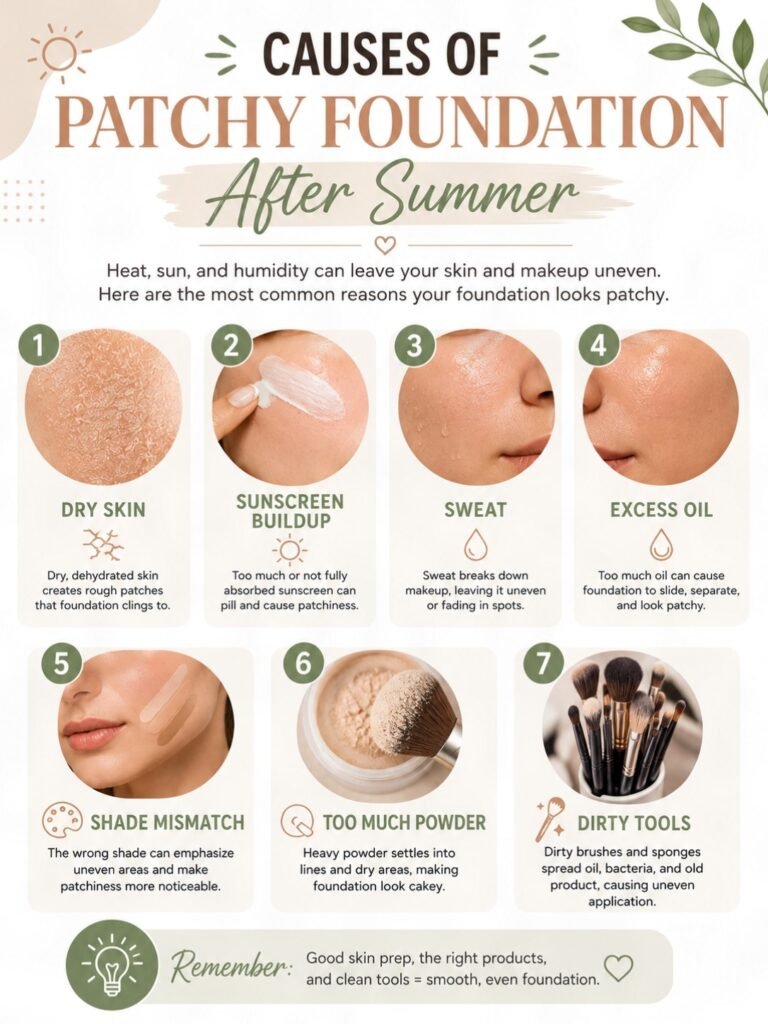
Why foundation looks patchy after summer usually comes down to dry skin, uneven texture, leftover sunscreen buildup, too much powder, shade changes, sweat, and products that no longer match your skin after warmer weather. I recommend fixing the skin prep first because patchy foundation is often a routine problem, not just a foundation problem.
After summer, your skin may feel tighter, look duller, get oilier in some areas, or develop dry patches from sun, heat, chlorine, saltwater, and frequent cleansing. When foundation sits on top of that uneven surface, it can cling, separate, flake, or look heavy.
In this guide, I’ll explain why foundation looks patchy after summer, what to change in your skincare and makeup routine, and which product types can help your base look smoother without piling on more coverage.
This article is for general beauty education only. If you have burning, swelling, painful breakouts, rashes, severe peeling, eye irritation, or a reaction after using skincare or makeup, I recommend stopping the product and speaking with a dermatologist or qualified healthcare professional.
Why Foundation Looks Patchy After Summer and What It Usually Means
Understanding why foundation looks patchy after summer starts with the skin underneath. Foundation usually looks smoother when the skin is balanced, gently moisturized, and not overloaded with incompatible layers.
The American Academy of Dermatology recommends applying moisturizer when skin is still damp and using fragrance-free products if skin is dry or irritated. AAD’s dry skin relief tips are helpful if foundation is clinging to flaky areas or looking rough after summer.
Cleveland Clinic also explains that over-washing and hot water can contribute to dry skin, and it recommends choosing non-comedogenic facial moisturizers for dry skin. Cleveland Clinic’s moisturizer guide supports the idea that the right moisturizer can make a big difference before makeup.
The 2026 makeup direction also supports lighter, more flexible bases. Vogue’s blurred skin trend coverage points to hydrating primer and lightweight buildable liquid foundation for a soft-focus base, while Allure’s 2026 makeup trend report notes more demand for sheer textures, lightweight bases, and products that move with the skin instead of masking it.
That is why my first answer to why foundation looks patchy after summer is usually not “buy a heavier foundation.” It is usually: adjust your skin prep, use less product, check your sunscreen and primer match, and apply thin layers.
The Most Common Reasons Foundation Looks Patchy After Summer
1. Your Skin Is Drier Than It Was Before Summer
Dry skin is one of the biggest reasons why foundation looks patchy after summer. Sun exposure, chlorine, saltwater, heat, air conditioning, and frequent washing can all make skin feel tighter or rougher.
Foundation tends to cling to dry patches around the nose, cheeks, chin, forehead, and mouth. Even a good foundation can look bad if the skin underneath is flaky or dehydrated.
Best for: dry patches, tight skin, flaky texture, foundation clinging.
What to change:
- Use a gentler cleanser
- Apply moisturizer while skin is slightly damp
- Use a richer moisturizer at night
- Pause strong exfoliation if skin is irritated
- Avoid hot water on the face
Mitchelle tip:
If your foundation looks patchy only in dry spots, change your moisturizer before changing your foundation.
2. Sunscreen Buildup Is Sitting Under Your Makeup
Sunscreen is essential, but leftover sunscreen buildup can be part of why foundation looks patchy after summer. During summer, many of us apply and reapply sunscreen more often. If it is not removed properly at night, the residue can mix with moisturizer, primer, and foundation the next day.
The AAD recommends using broad-spectrum sunscreen with SPF 30 or higher, and sunscreen should still be part of your routine. AAD guidance on sunscreen selection explains what to look for in sun protection.
Best for: patchy makeup after SPF, pilling, uneven base, clogged-feeling skin.
What to change:
- Remove sunscreen gently at night
- Use a cleansing balm or micellar water if needed
- Follow with a mild cleanser
- Let morning sunscreen settle before foundation
- Avoid layering too many silicone-heavy or rich products at once
Mitchelle tip:
Do not skip sunscreen to make foundation look better. Instead, find a sunscreen that layers well under makeup.
3. Your Foundation Shade No Longer Matches
A shade mismatch is another reason why foundation looks patchy after summer. Even with sunscreen, your skin tone may look warmer, deeper, redder, or more uneven after summer.
When foundation is too light, too pink, too yellow, or too matte against your current skin tone, it can look patchy even when it is blended well.
Best for: foundation looking ashy, orange, gray, streaky, or obvious.
What to change:
- Check your shade in natural light
- Compare foundation on your jawline
- Use a summer-to-fall mixing shade if needed
- Try sheerer coverage while your tone adjusts
- Avoid applying extra foundation to force a bad match
Mitchelle tip:
If your foundation looked good in spring but looks patchy after summer, shade mismatch may be part of the problem.
4. Your Primer and Foundation Are Not Working Together
Product mismatch is a common reason why foundation looks patchy after summer. Some primers, sunscreens, moisturizers, and foundations do not layer well together. This can cause pilling, sliding, separation, or uneven coverage.
A water-light skin tint may not sit well over a very slippery primer. A matte foundation may look dry over a thin gel moisturizer. A rich sunscreen may make foundation separate if you apply too much too quickly.
Best for: pilling, rolling, separating, streaking, makeup sliding.
What to change:
- Let skincare absorb before makeup
- Use thinner layers
- Match textures when possible
- Test foundation with one primer at a time
- Skip primer temporarily to see if it is the issue
Mitchelle tip:
When foundation pills, do a simple test: moisturizer, sunscreen, foundation. If it works without primer, the primer may be the problem.
5. You Are Using Too Much Powder
Powder can help shine, but too much powder is a major reason why foundation looks patchy after summer. After humid weather, it is easy to over-correct by powdering heavily. The problem is that powder can cling to dry spots and make texture look rough.
The 2026 soft-focus makeup direction is less about flat, dry coverage and more about diffused skin that still looks flexible. Vogue’s blurred skin coverage supports using lighter, more strategic base products instead of heavy layers.
Best for: cakey makeup, dry patches, makeup cracking, dull-looking base.
What to change:
- Powder only the T-zone
- Use a small brush
- Avoid powdering dry cheeks
- Blot before powdering
- Try setting spray if powder looks heavy
Mitchelle tip:
Use powder where makeup moves, not everywhere. The cheeks often look better with less powder.
6. Sweat and Oil Are Breaking Down the Base
Sweat and oil can also explain why foundation looks patchy after summer. In warm weather, foundation may break apart around the nose, upper lip, forehead, and chin.
If your skin is oily but dehydrated, foundation can look greasy in one area and dry in another. That is why balance matters.
Best for: separation, shiny patches, nose makeup wearing off, T-zone breakdown.
What to change:
- Use a lightweight moisturizer
- Choose a foundation that suits your skin type
- Apply thin layers
- Set only oily zones
- Carry blotting papers instead of adding powder repeatedly
Mitchelle tip:
Adding powder over sweat can make the base look thicker and patchier. Blot first, then touch up lightly.
7. You Are Applying Foundation Too Soon After Skincare
Timing is a simple but overlooked reason why foundation looks patchy after summer. If moisturizer, sunscreen, or primer is still wet or slippery, foundation may not spread evenly.
You do not need to wait forever, but giving each layer a short moment to settle can help the final look.
Best for: streaking, sliding, uneven blending, pilling.
What to change:
- Use less skincare in the morning
- Let moisturizer settle
- Let sunscreen settle before foundation
- Apply foundation in thin layers
- Press instead of dragging over textured areas
Mitchelle tip:
If your foundation moves around instead of blending in, your skincare may need more time to settle.
8. Your Tools Need Cleaning
Dirty brushes and sponges can make foundation apply unevenly. They can also hold old foundation, sunscreen, oil, and bacteria.
This can be part of why foundation looks patchy after summer, especially if you used more sunscreen, sweat more, or applied makeup on humid days.
The AAD recommends testing new skincare products on small areas first to reduce the risk of irritation, and I use the same careful mindset with makeup tools and products when skin feels reactive. AAD product testing guidance is helpful if your skin is easily irritated.
Best for: streaky application, clogged-looking base, breakouts, uneven blending.
What to change:
- Wash foundation brushes weekly
- Replace old sponges
- Let tools dry fully
- Avoid storing damp sponges in closed bags
- Use clean hands if your tools are not clean
Mitchelle tip:
A clean sponge can make the same foundation look much smoother.
9. Your Foundation Formula Is Too Heavy for Post-Summer Skin
Sometimes why foundation looks patchy after summer is simple: the formula is too heavy for your current skin. Your skin may need a lighter, more flexible base after months of heat, sunscreen, sweat, and texture changes.
Vogue’s coverage of the new foundation direction says foundation is becoming more skincare-like, with newer formulas designed to feel lighter and move with the skin. Vogue’s new face of foundation article fits the 2026 shift away from heavy mask-like coverage.
Best for: heavy makeup look, foundation settling, dry texture, cakiness.
What to change:
- Try skin tint
- Try tinted moisturizer
- Use a thinner layer of foundation
- Spot conceal instead of full coverage
- Mix foundation with moisturizer if the formula allows it
- Use a damp sponge for softer application
Mitchelle tip:
If you need more coverage, add concealer only where needed. A thinner base often looks smoother than full-coverage foundation all over.
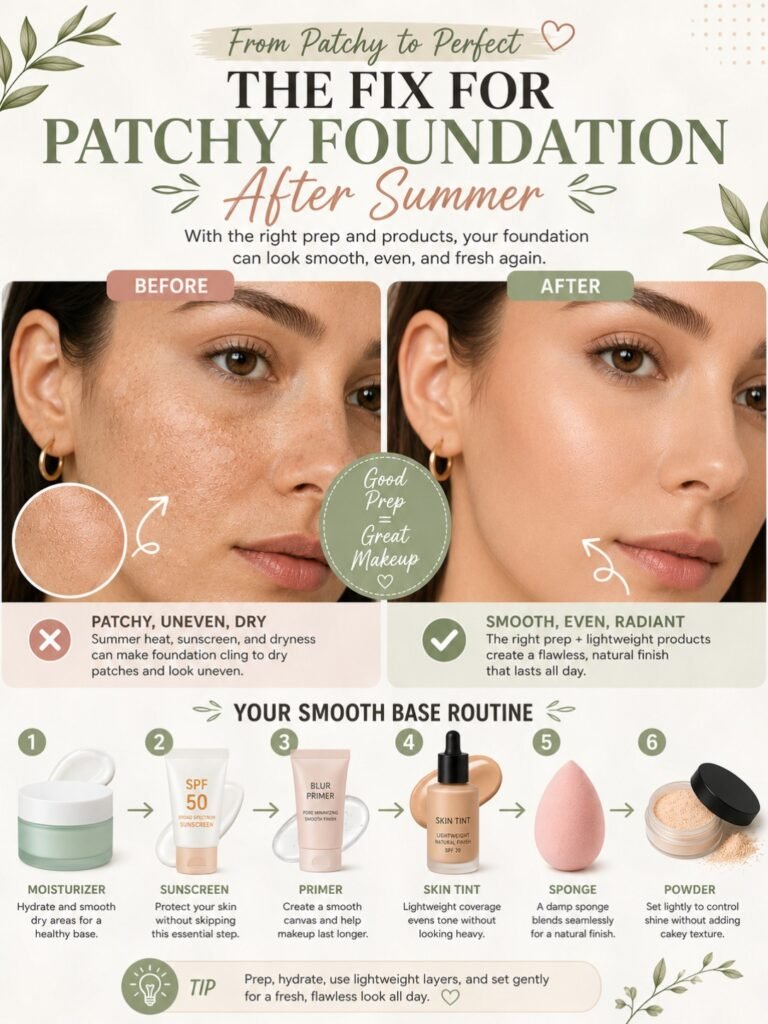
How to Fix Patchy Foundation After Summer
Step 1: Reset Your Skin Prep
The first fix for why foundation looks patchy after summer is a skin prep reset. You do not need a complicated routine.
Try this:
- Gentle cleanser
- Lightweight hydrating serum if tolerated
- Moisturizer
- Sunscreen in the morning
- Foundation after sunscreen settles
The AAD recommends moisturizer while skin is damp, and Cleveland Clinic recommends non-comedogenic facial moisturizers if you are choosing a moisturizer for dry skin. AAD dry skin guidance and Cleveland Clinic’s moisturizer guide both support a simple moisture-first approach.
Step 2: Use Less Foundation
One practical answer to why foundation looks patchy after summer is using less product. Too much foundation can collect around dry patches, texture, and fine lines.
Apply a thin layer to the center of the face first, then blend outward. Add more only where you truly need it.
Mitchelle tip:
Foundation should even the skin, not cover every natural detail. Skin-like makeup usually looks fresher after summer.
Step 3: Spot Conceal Instead of Layering Everywhere
If you have discoloration, post-summer redness, breakouts, or dark spots, spot concealing can look cleaner than adding a second layer of foundation all over.
Use a small brush and tap concealer only where needed.
Best for: dark spots, redness, blemishes, under-eye shadows.
Mitchelle tip:
The more targeted your coverage is, the less patchy the whole face tends to look.
Step 4: Press Over Texture Instead of Rubbing
If your skin has dry flakes or texture, dragging foundation across the skin can lift patches and make roughness more visible.
Try pressing foundation with a damp sponge or tapping with a brush.
Best for: dry patches, texture, peeling, rough cheeks, nose area.
Mitchelle tip:
Use gentle pressing motions around the nose and mouth. Those areas often get patchy first.
Step 5: Set Only Where You Need It
Powder is useful, but strategic powder looks more modern and less dry. Set oily areas, then leave drier areas alone.
Best for: oily T-zone, makeup transfer, humidity, long wear.
Mitchelle tip:
If your cheeks look dry after powder, stop powdering your cheeks. You can still set your nose, chin, and forehead.
Simple Routine to Stop Foundation Looking Patchy
Here is the easiest way to use what you learned about why foundation looks patchy after summer.
Morning Makeup Prep
- Cleanse gently or rinse.
- Apply moisturizer while skin is slightly damp.
- Apply sunscreen.
- Let sunscreen settle.
- Apply primer only if needed.
- Use a thin layer of foundation.
- Spot conceal.
- Powder only oily areas.
- Use setting spray if the finish looks too dry.
Evening Skin Reset
- Remove sunscreen and makeup gently.
- Cleanse with a mild cleanser.
- Apply moisturizer.
- Use a richer cream on dry patches.
- Pause exfoliation if skin feels tight or irritated.
What to Change by Skin Type
Dry Skin
If you have dry skin, why foundation looks patchy after summer is often about moisture. Use a creamier moisturizer, hydrating primer, lightweight foundation, and very little powder.
Oily Skin
If you have oily skin, foundation may separate around the nose, forehead, and chin. Use lightweight moisturizer, thin foundation layers, and powder only the oily zones.
Combination Skin
Combination skin can be dry on the cheeks and oily through the T-zone. Use richer prep on dry areas and lighter prep where you get shiny.
Acne-Prone Skin
If you are acne-prone, choose products labeled non-comedogenic or won’t clog pores. The AAD recommends those labels for makeup, sunscreen, skin, and hair-care products when managing acne-prone skin. AAD acne product guidance is helpful if foundation triggers breakouts.
Sensitive Skin
If your skin stings after summer, pause new products and keep the routine simple. The AAD recommends testing skincare products on small areas first to help predict reactions. AAD product testing guidance is useful before trying new primers, moisturizers, or complexion products.
Common Mistakes to Avoid
Using More Foundation to Cover Patchiness
More foundation often makes patchiness worse. Use less foundation and more targeted concealer.
Skipping Moisturizer
Foundation usually looks rougher on dry skin. Moisturizer is part of makeup prep.
Applying Foundation Before Sunscreen Settles
If sunscreen is still wet or slippery, foundation may streak, pill, or separate.
Powdering the Whole Face
Powder only where you need it. Too much powder can make dry skin look rough.
Exfoliating Too Hard
If foundation clings to flakes, harsh scrubbing may make irritation worse. Use gentle skincare and give the skin time to recover.
Ignoring Shade Changes
Your post-summer shade may not match your pre-summer foundation. Check your undertone and depth in natural light.
Using Dirty Makeup Tools
Dirty brushes and sponges can make foundation look streaky and uneven.
Trying Too Many New Products at Once
If your foundation suddenly looks patchy, change one thing at a time. That makes it easier to find the real problem.
FAQ
Why does foundation look patchy after summer?
Why foundation looks patchy after summer usually comes down to dry skin, sun exposure, sunscreen buildup, sweat, oil, uneven texture, shade mismatch, too much powder, or products that do not layer well together.
How do I stop foundation from looking patchy?
To stop foundation looking patchy, use a gentle cleanser, moisturize while skin is slightly damp, let sunscreen settle, apply thin foundation layers, spot conceal, powder only oily areas, and clean your tools regularly.
Why does my foundation cling to dry patches?
Foundation clings to dry patches when the skin surface is flaky, dehydrated, or not moisturized enough. Start with moisturizer and avoid heavy powder on dry areas.
Can sunscreen make foundation patchy?
Yes, some sunscreens can pill or make foundation separate if they do not layer well. Let sunscreen settle before makeup and test different sunscreen and foundation combinations.
Should I exfoliate if foundation looks patchy?
Only gently and only if your skin is not irritated. If your skin feels tight, stings, or peels, pause exfoliation and focus on moisturizer first.
What foundation is best after summer?
A lightweight foundation, skin tint, or tinted moisturizer usually looks better after summer if your skin is dry, textured, or uneven. Choose a finish that matches your skin type.
Why does foundation separate on my nose after summer?
Foundation can separate on the nose because of oil, sweat, sunscreen, primer mismatch, touching the face, or too much product. Use thin layers and set lightly.
Why does my foundation look cakey after summer?
Foundation may look cakey after summer because your skin is dry, you are using too much product, your powder is too heavy, or your foundation formula is too matte for your current skin.
Do I need a new foundation shade after summer?
You might. If your skin tone changed after summer, your old foundation may look ashy, orange, gray, or uneven. Test your shade in natural light.
What is the easiest fix for patchy foundation?
The easiest fix is to moisturize well, use less foundation, apply with a damp sponge, spot conceal only where needed, and powder lightly.
Conclusion
Why foundation looks patchy after summer usually has more to do with skin prep, product layering, and texture than the foundation alone. Summer can leave skin dry, oily, uneven, or sensitive, and foundation will show those changes quickly.
I recommend starting with the basics: gentle cleansing, moisturizer, sunscreen that layers well, thin foundation layers, targeted concealer, clean tools, and light powder only where needed.
Once you understand why foundation looks patchy after summer, your makeup becomes much easier to fix. You do not need to cover more. You usually need to prep better, apply less, and choose products that move with your skin.
Sources
- American Academy of Dermatology: Dermatologists’ Top Tips for Relieving Dry Skin
- American Academy of Dermatology: How to Select Anti-Aging Skin Care Products
- American Academy of Dermatology: 10 Skin Care Habits That Can Worsen Acne
- American Academy of Dermatology: How to Test Skin Care Products
- Cleveland Clinic: Choosing the Best Moisturizer for Dry Skin
- Cleveland Clinic: Dry Skin, Symptoms, Causes, Treatment and Prevention
- Vogue: Blurred Skin, This Soft-Focus Makeup Trend Suits Every Skin Type and Texture
- Vogue: The New Face of Foundation
- Allure: The Biggest Makeup Trends of 2026 Signal a Colorful Vibe Shift