


Few skincare steps feel more disappointing than applying sunscreen and watching your face turn pale, gray, purple, or chalky. You know sunscreen matters, but you also want to look like yourself after you put it on. If you are trying to understand why your sunscreen leaves a white cast, the answer usually comes down to the formula, the UV filters, your skin tone, how much product you apply, and how well the sunscreen blends into your skin.
A white cast does not always mean the sunscreen is bad. It often means the texture, tint, or application method is not the best match for you. I recommend fixing the cast without reducing sunscreen use, because protection still comes first.
What Is a Sunscreen White Cast?
A sunscreen white cast is the pale, chalky, gray, or ashy layer that some sunscreens leave on the skin after application. It can show up on any skin tone, but it is often more noticeable on medium, tan, brown, and deep skin tones.
When people ask why your sunscreen leaves a white cast, they are usually noticing one of these problems:
- Skin looks gray or dull
- Face looks lighter than neck
- Sunscreen sits visibly on top of skin
- Makeup looks ashy over sunscreen
- Hairline and brows collect white residue
- Skin looks purple or bluish in photos
- Sunscreen gathers around dry patches
The American Academy of Dermatology sunscreen FAQ explains that tinted sunscreen that matches your skin tone can help avoid the white residue or “cast” that some sunscreens leave. AAD also recommends choosing a sunscreen that is broad-spectrum, water-resistant, and SPF 30 or higher.
This article is for general skincare education only. If sunscreen causes burning, swelling, rash, hives, severe irritation, or an allergic-looking reaction, I recommend speaking with a dermatologist or qualified healthcare professional.
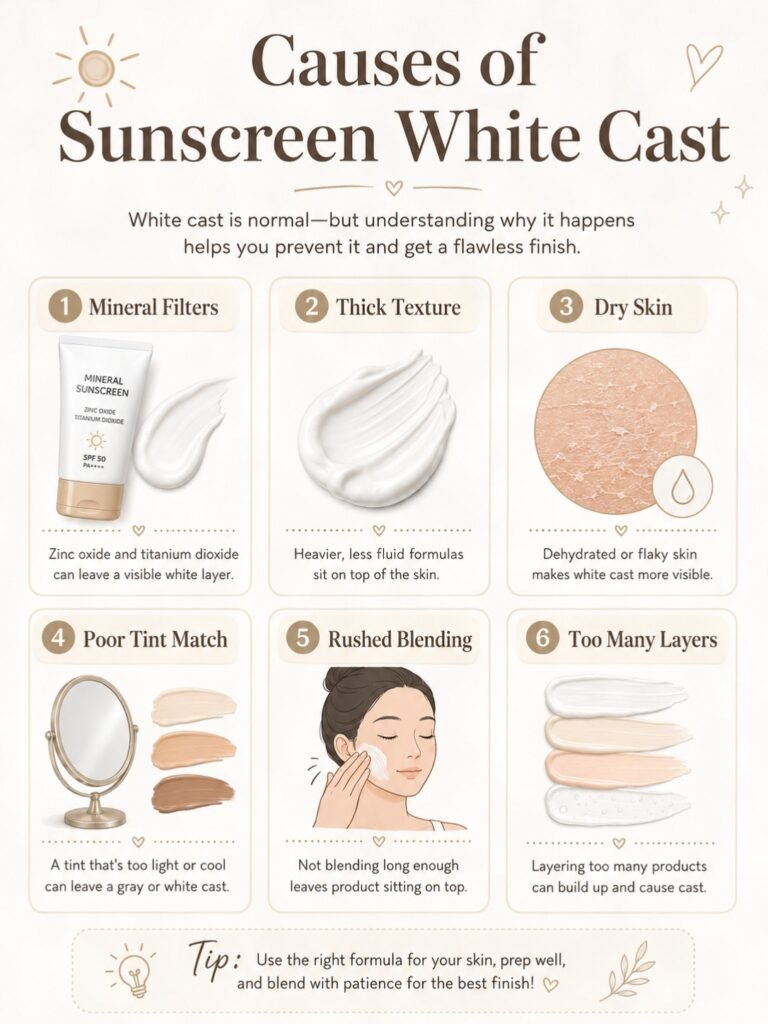
9 Reasons Why Your Sunscreen Leaves a White Cast
1. Your Sunscreen Is Mineral-Based
The most common reason why your sunscreen leaves a white cast is that it contains mineral UV filters.
Mineral sunscreens usually use zinc oxide, titanium dioxide, or both. These ingredients are often chosen for sensitive skin, but they can also leave a more visible finish than many chemical sunscreens.
The AAD sunscreen label guide explains that if the active ingredient is titanium dioxide, zinc oxide, or both, the product is a physical sunscreen, also called mineral sunscreen. The Cleveland Clinic mineral vs. chemical sunscreen guide also notes that mineral sunscreens tend to have a heavier texture, while chemical sunscreens are often lighter.
What to try:
- Choose a tinted mineral sunscreen
- Look for “sheer,” “invisible,” or “no white cast” mineral formulas
- Try a hybrid sunscreen if your skin tolerates it
- Apply in thin layers rather than one thick swipe
- Blend around hairline, brows, nose, and jaw
Mineral sunscreen is not wrong. It just needs to match your skin tone and texture preferences.
2. The Formula Is Too Thick or Pastelike
Some sunscreens have a dense, creamy, or paste-like texture. This can be helpful for outdoor wear, water resistance, or sensitive skin, but it can also make the product sit heavily on the face.
If your sunscreen feels hard to spread, it may leave visible streaks before you even finish blending.
This is a big reason why your sunscreen leaves a white cast even when you apply the correct amount.
What to try:
- Look for lightweight lotion, fluid, gel-cream, or serum textures
- Warm the sunscreen between your fingers before applying
- Dot it evenly across your face before blending
- Apply one thin layer, let it settle, then apply the next layer
- Avoid rubbing until the product pills
I do not recommend using less sunscreen just to reduce the cast. A better texture is the safer fix.
3. The Sunscreen Shade Does Not Match Your Skin Tone
Tinted sunscreen can help with white cast, but only if the tint works for your skin tone and undertone.
Some tinted sunscreens are too pink, too orange, too peach, too light, or too gray. A “universal tint” may look seamless on one person and ashy on someone else.
The AAD practice safe sun guide says tinted sunscreens do not leave the white residue or cast that some sunscreens do, and recommends choosing a tinted sunscreen that matches your skin tone. AAD also notes that tinted sunscreen with iron oxide can help protect against visible light, which can contribute to dark spots.
What to try:
- Match tinted sunscreen to your face, neck, and chest
- Check it in natural light
- Pay attention to undertone, not just depth
- Try flexible tints if you are between shades
- Use a skin tint or foundation over sunscreen if needed
- Avoid tints that make your skin look orange, pink, or gray
A tinted sunscreen should disappear into your skin. If it corrects one cast but creates another, it is not the right match.
4. You Are Applying It Too Quickly
Sunscreen can look streaky or chalky when it is rushed.
If you swipe it across the face in a few seconds, it may collect around texture, facial hair, eyebrows, dry spots, or the edges of your face. Some formulas need more careful placement and blending.
What to try:
- Dot sunscreen on cheeks, forehead, nose, chin, and neck
- Blend one area at a time
- Press over stubborn areas instead of dragging
- Check the hairline, brows, ears, and jaw
- Let sunscreen settle before makeup
- Use clean hands for better control
When learning why your sunscreen leaves a white cast, application matters almost as much as formula.
5. You Are Applying It Over Dry or Flaky Skin
White cast can look worse when sunscreen catches on dry patches.
Dry skin, peeling skin, rough texture, and flaky areas can make sunscreen sit unevenly. Even a sheer sunscreen can look chalky if the skin underneath is tight or textured.
The American Academy of Dermatology dry skin tips recommend using gentle, fragrance-free skincare products and applying moisturizer immediately after washing to help relieve dry skin.
What to try:
- Moisturize before sunscreen if your skin is dry
- Give moisturizer a few minutes to settle
- Avoid harsh scrubs before sunscreen
- Use a gentler cleanser if your skin feels tight
- Try a more hydrating sunscreen texture
- Press sunscreen over flaky areas instead of rubbing hard
A white cast may be partly a sunscreen issue and partly a skin prep issue.
6. You Are Layering Too Many Products Underneath
Sunscreen can turn white, streaky, or patchy when it sits on top of too many skincare layers.
Heavy moisturizer, face oil, silicone primer, sticky serum, and sunscreen may not blend well together. Instead of forming an even layer, the sunscreen may slide, pill, or gather in visible patches.
What to try:
- Use fewer products in the morning
- Let each layer settle before sunscreen
- Skip face oil under sunscreen if it causes separation
- Use a lightweight moisturizer
- Avoid layering multiple primers before SPF
- Apply sunscreen before makeup, not mixed into makeup
The goal is an even sunscreen layer. If the base underneath is slippery or overloaded, the cast may look worse.
7. You Are Not Giving the Sunscreen Time to Settle
Some sunscreens look white at first, then settle after a few minutes. Others stay chalky no matter how long you wait.
Before deciding a sunscreen is unusable, I recommend checking how it looks after 10 to 15 minutes. If it softens into the skin, it may still work for casual days. If it stays gray, it may not be your best everyday formula.
The FDA sunscreen guide recommends using broad-spectrum sunscreen and reapplying at least every two hours, and more often if you are sweating or swimming.
What to try:
- Apply sunscreen before getting dressed
- Wait before applying makeup
- Let the formula settle before judging it
- Blot gently if it feels greasy after setting
- Avoid rubbing after it has started to dry
Some white cast is temporary. Persistent ashiness is usually a formula mismatch.
8. The SPF Formula Is Not Designed for Your Daily Routine
A sunscreen made for beach days may not be the best sunscreen for everyday makeup, office wear, or photos.
Water-resistant sunscreens, sport formulas, heavy mineral creams, and high-coverage mineral sunscreens can be excellent for certain situations, but they may look too visible for daily face use.
That does not mean they are bad. It means you may need different sunscreens for different days.
What to try:
- Keep one everyday face sunscreen
- Keep one outdoor or water-resistant sunscreen
- Use tinted sunscreen for makeup days
- Use a lighter chemical or hybrid formula if your skin tolerates it
- Use hats and shade for extra outdoor protection
The AAD sunscreen FAQ says chemical, physical, and hybrid sunscreens can all effectively protect your skin when they are broad-spectrum, water resistant, and SPF 30 or higher.
9. You Are Trying to Fix the Cast by Using Too Little
This is the mistake I would avoid most.
If your sunscreen looks white, it is tempting to apply a smaller amount. That may improve the look, but it can reduce the protection you get. The better answer is to find a formula that lets you apply enough product comfortably.
The FDA sunscreen guide says to apply sunscreen generously and reapply at least every two hours. AAD also recommends broad-spectrum SPF 30 or higher for sun protection.
What to try instead:
- Switch formulas
- Try tinted sunscreen
- Apply in two thin layers
- Use a more blendable texture
- Pair sunscreen with a hat or shade
- Avoid mixing sunscreen with moisturizer or foundation unless the product directions allow it
If you are asking why your sunscreen leaves a white cast, do not solve it by under-applying. Find a sunscreen you are willing to use properly.
How to Fix Sunscreen White Cast Without Losing Protection
A good sunscreen routine should protect your skin and look wearable.
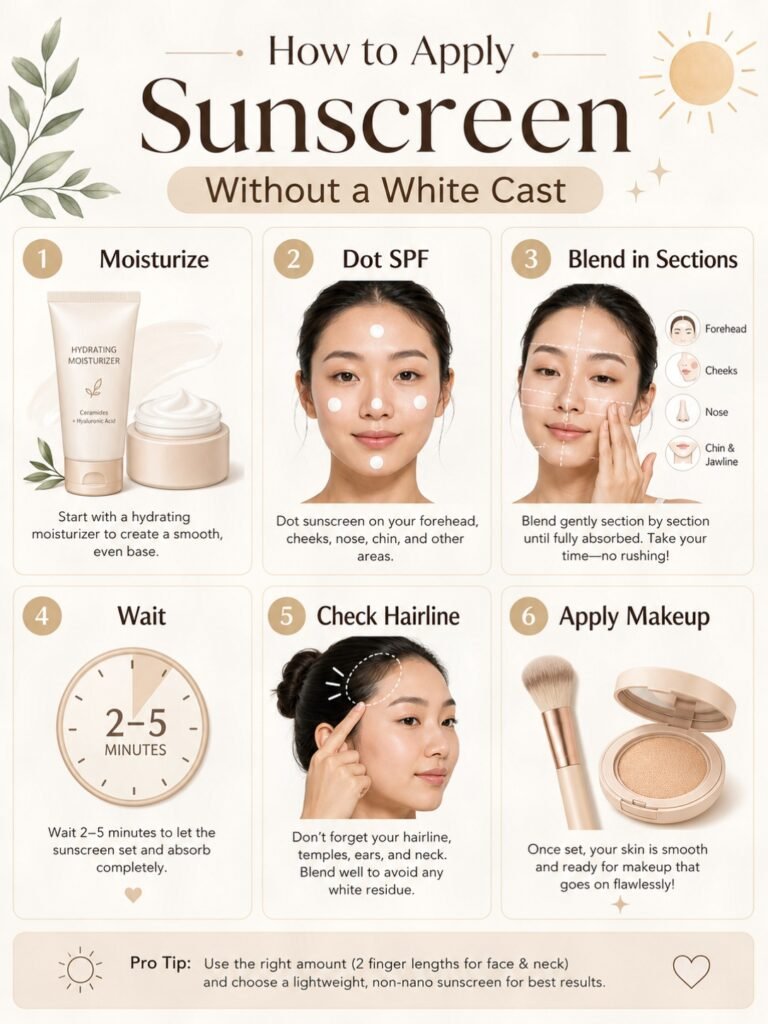
Here is the routine I recommend:
Step 1: Prep Your Skin Lightly
Use a gentle cleanser and a moisturizer that suits your skin type. Avoid heavy oils or thick creams underneath if they make sunscreen slide.
Step 2: Apply Sunscreen in Sections
Dot sunscreen around your face and blend one section at a time. This helps prevent thick patches.
Step 3: Use Two Thin Layers
Apply one thin, even layer. Let it settle briefly, then apply another thin layer. This often looks better than one heavy application.
Step 4: Press Around Problem Areas
Use your fingertips to press around brows, hairline, nostrils, and jawline where residue collects.
Step 5: Wait Before Makeup
Let sunscreen settle before applying foundation, concealer, or powder.
Step 6: Choose a Better Formula if Needed
If the sunscreen still looks gray, switch to tinted, sheer mineral, hybrid, or chemical sunscreen if your skin tolerates it.
This is the practical side of why your sunscreen leaves a white cast. You are not just identifying the problem. You are changing the texture, tint, and application method.
Best Sunscreen Types for Avoiding White Cast
Tinted Mineral Sunscreen
Best for people who like mineral sunscreen but want less ashiness. Choose a tint that matches your skin tone.
Sheer Mineral Sunscreen
Best for sensitive skin that tolerates mineral filters well. Look for formulas designed to blend clear or nearly clear.
Hybrid Sunscreen
Best for people who want the feel of a lighter sunscreen while still having some mineral filters.
Chemical Sunscreen
Best for people who want a more invisible finish and tolerate chemical UV filters well. Some sensitive skin types may prefer mineral sunscreen instead.
Gel, Fluid, or Serum Sunscreen
Best for people who dislike heavy creams and want a more lightweight daily texture.
Moisturizing Sunscreen
Best for dry skin that gets a chalky cast because sunscreen catches on flakes or rough texture.
What Not to Do When Sunscreen Looks White
Do Not Use Less Than You Need
A thin, barely-there layer may look better, but it may not protect properly.
Do Not Mix Sunscreen Into Foundation
Mixing can interfere with even application unless the product is specifically designed for that use.
Do Not Skip Sunscreen Because of White Cast
Try a better formula instead. Sun protection matters for all skin tones.
Do Not Rub Aggressively
Hard rubbing can cause pilling, redness, and uneven coverage.
Do Not Assume Tinted Sunscreen Always Matches
Tinted sunscreen still needs to suit your undertone and depth.
Do Not Forget Your Neck and Ears
A white face and uncovered neck can make the cast look even more obvious.
White Cast on Deeper Skin Tones
White cast can be especially frustrating on deeper skin because mineral filters may look gray, purple, blue, or ashy.
This is one reason sunscreen shopping can feel unfair. A sunscreen that looks clear on fair skin may look very visible on brown or deep skin.
The AAD sunscreen FAQ says tinted sunscreen that matches your skin tone can help avoid white residue or cast. The AAD practice safe sun guide also notes that tinted sunscreen with iron oxide can help protect skin from visible light, which can contribute to dark spots.
What to try:
- Look for tinted sunscreen in real shade ranges
- Check reviews from people with a similar skin tone
- Avoid “universal tint” if it looks gray or orange on you
- Try chemical or hybrid sunscreen if your skin tolerates it
- Test sunscreen on your jaw and neck
- Check it in daylight before committing
The best sunscreen is the one you will actually wear in the right amount.
Can You Wear Makeup Over Sunscreen White Cast?
Yes, but makeup should not be the only fix.
If the sunscreen is slightly pale but comfortable, makeup can help even out the finish. If the sunscreen is very chalky, thick, or patchy, foundation may make the texture worse.
What to try:
- Let sunscreen settle first
- Use a skin tint or foundation that matches your neck
- Press makeup on instead of dragging
- Use less powder if sunscreen already looks dry
- Avoid layering heavy foundation over thick mineral sunscreen
- Try tinted sunscreen instead of a separate tint if you want fewer layers
Makeup can soften a small cast, but the right sunscreen formula makes the biggest difference.
FAQ
Why does my sunscreen leave a white cast?
Your sunscreen may leave a white cast because it contains mineral filters like zinc oxide or titanium dioxide, has a thick texture, does not match your skin tone, is applied too quickly, sits on dry skin, or does not blend well with the products underneath.
Is sunscreen with a white cast still effective?
It can be. A white cast does not automatically mean sunscreen is ineffective. The bigger concern is whether you apply enough, use broad-spectrum SPF 30 or higher, and reapply as directed.
How do I stop sunscreen from leaving a white cast?
To reduce white cast, choose tinted sunscreen, sheer mineral sunscreen, hybrid sunscreen, or chemical sunscreen if your skin tolerates it. Apply in thin layers, moisturize dry skin first, blend carefully around edges, and avoid using less sunscreen just to make it invisible.
Does mineral sunscreen always leave a white cast?
Not always. Some mineral sunscreens are tinted, sheer, or formulated to blend better. However, mineral formulas are more likely to leave a visible cast than many chemical formulas.
Is tinted sunscreen better for white cast?
Tinted sunscreen can be better if the tint matches your skin tone. AAD notes that tinted sunscreen can help avoid white residue or cast, and tinted sunscreen with iron oxide can also help protect against visible light.
Why does sunscreen look gray on my face?
Sunscreen can look gray when the formula is too pale, too mineral-heavy, too thick, or not matched to your undertone. This is especially common on medium, tan, brown, and deep skin tones.
Can I mix sunscreen with moisturizer to reduce white cast?
I do not recommend mixing sunscreen with moisturizer unless the product directions say it is okay. Mixing can make it harder to apply sunscreen evenly. Use a better-blending sunscreen instead.
Conclusion
If you have been wondering why your sunscreen leaves a white cast, the likely reasons are mineral filters, thick texture, poor shade match, dry skin, rushed application, too many layers underneath, or a formula that simply does not suit your daily routine.
I recommend fixing the cast by changing the formula or application method, not by using less sunscreen. Try a tinted sunscreen, a sheer mineral formula, a hybrid sunscreen, or a lightweight chemical sunscreen if your skin tolerates it.
Once you understand why your sunscreen leaves a white cast, it becomes much easier to find a sunscreen that protects your skin and still looks natural enough to wear every day.
Sources
- American Academy of Dermatology sunscreen FAQ: https://www.aad.org/media/stats-sunscreen
- American Academy of Dermatology sunscreen label guide: https://www.aad.org/public/everyday-care/sun-protection/shade-clothing-sunscreen/understand-sunscreen-labels
- American Academy of Dermatology practice safe sun guide: https://www.aad.org/public/everyday-care/sun-protection/shade-clothing-sunscreen/practice-safe-sun
- American Academy of Dermatology choosing the right sunscreen: https://www.aad.org/public/everyday-care/sun-protection/shade-clothing-sunscreen/choosing-right-sunscreen
- American Academy of Dermatology dry skin tips: https://www.aad.org/public/everyday-care/skin-care-basics/dry/dermatologists-tips-relieve-dry-skin
- FDA sunscreen guide: https://www.fda.gov/drugs/understanding-over-counter-medicines/sunscreen-how-help-protect-your-skin-sun
- Cleveland Clinic mineral vs. chemical sunscreen: https://health.clevelandclinic.org/mineral-vs-chemical-sunscreen
- Cleveland Clinic mineral sunscreen guide: https://health.clevelandclinic.org/mineral-sunscreen-explained